
What do you do when there is no roadmap, no proven process, and no clear direction?
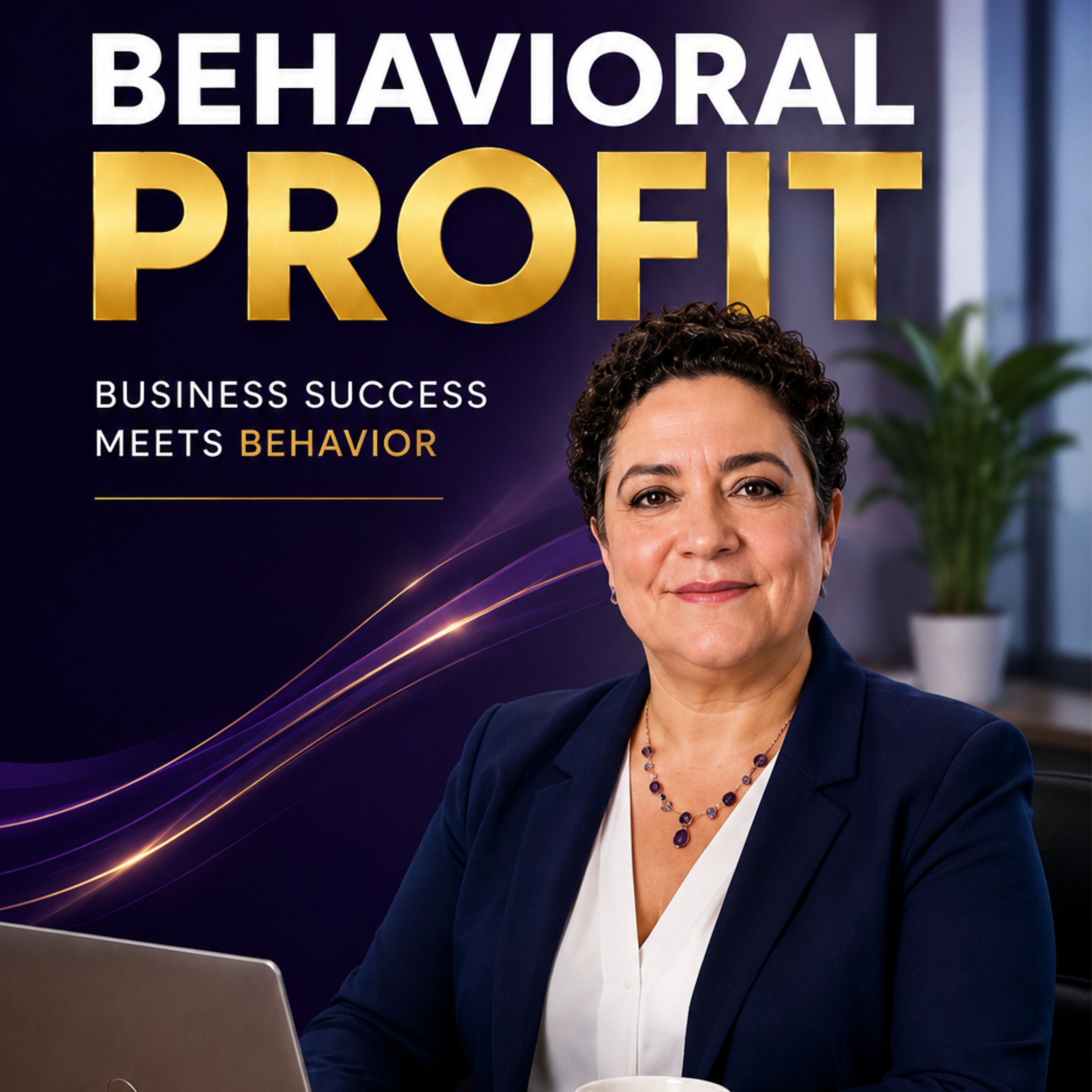
In this episode of Behavioral Profit, Debbie Longo speaks with Navid Nazemian about his experience moving from Germany to the Middle East to help scale a business from approximately 60 employees to more than 350 employees in just a few years. Faced with conflicting guidance, unfamiliar cultural challenges, and the pressure of rapid growth, Navid shares how he stopped waiting for perfect answers and started creating practical solutions.
Together, they discuss leadership under pressure, decision-making in uncertainty, getting out of your comfort zone, building talent pipelines, navigating competing opinions, and why progress often comes from action rather than perfection.
This conversation explores the importance of adaptability, accountability, collaboration, and leadership courage when facing complex business challenges. Whether you're a business owner, executive, HR professional, or emerging leader, you'll gain practical insights on how to move forward when the path ahead is unclear.
Connect with Debbie Longo Transformational Coach | Speaker | Podcast Host
Website: www.DebbieLongo.com
Email: debbie@lifeinbloomny.net
LinkedIn: https://www.linkedin.com/in/debbie-longo-life-in-bloom-ny/
Connect with Navid Nazemian
Linkedin: https://www.linkedin.com/in/navidnazemian/
Website: https://masteringleadership.kit.com/
Welcome to the Behavioral Profit, the podcast
where behavior drives performance and performance
drives results. I'm Debbie Longo, executive behavioral
coach and founder of Life in Bloom NY. Each episode,
we explore the behaviors, habits and decisions
and mindset shifts that impact leadership, workplace
culture, business growth and personal success.
Whether you're a business owner, executive leader
or someone looking to create meaningful change,
you'll discover practical insights you can apply
immediately because when behavior changes, results
follow. We have a very special Good afternoon.
Welcome to the show. Hey, Debbie. This is very
nice of you to have me on your show. Thank you
very much. And thank you for being here. I appreciate
it. My name is Navi. I'm going to ask you today
to explain a situation or scenario that you've
experienced in any type of business atmosphere
where there was a situation and you went through
a process and you came out the other side and
the end result should always be positive. Now
I do the show for a few different reasons. And
one reason is everybody has negative situations
or problems that they have in their business.
And out of all the listeners on this earth, I'm
sure there is somebody that's going to be able
to identify with what your situation is. These
situations and scenarios repeat a lot in business.
I want to be able to explain what the process
is in as much detail as you are comfortable with
doing. This is going to help the business owner,
and they might say, I'm in this situation and
I don't know how to get out of it. don't even
know if I can. And this is just the way that
it's going to be. We don't want that because
we know that's not the truth. The ultimate goal
of everything we talk about here is to get rid
of the negativity so everything can become positive
and then the company is going to increase sales
and profits. If you could give me an example
of that, I would appreciate it. Thank you. Sure.
Thank you. The one example that comes to my mind
is roughly about 20 years ago when I was hired
in Germany and sent to the Middle East to help
grow a business. What was really unique about
that was that I was the head of HR, by the way.
I was hired in Germany and all my entire life
in terms of professional work experience had
been in Western Europe. And at the time I came
to the Middle East, I was not used to that. Culture
used to that work environment. I've never experienced
scaling up a business. What was also unique about
this was this business had been in existence
for over 100 years and they had operations in
over 180 countries. But for political reasons,
other reasons, they decided to enter the market
roughly two years before I joined and they had
roughly 60 people on the payroll at the time
I arrived. And the plan was really bold and ambitious
to grow this into 500 plus 500. So 500 means
500 kind of own employees and another 500 to
our distributor. I really had no idea where to
begin and to start because as I said, I'd been
working in very mature businesses. I worked for
Adidas or Adidas as you call them in the US.
I worked for GE. These are giant sized businesses
with hundreds of thousands of employees and very
mature and very stable in their business operations.
This was a whole different story. And I really
struggled in the first, I would say six months
because I was trying to get it right and waiting
for direction. So I remember we had three different
layers of governance above us. So we were a country
operation. I had an area team that included 19
countries of which this one was a member. And
they were based in Dubai. And then we had our
regional head office. The region was called Africa
McGillis at the time. It was based in Stellenbosch
in South Africa. The third mayor was the Global,
the mothership as we refer to it, headquartered
in London. And I remember going back and forth
between the area, the region and the Global,
for instance, to get the blueprints for how do
we go about tele -management? How do we go about...
pay and reward. How do you go about all the various
things that you typically do in jar? Now, the
funny thing is I never had to look for those
things in Europe because they had long been established
before I arrived and they were very much readable
and you could essentially utilize them. Here,
it was a whole different game because it was
not just around if this was a game of chess to
think about which figure do I want to move from
which view, you were actually drawing the fields
as you were going along and making up those figures.
And so it was really a struggle for me. And for
about six months, I felt I was going back and
forth and sometimes trying to mediate conflicting
ideas and roadmaps and frameworks from area,
region or global until I decided it's probably
not going to get us anywhere. I would not be
able to even launch this rocket, let alone land
it safely and then have someone getting out and
set foot on this planet. So that's when everything
shifted for me. When I stopped looking for clarity,
looking for guidance, looking for frameworks,
looking for processes, at one point I had all
the policies sent to me. What a nightmare job
it was to try to read through 20 different other
countries' policies and then try to make sense
as to if we were to draft our own policy, which
of these 20 other country policies can be that
adapt and shape shifting to something that actually
works for us. Thank you for that because sometimes
I want to be able to express my opinion and say
what I think is going to work. But I don't know
if it's really going to work or not. But if I
think something's going to work. and I say it's
gonna work, that's different than me forcing
people towards my will, towards saying this is
the way that it has to be, and I know that this
is gonna work. And it doesn't sound like you
said that. It sounds like you were able to say
it in a way where it wasn't ego -driven, and
you were able to get the proper feedback from
your peers or executives or boss or whoever it
was, and you were able to come to some kind of
conclusion. Based on all of this, I might be
getting a little bit ahead of what you were talking
about, but this is really common. I've seen it
thousands of times. And I can't be in a situation
where I tell somebody something in business and
then they say, let's try it. And they think that
they're just doing it because the person is telling
them to. But we want everybody to have a mind
of their own. Think, what should I say to this
person? Should I just say, let's do it? just
this person selling me or should I really think
about it and express my opinion and if I've had
experience in this specific area and I could
stick up for myself and tell people how I feel
and that might help change the outcome. Firstly,
just to conclude what you said, I wish I would
be able to say what is the right course of action
for us in the first month or two or three, but
I just did not have that kind of experience and
I couldn't make it up possibly. And so what I
started to do is try to seek guidance, try to
seek for advice, and really try to get it right.
A harmonized view between the area, the region,
and the global guys. Essentially everyone said,
ignore the other idiots, just do what I told
you to do and you will be fine. That was the
first challenge I had to overcome. And then the
second one was I then connected with a bunch
of the HRDs that had been working in other businesses
in the same country. I connected with a consulting
firm and they invited like... the HR directors
once a month to a networking business breakfast.
And then I connected with all the other businesses.
And to my surprise, they had been in the country
for 30, 40 plus years. I couldn't really earn
from them. They were like a GE or an Adidas or
something of nature, although they were much
smaller because it was obviously a smaller country
organization. But the fact that they had set
up the shop 30, 40 years ago, it didn't really
help me. So I really had to, at some point to
think I have this deliverables, I will be in
12 months down the line, I will be measured against
these outcomes. And these are bold ambitions.
If you want to grow in three years from 50 to
500, you need to look at a pipeline of thousands
of people because you will have attrition in
between. You will have churn in between. You
will have low performance in between. You need
to actually hire a much bigger number so that
eventually you land on that 500 number plus 500.
But again, knowing where to hire. There were
no traditional suppliers in that country. The
way I used them when I was in Germany, I could
just select between the most meaningful manpower
companies and then hit them up and say, I need
100 people for this factory here. And they would
immediately hire me. those people within four
or six weeks. Whereas in that country, it didn't
have those kind of supplies and those connections
and relationships was the other angle. I was
new to that country myself. It really was a puzzle
that seemed unsolvable at the beginning. You
tried to get advice or help, but it didn't work
out. But you went out of your comfort zone and
you said, I'm going to do this. I'm going to
get this accomplished. I'm not going to let anything
stop me. Maybe you had to because of your job
or whatever the underlying reason was, but...
but there were people that maybe would have quit.
There's a lot of other avenues that you could
have went through, but you didn't do that. There's
reasons why that happened to you and things happen
to people because not only did you get out of
your comfort zone and you learned how to do it,
but what happens two years or three years from
now, maybe somebody runs into the same problem
or a similar problem or something related to
that. And they call you or somebody else and
they say, oh, I know this person and he might
be able to help you. I'm not sure, but you should
call. We don't know. And this is all stuff that
I've experienced because now you have that knowledge
and nobody else hasn't. These are some of the
things that are important in business because
these things are very common and things happen
to us for reasons. I want to be able to definitely
get out of my comfort zone and say, I can do
this. And that's when I become totally positive
in my workplace. And then I get a positive result
from that view. I can't do this. I quit. There's
nobody else here that knows how to do it. And
I just can't do it. What would have happened?
You wouldn't have worked there anymore. And then
you would have went on a different path, but
you didn't do that. So you went into the unknown.
I don't know all the exact details of it. I'm
just saying a general example here. And it worked
out good because that's something that just happened.
That's not something that I planned. It's not
really something that I can really control. So
how do I react? I guess what really helped me
were two things. One was that there's a saying,
I'm not sure how to translate it correctly into
English, but there's actually two sayings. One
says it is the equivalent of if you have too
many chefs in the kitchen, the soup is hot. highly
likely to be too salty or too spicy. And that's
just the reality. So if you ask three different
layers of governance as to what is the right
next course of action, it's a bit like when you
speak with lawyers. You ask the three different
lawyers about There's some things very similar,
very different recommendations as to how to go
about it. So that's the first one that I wanted
to cite here. And then the second one is the
fact that don't ask for permission, ask for forgiveness.
That mindset shifts for me to say, okay, you
know what? I actually do not have the time to
sit down and read through 20 different other
country policies. And it's not like you have
two policies in the HR function. You have 40,
50, 60. and that times 20 that becomes a manageable
task. You know what? I'm just going to go with
what we Chilean need we need here. And that is
probably an 80 % perfect solution for now, but
that 80 % is going to give us a heads up because
we need to have the policy in place right now.
We're hiring people in a big way, so we need
to have our recruiting and whatever the adjacent
policies were in the right order. And that's
really helped us as a business also be able to
keep up with the pace. We didn't quite land at
the 500s, but two and a half years later, when
I was assigned with the same company to take
on a different role, we landed at 350 plus the
500 we wanted with the distributors. We almost
got there in two and a half years. But the fact
of the matter is that if I had not done that
role in that part of my career, I would always
be like the developed market guy. Someone who's
been there and done that just in the comfort
zone of Western Europe for most of my career
has been in Western Europe, in Germany, Switzerland,
UK, and all these wonderful countries. But coming
to the Middle East and really almost starting
something from scratch was fundamentally different.
As an experience, it was painful. It was laborious.
It was not always easy, but in hindsight, I'm
obviously much more well -round John Eder. After
I experienced it, it was not my only experience.
I got additional experience in the Middle East.
It really helped me to shape -shift my own career
into something much better. And of course it
was also a good move for the business, ultimately.
And that's exactly my point, because whatever
you did, whatever you went through, how you went
through it, what was the process, we could talk
for hours and hours of this, but we just... really
trying to get to the point. And we did that because
whatever you did that created the end result
and that created a positive result. So we know
that worked out. That was the way you were supposed
to think. That was the way that the process truly
was. But if I don't do that, I fight it. then
it's not going to work out and there's going
to be a lot of problems. And then there's going
to be problems in my workplace. Ultimately, what
you did help the company, whatever the company
got out of it is positive. That's basically the
bottom line. What happened in the end and how
do you feel as a result of everything that happened
and everything that we just talked about and
how you described everything? What was really
good is that, see, the wider organization was
very much mature, established. That meant that
for instance, I'm not kidding me, we got every
single decision right. That will be next to impossible.
So for instance, there were these, we call them
ball composition committee meetings, which essentially
was a way for every market. And there were 19
in our area to set their demands or asked off
the area. As in I want to change the policy right
now that I've set up myself like a year ago.
And now I want to change something because something
shifted in the market or I have now enough data
points to be able to say this part of the policy
really worked for us anymore and I now want to
change it. Now I need to seek permission to get
it changed. I think it was really through those
governance meetings and those kind of collaborative
meetings with the area where I would then have
to come and pitch as in, okay, why do I want
to change it? What is the business reason for
it? What is the rationale? How much is it going
to cost? And what is the outcome for the business
if this was to work out the way I suggested it
would. That was also a learning lesson that I
draw upon from today when I am working with boards
in a way that area entity was like the board
for the country operation to say, no, you can't
just go out and spend all the money on your own.
But if you explain to us why you want to spend
the money and what you're going to spend it on
and what is that. Show business impact as a result
of that. We are happy to give you this permission
for six or 12 months, and then we will come back
and revisit to see if this was the right decision
or not. Same applies with our talent measures.
Again, in a country where you don't have necessarily
the standard suppliers and the recruiters, you
have to get creative and you have to work with
freelancers and sometimes the resources outside
of the country, just to make sure that you're
still able to hit your targets. In terms of business
outcomes, we didn't quite hit the 500 employee
mark. was also pulled six months earlier than
planned. We landed on 350, but we had to take
the 500 employees hired through our distributor
that were distributing our products in the country
already after two and a half months. That was
a very good way to close. I would like to reiterate
that this is an example of a negative situation
that turned into a positive. And if a listener
can get anything out of this, can identify with
any part of this. It doesn't have to be the exact
situation, the exact scenario. It could be something
in this podcast that they are going through.
They can relate it to what the end result was,
what we just talked about. And that will benefit
them and their company. So thank you for joining
us on Behavioral Profit. If today's conversation
gave you a new perspective, challenged your thinking,
or helped you identify a behavior that's holding
you back, be sure to subscribe. leave a review
and share this episode with somebody who could
benefit from it. Until next time, remember your
strategy may not be the problem. The behaviors
behind it often are. I'm Debbie Longo. This has
been Behavioral Profit and thank you, Naveed,
for being on. I appreciate it. Thank you.