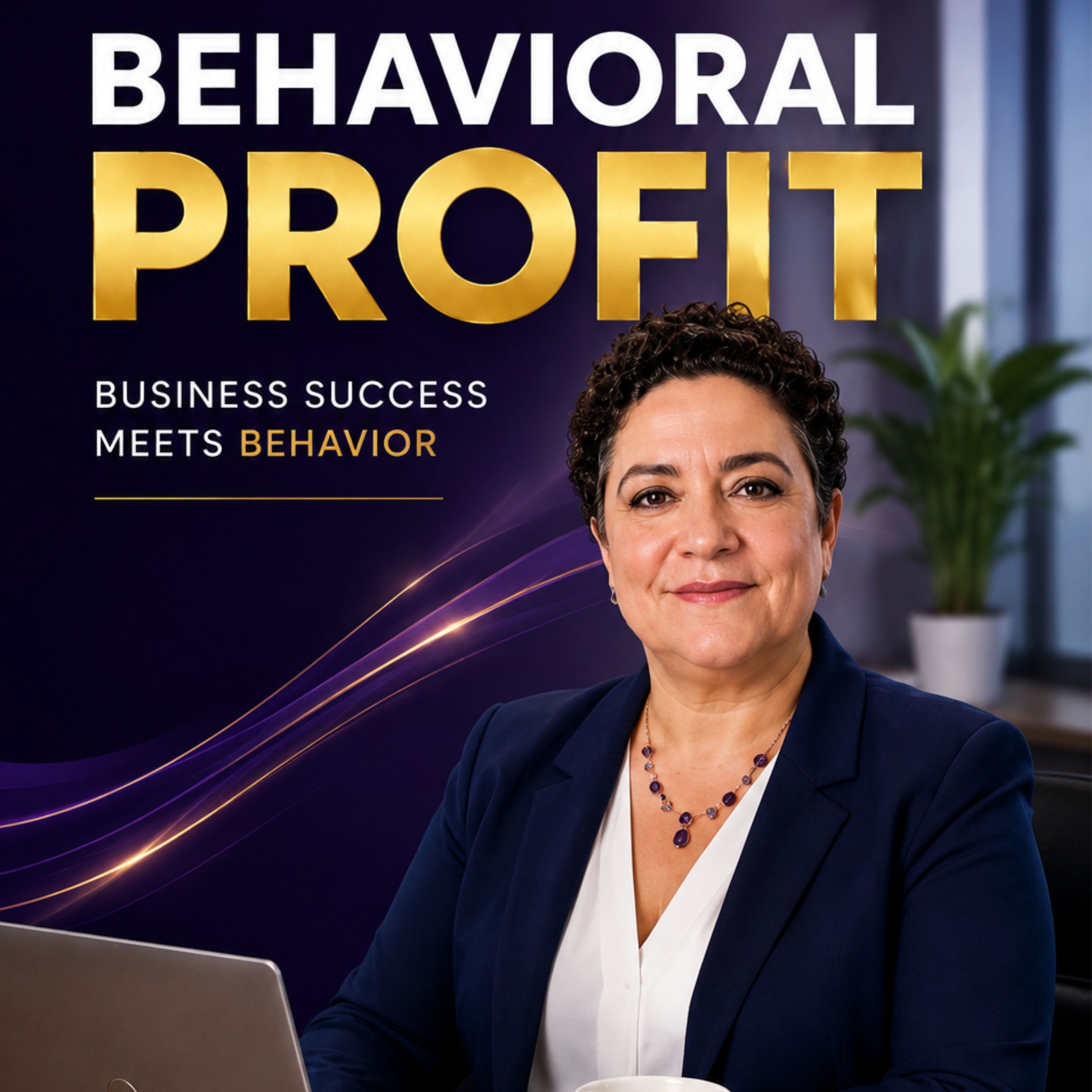
In this episode of Behavioral Profit, Debbie Longo sits down with Michael Dodsworth—founder and CEO of Fanfare, the platform engineered to rescue brands and fans from meltdown-prone product launches. After two decades battling midnight server crashes and scalper bots, Michael explains how he reverse-engineered Ticketmaster-style pain points into a “fair-play” system that rewards true loyalty instead of speed or spending power . We probe whether scarcity marketing genuinely deepens fandom or merely shifts profit to resellers, and Michael makes the case that transparent queues, data-driven VIP tiers, and under-market pricing create longer-term brand equity than gouging ever could . He also reveals how experiential commerce—think backstage-level perks or real-world pop-ups—turns a simple transaction into a memory that fans amplify for free on social media . Along the way we test the limits: Can legacy brands adopt sneaker-culture tactics without burning out their audience? Michael argues yes—if they curate halo products, respect supply-demand signals, and keep quality un-compromised . Whether you’re launching a new SaaS, a limited-edition tumbler, or the next stadium tour, this conversation shows how to turn hype into sustainable growth while keeping fans on your side.
Connect With
Debbie Longo
Executive Behavioral Coach
Connect with
Michael Dodsworth
fanfare founder & CEO
Coach
Welcome back to the behavioral profit, the podcast
where we decide. the human behaviors that turn
hype into measurable growth. I'm your host, Debbie
Longo, executive behavioral coach. Today's guest,
Michael Doddsworth, founder and CEO of Fanfare,
the platform fixing the chaos of high stakes
product launches. After two decades rescuing
brands and artists from midnight meltdowns, crash
servers, and bot infested queues, Michael built
a fair play system that delivers unforgettable
launches for fans and lawyers. loyalty -driven
growth for brands. Get ready for battle -tested
lessons from the front lines of high tech and
customer experience. Good afternoon, Michael.
Welcome to the show. Is there anything you would
like to add to that intro? No, that's great.
It's great to be here. Perfect. Thank you. So
I have a few topics. The first topic is how launch
disasters inspired fanfare and taught us exactly
what not to do. Absolutely. So the origin story
for me and for fanfare comes out of frustration
and it's frustration that I'm sure we've all
felt. So I came through the live events ticketing
space. The last company I was at was trying to
go up against the likes. of Ticketmaster, those
huge incumbents that we see who kind of have
a monopoly on live event ticketing. And one of
the things that really frustrated me with live
event ticketing is whenever you go to one of
these shows, it feels like you're paying a tax
every time you enter one of these processes.
We've all been there with our multiple tabs open,
staring at a spinner. You're in this queue for
four hours. Don't leave your desk. It's a terrible
consumer experience. And then the frustration
of seeing all of those tickets go on a secondary
site for 3x the price, 10x the price sometimes.
And having spent some time trying to address
that problem, understanding how painful it is
for a vendor like Ticketmaster to try and get
their arms around this problem. You have this
huge spike in traffic. You've created this huge
incentive for people to come in and try and scoop
up those tickets so they can sell them on a secondary
market. And that leads to this, this horrible
situation that we kind of all expect to happen
when we try and buy tickets for something, whenever
we try and get that scarce item, whether it's
a switch to, or the highly hyped item, like sneaker
drops, for example, you see this all the time
and it's, it's frustrating kind of here to tell
you there's a better way. There is definitely
a way of fixing this problem and doing it in
a way that's fair in a way that's transparent.
and a way that you can build up loyalty and fandom
for your brand and not frustrate your long suffering
customers sometimes. I think that a lot of times,
even for myself, because I've bought a lot of
tickets, all kinds of tickets, concert tickets,
show tickets, at Ticketmaster. And it was different
when I was going, when I was younger. We would
go to the actual venue and buy the tickets at
the venue So you wouldn't pay the fees to ticketmaster,
but obviously I don't think we could do that
now What I'm getting out of this is that a lot
of times and I know this I've recognized this
over the years as I've been going to shows and
different things is that there's layers to this.
So you have the band, then you have the venue
and then the employees that work for the band.
And then there's the setup of the show. And then
it is probably like 10 layers before it gets
to ticket master. And now ticket master now is
going to sell the tickets to the public. Everybody
is Crews involved in this this employees. So
everybody needs to get paid. And you see like
a lot of the Ticketmaster gets a bad reputation
for multiple reasons. But one of them is those
fees that we all see and understanding from the
other side of it. These aren't necessarily Ticketmaster
levied fees. These are from the promoter, from
the venue, from like Ticketmaster is taking is
the full guy for a lot of these. other parties
that are adding fees on top of it. So that's
definitely an issue with ticketing. And I think
that's something that transparency around those
different fees and where they're coming from,
who they're going to, I think would help with
that. And I think certainly just showing you
where those fees are and how they've been applied.
Definitely makes a big difference. I know they
used to be rolled in and you had no idea like
the tickets were just $300 and you would see
a convenience fee, which seemed very inconvenient
and things like that. But what we're really focused
is on is just the process that you go through
to try and get some of these things. The painful
multi -hour queue that you join to try and get
these things where you're just staring at a machine.
You can't leave your chair just in case you get
through and that feeling like You have been people
are coming in and they're grabbing tickets ahead
of you, even though you're a real fan of whoever
it is. And they're doing it through means that
are kind of nefarious. They've worked around
the system in some way. And Ticketmaster is just
is is allowing them through or is not protecting
the process as much as they should. And then
that causes all kinds of issues on the other
side. So absolutely seeing it from different
sides. I've definitely seen. The issues around
availability of tickets too, which is often venues
and teams will cede some of their tickets out
to brokers. So often you're competing over a
very small bucket of tickets where you think
the whole venue just went on sale. So surely
there's 50 ,000 tickets for that particular day.
And that's not true. Some of those tickets went
to other people to try and ease down the risk.
that the team is taking or the venue is taking
or the promoter is taking. So sometimes there's
a very small bucket of tickets actually left
when it goes on sale. Next topic is what we learn
trying to be Ticketmaster. Like I say, I don't
think Ticketmaster is high on anyone's list of
favorite companies. They generally don't do well
in those kind of surveys for good reason. But
I think what I learned through this process,
a company called Rival is It's a really hard
problem to get your arms around. There's all
kinds of different parties involved. Even ticketing
a simple sports event is incredibly complex.
And what we've seen with Ticketmaster is just
this kind of accumulation of debt, like organizational
debt, technical debt, and it means they can't
really move quickly in any particular direction.
And there's no real strong motivator for them
to do that either. Like I say, they have an enormous
chunk of the market. There's no real competitors
out there, even though they try. And that means
that they don't really have to innovate and they
don't have to move the products forward in any
way. So we were actually acquired right at the
start of the pandemic by Ticketmaster. And one
of the things that frustrated me through that
time is essentially all of the traffic is now
gone from your site. Like no one's buying tickets
to live events because all the live events have
shut down. now would be a perfect time to try
and take on some of these large chunks of debt
that you've accumulated over time, to make the
process better, to make the consumer experience
better, to try and make the platform better.
That's not what they invested in. That, for me,
was a frustrating moment. And that, for me, shows
that there's no real incentive for them to improve
things. And you really have to just kind of go
after them if you want to make any meaningful
improvement to that process. For me, it's about
a lot of times to trying to Get into read the
relation kind of of what you're saying. Are we
managing and using the resources that we have
for our business to their greatest ability and
using our brain instead of worrying about who's
going to get the deep pockets, what we're going
to get out of that to me, which is like greed,
money, power. So that might be hopefully similar
to what you're referring here. And also I was
talking a lot in my past podcast about the pandemic
and a recession. and different ways that businesses
were struggling and they went out of business
and stuff and they filed bankruptcy. It didn't
have to be like that because the mind controls
and we could use this in this situation. We could
use it any situation, but the mind controls what
I am going to do, what my next move is. And that
translates, it could be. one of the things into
behavior. It could be my thinking and negativity
and all these different things. There's a lot
of things that that it has to do with. But if
I have too many outside forces trying to take
over, trying to control my business, giving me
opinions, giving me advice, there are so many
different examples of this. I want to try to
limit that. I don't want that to get into my
head and involved in my business too much, because
then it becomes TMI, too much information. And
then it becomes information overload. And that
is gonna be a big problem. And then you're gonna
see that anything could happen and you don't
know what's gonna be next. And that's gonna be
a big problem. It can turn into that. I've worked
at a couple of large companies, a couple of small
companies, a couple of medium -sized companies.
And I think what I feel with incumbents, like
the people who have a good chunk of market share,
is large number of people, established products,
and a good understanding of the market. They
tend to be groupthink and incentives that, for
me, are not set up for trying to improve the
customer experience in many ways. there's some
protection of resources or there's some protection
of existing, like there's all kinds of things
that get folded in that are not really moving
anything forward in any way. In fact, there's
some risk aversion and desire to keep things
just as they are. So that's why I think smaller,
more nimble companies, if a customer has some
issue with fanfare, like I hear about it immediately,
I'm so close to the customers, they will just
jump on the call. and shout about whatever it
is is going wrong in that moment. But I also
hear the good sides, too. When you're a large
company like that, you're so far removed from
those customers that you can, I think, be disconnected
from their issues and their frustrations. And
that's, I think, not a good thing. Definitely
see that with more and more of these large incumbents
as they tend to ossify and not really move things
forward. So that's how I feel about. ticketmaster
to is I don't think there's any real strong incentive
to move things forward right now. And like I
say, it's a giant organization and they've just
built up all of this kind of organizational debt
that makes it hard for them to move in any direction.
The next topic is inside the high pressure world
of ticketing and how we built for the world's
most coveted events, the new rules of experimental
commerce. Yeah, I think. One of the things that
we always talked about Arrival was we talked
to some of the teams that we were working with.
It wasn't just about buying tickets or selling
tickets to fans. It was about crafting an experience.
You're going with your kids to watch a Dodgers
game. There's all kinds of things folded into
that. There's the Arrival. There's the actual
sitting down. There's maybe getting signed merch.
There's all kinds of things that you can fold
into that. And we wanted to explore things that
we could do. around enhancing that experience.
So if you go to a Dodgers game and there's a
ton of open seats in front of you, why not gift
people the ability to move forward? If you're
there with your kids, maybe you can go to some
exclusive area and show people around and have
an enhanced experience because of that. It doesn't
really cost anything for the team, but it definitely
makes those people more likely to be fans over
time. to really have a strong connection with
the brand, with the team, and to feel a little
bit more in those moments. So that's, I think,
what I want to explore with commerce is there
are things that are convenient, there are things
that we need, and then there are things that
we want. And we all have our things. Like I have
a bunch of mechanical keyboards behind me. Back
here, we all have our quirky little things that
we collect. that we're always online kind of
digging through and going down rabbit holes on.
And I think for those, I want to create experiences
more than I just want to sell a product. I want
to create a moment that people remember when
they go and they purchase something or they go
and they attend a drop in real life and they
feel something in a communal setting. So that's,
I think, where experiential commerce is going.
I think more and more people experiencing brands
in places like social media, right? They're going
to pop -ups. There's a place just around the
corner from me in LA, the mall where there's
a Chamberlain coffee place right next to a pot
mart. And both of those places have giant lines
always. It can be like six o 'clock at night
and there'll be a giant line of Gen Zers getting
coffee, which seems completely insane to me.
But like this is, people feel some draw. They're
fans of hers. They're fans. of the coffee place,
so they'll turn up and they'll make a moment
out of it. They'll post around it. So that's,
I think, an experience that people are gravitating
towards, but there's no real infrastructure to
help them with that. So that's where fanfare
comes in. What I was thinking of when you were
talking in the beginning was backstage passes.
Absolutely. What's more memorable than backstage
and being close to the artists, having them walk
past you like. I remember those moments. And
the same is true of Rita. I remember moments
when I was maybe 15 years old and going and getting
a limited edition of Super Metroid, I think it
was at the time. I remember unboxing it. I remember
just the feel of getting these things. I remember
all of those aspects because it was different.
It was limited. It was scarce. And it felt special
to me. I feel the opportunities there to create
more of these kind of lasting... moments and
you see some brands who are extremely good at
it, but it comes with some hazards. If you fail
in those moments, you cause massive frustration.
But that's the chance that you take. A lot of
times when you have a business, I think most
businesses, they want to try different things.
They're not going to do the same thing over and
over again for 100 years. So that's the chance
that you take. But my question or my comment
is, let's try to focus on more of the customer,
the fan, and how we can help them to benefit
from what the show is about and who is the star,
who is the singer of the band, whatever they
are showcasing. at the time. So maybe like if
I was doing this, looking at another side of
it or it could be similar side to what you're
saying, but what about thinking about the brand?
Like you said, whatever that is and how can we
improve that and also make the fans or the customers
happy. So they want to keep coming back and they
want to keep buying tickets and things, but they're
not feeling like they have to constantly pay
a lot of money. Whereas sometimes if a brand
or a band or something, they get more popular,
more famous, and then the ticket prices go up.
Who is benefiting from? I mean, to me, like,
it's common sense. If I'm paying more for whatever
that brand, it could be the paraphernalia, whatever
they're selling. If I'm paying more for that
or if they're being more successful, then it's
common sense that their prices, their prices
of everything are going to go up. But why does
that have to be? Because are we focusing on what
makes the fan happier? And how can they benefit
the most from buying shirts and accessories and
paying for the shows? And would they be happier
doing that? And also, or would you constantly
be raising your prices? And the other thing too
is... I hate to say this, but it's the class
of people. So if you keep raising your prices,
okay, I'm just gonna use this as one example,
raising prices. If you keep raising your prices,
then are you gonna be able to get the fan that
you had when the prices were lower or more sustainable
for a middle -class person? Or so now, if you
keep raising your prices, The upper class and
I don't really like we don't to me. We don't
really have like upper class and middle class
today. But the point is that I'm just using that
as a thing to say without the yeah. So the upper
class then is the only the way that that's the
only person that's going to be able to afford
that. Ticket, but then is that all that the brand
wants to attract? It's just the upper class then
now they have to make All this they have to change
everything that they're doing the quality in
order to satisfy The upper class so so now like
now they're gonna raise the price obviously So
are they gonna now shoot themselves in the foot
see this is what I'm saying. So this is kind
of like It makes sense, you know, because they'll
make a bunch of money in a short period of time.
It makes sense. But to me, it's not well, I don't
know, because I'm not I'm not running the company
or the business or whatever. But as far as the
consumer, right, or a fan or whatever, to me,
it makes more sense to stay, keep the prices
medium, because to me, the person that I get
is going to go by the price that the ticket costs.
because I even either have the money for whatever
the brand is selling or I don't. It's not like
a negotiation kind of thing. This is the price
and that's it. I think this is a really interesting
kind of behavioral aspect of live event sales
and just retail in general, which is if you have
scarcity and sometimes the scarcity is artificially
created. So you can get like a Birkin bag, for
example, like those super expensive luxury items.
They could produce more of them if they really
wanted to, but to have like a four or five year
waiting list creates a feeling of exclusivity
around that particular product. Or if you actually
have scarcity, like we can't have any more of
these artists, for example, like pick your favorite
artist. There's only a certain amount of ticket
dates that they can possibly do in a year. So
it's going to be naturally scarce. So then you
would say, well, Econ 101 would say you should
just try and increase the price. until people
stop purchasing. Right until you hit that where
you sell out and you've maximized revenue. But
then the problem is, as you've mentioned, you
anger all of your real fans who now can't get
those tickets because they're thousands of dollars
and they've been sold on the secondary market
and that's incredibly painful. And there's a
feeling, there's a backlash to that too. Like
artists will feel like their fans are frustrated.
with the artist because they can't go and see
them. So they try and strike a balance. And you'll
see this with if we take Taylor Swift, for example,
like the initial ticket sales, maybe few hundred
dollars. Everyone knows that those tickets are
going to go for thousands of dollars if they're
sold on the secondary. But there's a decision
to actually keep the price low enough that people
can go to these events. They're still more expensive
than they used to be. They're still very expensive.
but they're not market value by some margin.
You've created a huge incentive for someone to
buy them and sell them on secondary market. And
the same is true of products. I think Nike is
a good example here. Well, they'll sell products
and they'll keep price discipline. So they'll
have a drop for sneakers that are $200, $250.
And they know, based on the demand for those,
that they're going to go for 3x, 5x the price.
But they don't do that. And they don't try and
produce more of it so that they can maximize
how many people come through. They're trying
to create this feeling of exclusivity. And to
your point about just the middle class, the wealthy,
I think there is with this kind of model where
you're dropping things. And if you can really
try and reach the fans, like people who've listened
to an album multiple times should be moved forward
in line or people who failed five times to get
whatever it is. should be given exclusive access.
I think that's a way of keeping the price low,
making sure that people who are real fans feel
like they've been rewarded for their loyalty,
for their fandom. And they feel special because
they got something that most people didn't get.
And they didn't have to do that by spending like
10x the price. I see like more and more brands,
I think, build fandom around themselves by taking
on this kind of model. but then you get into
all of the headaches that come with it. So you
get into the headaches of like millions of people
show up all at once trying to get your things,
or people try and come in, work around the system
so they can sell it elsewhere. And that then
frustrates your fans. Like if you fall down in
one of those moments, you've frustrated everyone
involved. It's a really good model to try and
keep price discipline, reward people for their
time and effort and build loyalty over time.
But on the flip side of it, it does come with
some sharp edges that people need to be aware
of. Next topic is why product launches must evolve
beyond simple sales and how brands can create
unforgettable moments that last turning drops
into data. I think this goes back to this feeling
that there are there are things that we need
detergent socks, things that are really excite
anyone. They're just necessities that people
have to just Get every now and again. And then
there's the things that people want and the things
that we go after things that we kind of lost
after that we see wherever it is, we see them.
And the process right now for both of those things
is roughly the same. You go to a product page
and kind of looks like one of those old catalogs.
I remember way back when you would kind of browse
to your product. He would see an image and that's
the same for. when you're shopping for convenience
or when you're shopping for something that you
really care about and lust after. And I don't
think that that has to be true. I think when
you have things or you're able to create things
that people really want, then there's a way of
reaching them through an experience. Like whether
it's a pop -up, whether it's an in real life
drop where you have a whole community of people
come together to launch that product, or whether
you do something online where you maybe you bring
in a celebrity or an influencer or the artist
or creator that made the product to come and
talk to you about the product, to do something
that's a step above or many steps above, I think,
the convenience -based shopping they're all kind
of used to. So that's, I think, what we're trying
to move towards is this feeling of creating an
event around a product launch or product drop
or a restock even, things that really should
be exciting because I think these are things
that people really care about. And I think you
can really tap into that if you spend some extra
time and effort in crafting a launch experience
like that. What I always think of is these things
that you're saying are very general, which is
fine. Well, the first thing that we've been talking
about is the finances and how are they going
to get there? What are they going to do? How
are they going to do it? We have to pay salaries
to all these different people, all these different
things. And when I do coaching also, this is
one of the things I focus on a lot. What sets
me apart from everybody else? What am I doing?
I need to do something or several things that
are original. So if I have a brand... How many
brands are there even like just like detergent?
You know how many like I go to the store and
I'm like overwhelmed like there's a whole section
of just like one kind of detergent like it's
like ridiculous. And I don't know which one to
pick. I personally do because I use the same
name brands all the time. And that's just how
I am because I know that it's effective. But
there's a lot of different ones. So let's say
somebody wants to try something new and you could
use this scenario and what we're talking about
with any brand. Let's say somebody wants to try
something new. So or you want somebody, you know,
there's a lot of brands in that category. You
want them to buy your brand. What sets you apart?
What are you going to do that's going to make
yourself stand out that they are going to say,
I am going to buy this instead of everything
else? Well, the first thing I could think of
is marketing. That's the most common sense thing.
You pay somebody for marketing a lot of money
and then they figure out Because the more money
you pay the more marketing you're gonna get the
best quality and Then they figure out that how
was people gonna get I'm gonna buy your product
above everybody else's to me. That's their job
That's the first thing that I could think of
but that's the first as far as a business end.
But what is the customer? I'm focusing on the
customer and how they can benefit and what they're
going to get for their money and what's going
to make them truly happy. Not happy where you're
going to say, oh, I'm going to suck you in to
buying this product and it's all going to be
lies. OK, and we're going to stretch the truth.
And then when you buy it, you're going to see
eventually, not the first time. So you'll buy
it a lot of times. And then eventually you'll
figure out that this was not worth your money.
And meanwhile, you spent a whole bunch of money
on this thing. So I don't want to scam my customers.
I want to be true and genuine. And I want to
do it in a way where I'm not being overpriced,
but they're getting more for the same amount
of money than they would have bought better quality.
And this is all really not only is going to raise
the prices of the thing, because this now adds
different layers, because then you have quality
control and now everything has to be more advanced
than different things. So this adds a lot of
layers. So the person who pays that is the consumer,
right, is the the person who pays for the product.
So this is what I'm saying. So can I make it
genuine where the person knows that they're going
to get whatever you're increasing, whether it's
quality or advertising or the brand name, whatever
it is that you're trying to make better. So you
could set yourself apart from everybody else
where the customer is going to benefit the company,
not only the brand. So they could grow their
brand and then overpriced somebody else and then
start that process all over again. I mean, we've
definitely had brands where they treat these
launches as marketing opportunities in the run.
So when people buy a product, they unbox it.
They show how how high quality they are or like
how they paid a lower value for that product
because everything that comes along with it.
the anticipation, the posts around it, that's
all marketing spend that they didn't have to
make because like the fan, the customer is advocating
for the brand. So I think that's a really amazing
model. And I think back to like the Nikes of
the world where, like I say, that the products
that they're selling could go for two, three
X the price, if it was sold on secondary, they
deliberately underpriced them versus like the
market price just so people will feel that allure
the next time they come in. So I do see brands
using these as more than just selling an item,
and they're folding in marketing into that experience.
So if we can bring in loyal fans who love the
brand, who are going to advocate for the brand
and going to show everyone how amazing this product
is, like they paid X amount for it. but it clearly
looks like more than that. I think that's the
way that you can launch these products and you
can under price things because you're getting
more than just the value of that top line revenue.
You're also getting a loyal fan over time or
you're bringing more people in because this person
is talking about it with their friends, their
family and so on. So I think that's also an interesting
aspect of this is like seeing it more than just
You're selling N number of a product for X. This
is like an event for your brand to try and bring
more people in, to try and like elevate. And
I think treating your customers properly and
making sure that the items are high quality,
making sure the experience is high quality is
really key to that. Because people are not going
to advocate for your product if they fall apart
the second you open the box. If you frustrate
people in any way when you've built an audience
around this. product. So I think it's really
important that you do like keep the quality high
and keep the price low. And like I said, I think
this model is a good candidate for that just
because it has these aspects kind of rolled into
it. Next topic is how brands can stop losing
launch insights and start capturing actionable
loyalty driving data instead. Yeah, I think this
gets back to like actually trying to find out
who your loyal fans are. so that you can bring
them forward into like a limited experience just
for them, or you can move them forward in line
and make them feel special and make them feel
that their fandom and their loyalty has been
rewarded. So that's definitely something that
we're trying to do is trying to identify who
these people are, not just the people who maybe
paid a little bit more or like actually got through
because they were lucky in that moment, but the
people who failed. i don't know how many times
i failed in a sneaker drop many many times and
brands not knowing that i tried and i spent hours
engage with the brand but i'm just unlucky that's
a really important signal and i think if you
can reach those people if you can try and give
them something that rewards their time and effort
even though they're just unlucky in that moment
is really really important so That's what I say.
Like there's a lot of signal that's just lost
through these experiences. There's a really good
example from a drop that happened a couple of
years ago with 3 .6 million people showed up
for a draw where they had 50 ,000 of the item.
So only learning about those 50 ,000 people who
were successful and like missing out on the millions
of people that weren't is a huge mess. Like that's
really important information that those are potential
VIPs. those are potential fans of your brand
and you have no idea who they are or why they
attended and if they're going to keep attending
like those kind of things we want to capture
so that's trying to make sure that we try and
identify fans and that then brands can do things
for those fans that keep them loyal keep them
fans of the brand for as long as possible thank
you so what i'm thinking about is If I am lucky
and I get the tickets for whatever show it is
and I'm successful with getting whatever it is
for the brands, then I'm going to be a loyal
customer. But if I am unlucky and I've never
gotten anything, any promo or whatever it is
that they have, then I'm not going to be helping
the brand benefit from me because I've never
won anything or anything. So I don't have the
experience of doing the things, being a fan and
everything that goes with that, buying the everything
that they have or whatever. So therefore I might
not be as worth something if I've never gotten
tickets or I've never bought anything to the
brand, to the company. I might not be worth anything
because the person that keeps winning and getting
lucky, right, is the person that's constantly
buying stuff so they're gonna buy again. Obviously,
because if they bought a ticket to something
and you go to the venue, let's just say for an
example, right? They're going to buy a shirt.
They're going to buy this and that whatever is
there. But if I've never had that experience
and I was unlucky a lot of times, then I could
be potentially. not a good enough quality fan
for them to constantly be selling tickets to.
OK, I don't know if somebody like that would
really be able to really showcase the brand because
they're just a one time fan. So that's kind of
what I think about because I'm thinking about
how are they going to benefit most from me? even
though I don't want that to be, but to me it's
just the reality of the way it's done business.
Yeah. I think if you listen to an artist, if
you've been a fan of that artist for a long time,
like maybe this is the first time you want to
come in and buy tickets to see whoever it is,
it would be nice if my fandom over time was rewarded
in some way. Like there's some way of connecting
those dots that get me in and make me lucky that
first time. But you see people who, I guess sneaker
heads are a good example of people who attend
these things fairly frequently. And over time,
what ends up happening is you go through those
experiences again and again with different brands
and you feel like you attend, you fail. You see
those things immediately go over to secondary
market and getting sold by people who've just
kind of scooped up all of the available inventory.
And you keep doing that. You keep going back,
you keep failing. Eventually, even if you're
a fan of that brand, you're going to be lost
because it's just a frustrating experience. And
I feel like I'm been treated poorly by the brand.
Like they're not rewarding me for anything. Like
I'm spending all of this time with them and they're
just rewarding the people who can jump in the
quickest or who are willing to pay for those
farms of bots to go in and grab those products.
So that's what we want to avoid. Like the people
who Do spend time and effort with the brand.
Like there's incredible information in there.
So we want to make sure that things aren't just
been scooped up by people who don't care for
the brand, right? Who don't care about going
to see that artist. They just want to sell the
tickets elsewhere. We want to get these into
the hands of real people who were real fans of
that product or of that artist. But we also want
to make sure that people feel like they've been
treated with, with some respect. You spend three
hours in a line for something, and I get nothing.
Like, I realize this may be oversubscribed. It's
a scarce thing. I realize that I can't go see
Taylor Swift every day. I realize that everyone
else wants to see these shows too. But I should
feel like my time is worth something. That you
can maybe move me forward for the next tour or
the next date that's coming up. because I spent
so much time with the brand. So for, yeah, I
think identifying fans is tricky, especially
if you, your fans in all kinds of different places.
We definitely saw an attempt at this. I think
at the tour that Taylor Swift did, you could
go and you could buy copies of her album and
things like that and demonstrate that you were
a fan in that way. But like that feels like gouging
too, because now you're expecting people to go
and purchase something like 13 of a thing. I
think it was would maximize your chances of getting
through. Like, why not just tap into like, I've
been listening to this fat, this size for a long,
long time. Like, that's really important information.
It's not easily falsifiable information to like,
maybe it's going to a particular place or like
having gone to a particular place in the past.
Like those may be useful information, pieces
of information that we can use. So yeah, I think
identifying fans. identifying bad actors, removing
them from the processes and then allowing brands
and artists to to treat their fans properly.
Next topic is what legacy brands can learn from
sneaker culture, streetwear mastered by scarcity,
loyalty and hype lessons every traditional brand
should borrow. Yeah, I think you see this more
and more with brands in different categories,
too. So Stanley is a good example. If you remember
the last couple of years. the quencher, the tumble,
like everyone was scrambling to get these things.
And it was a very deliberate process that Stanley
went through to get there. They hired someone
from Crocs on their marketing side, and they
went after this kind of approach of tapping into
viral moments that are created around this brand.
So it was very carefully done. It was very deliberate.
When you get there, if you can create that virality
around your products, like we saw with Stanley,
they tripled their revenue every year for the
last three years, like incredible growth of a
very established brand. So it's a really powerful
model. Like I say, it allows you to create a
communal feeling around your brand. It allows
you to create fandom, but you need to be careful
to treat people properly through that process.
So you don't want to create frustration. You
don't want to overdo it too. You don't want to
sell everything through a drop. You want to be
like picking halo products, like things that
you want to create some allure around, right?
You want to create an incentive for people to
go in there and maybe they get their products.
Maybe they don't, but they're aware of the brand
now. They'll go and navigate through your catalog
and see what else you sell. So it's a really
interesting process. It's a really interesting
model. And it's something that Supreme, like
streetwear brands have been doing for a while
and have been incredibly successful at. Like
Supreme, for example, like pretty much anything
that you used to slap a Supreme logo on would
sell out immediately. And like I say, there's
a lot of brands now that are using this model.
There's a cookie place in LA that sells exclusively
through Drops. So at 9 a .m. on a Monday morning,
the notification will go out and everyone knows
to pile into their website to try and get this
kind of box of exclusive, fancy looking cookies.
And they sell out instantly. And like they created
like a community of people who will post about
this stuff and like will share the cookies that
they got that week. So it's a really amazing
model if you can tap into it. And I think More
and more brands are trying to reach for it, but
they're realizing it comes with some, like I
say, sharp edges around running a process like
that is definitely not for the faint hearted.
And you're kind of taking on a lot of risk and
as much as we can do to try and allow brands
to mitigate that risk and make sure that their
customers are treated properly through a process.
The more we can do, the better I think. Like
I'm a fan of all of these different brands and
I've felt frustrated. And it's always been that
feeling of why is it still like this? We can
do better than this. We don't have to camp outside
a store overnight to try and get this product.
That seems like a painful process that people
go through and they really don't. So that's what
we're aiming at here with Fanfare. That's what
I used to do with concert tickets. We would stay
online. Overnight we would sleep there on the
line because you get it from I don't even know
if the ticket places existed I have no idea but
you would get it from the from the venue where
it was and that was just how we did it they probably
Existed but it was cheaper just to get it from
the venue. I know you can't do it that way anymore,
but So it's this is all very interesting. So
the last topic is behind the scenes of high stakes
product drops and how to win real talk and practical
advice from the front line of today's most demanding
product launches. Yeah, I think the brands that
we've seen succeed with this model are very thoughtful
about why they're doing it, which products they're
targeting for this. It's not just we have a bunch
of stuff in the warehouse. We're just going to
try something and throw this out there. It's
thinking about this as a campaign around building
some particular audience. Maybe it's a change
in demographic you're going through, or maybe
it's a certain group of people that you want
to reach. Think about what products make sense
to that group. Make sure that you're pricing
them probably under market value so you're creating
some exclusivity or creating this feeling like
people are getting something. because they're
going through a process rather than just spending
an enormous amount of money on a product. And
then just trying to understand what the level
of demand is so that you can create that scarcity.
Because if you sell through every time, if it's
very easy to get a product, and you've deliberately
decided that you want to create some mystique
around a product, you're not going to do it if
it just sells through immediately. So thinking
about how much of a particular product, maybe
you do a small batch first. and see how things
go. I think understanding how people are engaging
with you through that whole process, like you
announced something, you maybe message people
who are your fans, like you message your VIPs,
like how are they engaging with you over time?
And then using that to drive those decisions
around that particular launch. So I would say
definitely be deliberate. It's not like some
of these things go viral and it feels like an
accident. For brands, it's not an accident. They
usually prepare for these things. Even if they
just tap into a viral moment, they're kind of
ready with things to go. Certainly was the case
with Stanley. So that's how I would think about
these kind of experiences. Yes, that was good.
Thank you. So I'm thinking about a few things.
And one of the ones that I think is very important
is how to get the most out of my fans and potential
fans. And how do I keep them? And what is that
really worth to me? So you're giving the example
of the drops. So what are they? How are they
going to benefit the fan? Are they good quality,
high quality? Do they match the brand? And I'm
sure these things are what they consider before
they do these drops. as an example, but am I
going to benefit truly by buying something on
this drop? I am a fan. Am I going to benefit
truly from this product that I'm buying or am
I just buying it because it's a drop and I am
expected to buy it from the company, from the
brands? And then if I buy it, I'll be on a list.
And then I'll be able to get notified and then
get another one, get another one from another
drop. And that's part of the company's control.
That's not the consumer. That's a part because
the company is the one that the brand is the
one that arranges all this. So how is it going
to truly benefit the consumer, the fan? Is it
going to benefit them? for the company's sake
because they just like it for two seconds and
then they know that they have to go buy another
one or is it going to truly benefit the fan where
they know that they could get something out of
it so it's going to be more like a like than
a want which is maybe not that easy to really
think about or really consider for a company
because I mean, to me, how many T -shirts can
you have? How many paraphernalia and different
things, accessories that the brands are selling?
How many can you have? I buy a lot of this type
of stuff and I collect it just because I like
it. It means something to me because I collect
it. But that's just me. But that's what I'm saying.
Can they really think about as the brand just
thinking about if they're going to do this for
a marketing standpoint and then they're going
to say, well, we're going to get the fan or the
consumer to buy these things just because they
know that they're going to get notified again
so they could buy something else. And maybe they
like that. Maybe the fan likes that. Maybe they
feel important, but who is it benefiting more?
Is it benefiting the fan or the consumer more
or is it benefiting the company more? So therefore
they can increase their fans and the company
can make more and more money. I think you see
this where brands will burn themselves out with
a model like you create intrigue, but your product
isn't up to the mark. People get excited about
those. You maybe overdo it and then you just
lose lose your fan base. People won't stay fans
of your products for very long if they're trash.
But I think you mentioned like, how many t -shirts
do I really need? And you buy things and collect
things. So I have like sneakers in my closet
that they get maybe a walk out every like twice
a year or something. But I'm going to keep those
for a very long time. I'm going to treat them
properly. I'm going to care for them. And these
are not things I just buy and immediately throw
out. These mean something. And they mean something
because I can find the brand. The brand has created
some feeling of scarcity around these products.
If I walk out with these particular pairs, because
the people who know, they know, they'll identify
them. There's some intangible benefit for the
fans, for the people buying these things around
those products. And I much prefer that. I love
the collectibles. because these are things that
you do just keep around. Like I say, I have a
bunch of keyboards back there that I'm clearly
not using, but they're out. They're there just
in case I fancy one day of picking up and using
it. There's intangible benefits to these products.
And that comes with fandom and that comes with
this kind of feeling around like high quality
as well as like a community feeling around that
particular brand or that particular category
of products, for example. So I think there's
For sure, there are brands who get a viral moment
and they'll just try and capitalize on that by
just throwing out products that are subpar. That's
not a good long -term strategy because you will
lose those fans. Those people who are highly
engaged with the brand, they will post this stuff.
Their frustrations are the products. You will
hear about it and you have more and more ways
that your brand can be and feel that frustration.
than ever before. People will go immediately
over to wherever it is they go, like Instagram,
for example, and you will hear about that. And
we definitely see brands go through that pain
where they maybe overshoot, they get a lot of
interest, they start really producing things
that maybe aren't in line with what the fan wants,
and they lose them. So you very much need to
make sure that you keep the fans happy, both
through the experience and through the product.
But I think you are creating like lasting products,
like people who maybe they only have a few t
-shirts from that particular brand, but they're
special and they're treated as such. Yeah, it's
more like the intangibles of of of this than
it is sometimes the tangible things that you
can touch and feel and experience. But it's definitely
meaningful for fans, I think. Yeah, that makes
sense. So I collect baseball caps. That's one
of the things that I like to collect. So. If
a sports team wins, then I buy the baseball cap
for that team. But I don't wear those because
I don't want to wear them out. So the baseball
caps I have, I wear, but not the ones that I
buy as a collectible, not the ones that really
mean something to me. I don't wear those. But
that's just me. Everybody, I'm sure, does things
differently for all different reasons. That was
good. The show is coming to a close. Would you
like to say anything in closing? Just if you
are a brand, if you're a marketer and you feel
like you want to reach for this kind of model,
if you're interested in drops and we have Black
Friday, Cyber Monday coming up, if you felt that
pain going through an experience like that, please
reach out. You can find me at fanfare .io. Always
happy to talk about this stuff. And I feel like
this is pain that everyone has felt. So if we
can help people avoid that pain, both brands
and consumers, we're here to help. Thank you.
And what about social media? Do you have any
connections with social media at all? Yeah, you
can find me on LinkedIn is probably the place
to reach me. We do have an Instagram presence
that we're pushing on. But for the moment, like
LinkedIn is the place to find me. And please
feel free to reach out. I'm always on there.
for my sins, so happy to connect with people
and chat. Thank you very much. And we will put
all the contact information on the show's information,
too. So thank you very much for being on the
show. I really appreciate it. Thank you. It's
great to be here.