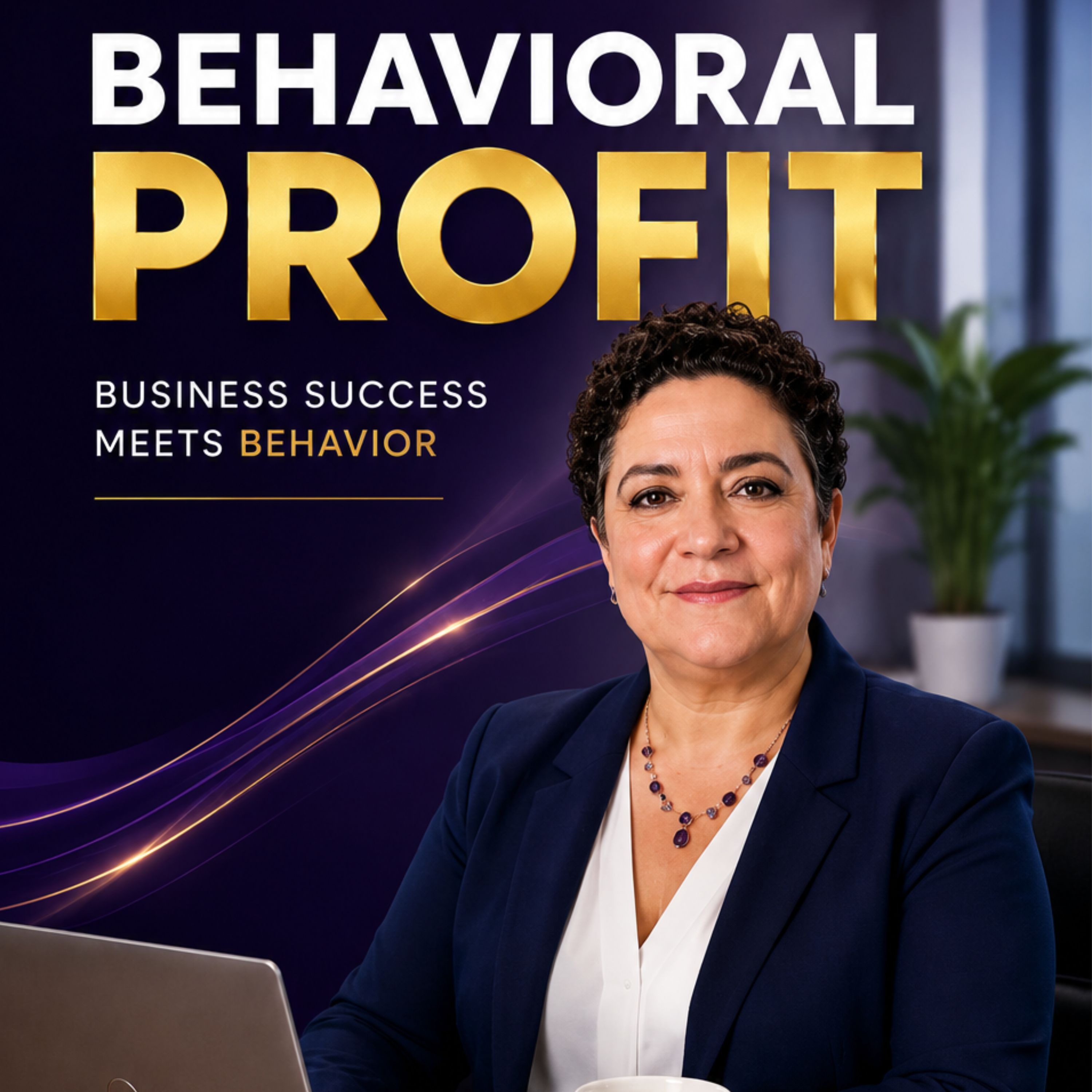
In this episode of Behavioral Profit, Debbie Longo speaks with Haren Bhakta about business failure, leadership behavior, investment management, company culture, and the lessons that came from losing a business during COVID.
Haren shares how he left Morgan Stanley to start his own investment fund focused on micro-cap companies. After investing heavily into a Las Vegas ticketing company and joining its board, he believed he could help improve operations, leadership, and business performance. However, when COVID shut down the Las Vegas entertainment industry, the company eventually went bankrupt.
Throughout the conversation, Haren explains that the company’s collapse was not caused solely by COVID. He describes how poor leadership decisions, excessive legal spending, lack of preparation, weak communication, and failure to modernize the business created deeper behavioral and operational problems long before the pandemic happened.
One major issue was that the company relied entirely on physical ticket kiosks on the Las Vegas Strip and failed to build an online ticket-selling platform despite changing consumer behavior. Haren also explains how disconnected leadership became from employees and how poor internal behavior created long-term instability inside the business.
Despite the financial loss and stress, Haren explains how the experience ultimately led him to create his new company, Inside Ownership Index. The failure forced him to rethink investing, leadership, and long-term business strategy. Instead of trying to “fix” struggling companies, he shifted toward investing alongside successful leaders and creating a lower-cost investment model designed to benefit individual investors more directly.
Debbie and Haren also discuss Warren Buffett, Kodak, business pivots, organizational behavior, company culture, risk management, and how many businesses fail because they continue investing energy into systems and behaviors that are no longer working. The conversation reinforces that business problems are often behavioral problems first, and that leadership decisions directly impact company survival and profitability.
This episode explores leadership, business behavior, resilience, failure, investment strategy, organizational culture, decision-making, risk management, company growth, and the importance of adapting before problems become irreversible. It reinforces the idea that failure itself is not always the end — sometimes it becomes the foundation for building something stronger and more aligned long term.
Contact Debbie Longo, Executive Behavioral Coach:
Website: https://www.debbielongo.com/
Email: debbie@lifeinbloomny.net
LinkedIn: https://www.linkedin.com/in/debbie-longo-life-in-bloom-ny/
Facebook: https://www.facebook.com/debbie.longo.2025
Instagram: https://www.instagram.com/debbie.life.in.bloom.ny/?hl=en
Contact Haren Bhakta:
LinkedIn: https://www.linkedin.com/in/harenbhakta/
Email: haren@insideownership.com
Hi, I'm Debbie Longo, Transformational Coach,
and welcome to The Behavioral Profit. This show
is about one thing. why businesses don't perform
the way they should. Most leaders think they
have a strategy problem, but they don't. It's
behavioral. It's how decisions are made, how
pressure is handled, and how people operate inside
the business day to day. On this show, we break
down what's really driving missed targets, stalled
growth, and poor execution, and what shifts when
behavior changes. Because when behavior changes,
performance improves, and that's where profit
comes from. We have a very special guest today,
Haran Bakhtar, and we're going to take a closer
look at what's really going on. inside his business,
what's working and what's not, and where behavior
may be impacting performance. Let's get into
a good afternoon and welcome to the show. Thank
you for having me on. Thank you for being on.
I'm going to ask you today to give an example
or a situation that you personally have experienced
in a business someplace where you worked or some
type of experience that you've had in a business.
the process of what happened during the change
of this situation and then the end result is
the positive result or something that happened
where basically you went. from a negative to
a positive. That's really what we're trying to
do here. Because believe it or not, people's
situations and scenarios are very, very, very
similar. So there's a good chance that a listener
is listening to this and has been through the
example that you're gonna give or any part of
it. And they wanna know how they can get. through
this without losing sales and profits, losing
employees, making their business go bankrupt,
because any business can get through any problem
situation scenario that it's going through now.
And it doesn't have to fail. It doesn't have
to continue that negative path or negative behavior.
And when we explain about the process, I'm just
going to ask you to be as detailed as possible
as you want to, whatever, it's fine. But when
we explain about that, we're showing a basic
path to get from one place to another, basically.
So in this situation, it's basically going from
negative to positive, which is pretty much what
we're describing here in a nutshell. And when
we do that, we're not only showing that the person
can get out of it, like I just said, Inadvertently,
the person's going to have a happier life, the
individual, the business owner, right, is really
the person that we're talking about here. They're
going to have a happier life. And the ultimate
goal to all of this behavior change and everything
that we're going to talk about, the ultimate
goal is to increase sales and profits for the
business, because if the business doesn't make
money, it can't function. That's basically the
bottom line, you know. So that's really what
the goal is here. But we do this by changing
behavior, by going through a process. And that
will take us from one place to another. Does
that make sense? Absolutely. Does it make sense
to the listener? I hope so. If you could do that
for me, I would appreciate it. I've spent my
whole career in investing management and I'm
a big Warren Buffett follower. And he talks about
behavior is the number one driver. for investment
results. It's not how much you know, it's not
how smart you are, it's not how good at math
you are, but it's behavior. So you mentioned
where I had some failure and it resulted in some
success. I've had some major, major failure.
In 2017, I was at Morgan Stanley doing wealth
management and I left Morgan Stanley to start
my own little fund. investing in tiny what's
called micro cap companies. And I invested a
big amount in a tiny little company in Las Vegas
that sells show tickets. It was a publicly traded
company. So I acquired 5 % of this company and
thought I could inflict some positive change
because they were kind of struggling. And I just
saw something that maybe I could fix. So I bought
5 % of the company and fought. to get on the
board, which I did. By 2019, I got on the board
of this company, thought I could make some positive
changes. In 2020, COVID happened. The entire
show business in Las Vegas shut down. And that
was 100 % of their business was selling show
tickets on a strip of Las Vegas. It really shouldn't
have been a public company, but it was. And when
the show market shut down, that was one of the
most stressful times of my life. I put a big
amount of money and I got investors to put in
money as well. And it ultimately went bankrupt
by 2022. It went bankrupt and me and a group
of investors bought this company out of bankruptcy.
And we took over in 2022 completely. So I even
moved to Vegas for a couple months just to kind
of see it through, bring it back up to speed
once the show market kind of started again. But
it was very difficult. It was very difficult
of a business to revive. And we ended up selling
it to a show producer in 2023. But that whole
lesson taught me something very valuable. And
it's what led to the creation of my new company
Inside Ownership Index. So by having that failure,
I would have never for one thought of the idea
of the ownership index. And the ownership index
is largely a passive index where I no longer
have to pick stocks anymore. Everyone kind of
understands this, where the S &P 500 and other
index funds are probably the best way to invest
for most people. So this is what I figured out.
And I'm now betting on leaders of organizations
that are already successful. So by having that
failure, I probably would have never thought
of this idea in the first place of betting on
successful leaders and passively investing alongside
them. Yeah, that was very good. Thank you. And
I think that's an excellent example. because
I have a lot of stories about this and a lot
of examples of COVID. I used to live in the North
in the United States, but I don't live there
anymore. I live in the South now. Not for that
reason, for other reasons. But I always say that,
and one of the reasons why I really got into
the business side of this business coaching was
because of COVID, because people thought that
they went bankrupt because of COVID. Now, sometimes,
and this is another big lesson that people learn,
which is exactly what you said, sometimes people
have to go through something, a loss, a money
loss, a loss of a person, any type of thing like
that, or something traumatic, and that brings
them to the other side of something else that's
meant for them to happen. Now, sometimes that
thing that was meant to happen was always there
knocking at their door, but they just chose to
do something else instead. And that's fine because
that's just part of their process. It's not right
or wrong just the way it is. I don't know if
that was your situation. But the point is that.
The there's no such thing as a bad thing that
happens. There's no such thing as a negative
thing. There's no such thing as a traumatic experience.
That's a feeling. Yeah, it's hard to say that
when you're actually in it. But no, I get your
point. And it was that failure that really allowed
for the success of my new company. So, yeah,
no, it's definitely a learning curve. And that's
the thing. You can't see it. Some people can,
but most of the time you can't see it until you're
out of it. That's the thing. But here's the thing
with that. Maybe I might learn from that. And
the next time this happens, maybe I might be
a little bit more aware or just aware of my surroundings
or maybe not, because things are really meant
to happen in a certain for a certain reason.
So sometimes people lose money. It's like the
end of the world. but if they come out the other
side and they do something else and Eventually
they get that money back or make a big investment
where they wind up getting twice as much money
back Then it really did work out but sometimes
people just do well on the past and say, I lost
this money, this happened, this business went
down. And there are so many, there's tons of
examples like this. Tons, because there were
so many businesses affected by COVID. So now
here's my question to you, okay? If... the business
had a different attitude and behavior, would
that company have went out of business or was
it solely because they lost all of their customers
and clients because of COVID? No, 100%. It actually
had nothing to do with COVID. It had to do with
much deeper problems than that. And so when I,
this was a $6 million company when I basically
started buying their stock and and ultimately
got on the board. I mean, for a $6 million company
to be public, these are tiny, tiny penny stock
companies. And I went through the last 20 years
of their filings and they probably, for a $6
million company, they probably spent about 18
to $20 million in legal expenses. This is before
I got involved. So you're talking about a company
that spent, for a $6 million company spending
$18 million in legal expenses. So this company
had a terrible behavior problem. So it didn't
go bankrupt because of COVID. It went because
they were spending money on just the wrong things.
And let me add that this is a business of selling
show tickets on the strip of Las Vegas through
kiosks. They didn't sell show tickets online.
Can you believe that? This was 2017 and 18 when
I started getting involved. And this is the opportunity
I saw to, okay, it's a no brainer. This company
is spending all this money on legal expenses,
not selling show tickets online. I thought this
was a no brainer for me to get involved and inflict
these changes. Let's just stop spending money
on these dumb things and invest in on a website
and a mobile platform to sell show tickets. So
had the company behaved much better, it would
have had a cash reserve to weather the storm
of COVID and it didn't. And that was the problem.
So it was completely a behavior problem. They
just didn't prepare. And the weird thing is,
the funny thing is, they experienced a similar
thing to this in the past. So when 9 -11 happened
in 2001, it wasn't shut down, but it was a ghost
town. People were not traveling. And also, I
think it was in 2018, there was a shooting on
the strip of Las Vegas, and that affected foot
traffic on the strip of Las Vegas big time for
a while. So the point is that the company needs
to, when you have a business that's tied to like
one region, doing one thing, you kind of have
to prepare for the unexpected Black Swan type
events. And they were just unprepared. And by
the time I got involved, I got on the board and
I didn't have control, but I got on the board
in October of 2019. by March the following year,
COVID happened. So it was just too late to really
inflict any kind of change that could have helped
the company. Yeah, yeah. So this company clearly
had some type of mismanagement problem or problems,
and they probably maybe could have did a lot
better in revenue if they sold tickets online.
Why they didn't do that, we don't know. because
people are someplace and then they travel to
Las Vegas. You know, most people don't live there.
So it's, you know what I mean? It kind of makes
sense, right? To buy something online. I mean,
I went there. Yeah. And I went deep in my research.
So we're talking about a company that had maybe
30 employees. And I went to those kiosks, asked
the employees, like, have they ever met upper
management? And for a 30 person employer company,
these employees have never met, some of them
have never met upper management. So for a 30
person company, everyone should know each other,
especially for a type of business like that.
And so I just saw a lot of opportunity that I
thought I could fix. And I just never really
got the chance to kind of just lost my money
before, before I got to inflict those type of
changes. And yeah, so that that was just one
of the most stressful times in my life. And yeah,
it's quite difficult. And it worked out. I mean,
I don't know about everybody else. In terms of
me coming up with this company through that failure.
Yeah. So that. And this is the story that we're
talking about, because this is basically going
from negative to positive. And this is not a
situation that you just witnessed. This is something
that you partly owned. So this was like a big
thing for you, because hopefully now through
your business now and whatever you're doing now,
you've reaped a lot of rewards from that. And
hopefully that money didn't really matter too
much now. Of course, losing money is not always
a good thing. But the point is that things happen
for reasons. And I can't always think about I
invest money and then I lose money. So I'm going
to go and invest money or make a company or whatever
and just focus on that. Things happen for reasons.
And why do things happen? And was this something
negative that happened that triggered something
good? for me to do things, different things like
that, because COVID helped a lot of people. I
hate to say it, but it's true in tons of ways,
tons of ways. So COVID had a positive outcome
in so many ways. But here's the thing, people
had to die because of it. Companies had to go
bankrupt. Companies had all kinds of problems
because of it. So there was a lot of stuff that
had to happen. in order for tons of people to
change and learn lessons and all that stuff.
And I hate to say it that way, but it's really
true. I mean, I started my business. One of the
big reasons was because of COVID, because companies
were going out of business because I'm a life
coach also. I'm not promoting myself because
that's not what this is about. But the point
is that this was a very good thing that you did.
And like I said, the result was very good. So
how do you feel right now the second with your
new business and everything that happened in
the past and basically everything we just talked
about in this podcast. How do you feel from all
this? What's the end result? I never envisioned
that would have this something I believe in and
love as much as I do with this new company that
I've created. And it just feels so good to have
something that I love with all my heart and soul.
And with every fiber of my body, I just believe
in that. For one, I know I'm doing good for people
because how many financial advisors and money
managers kind of remove money from the system
by charging high fees and things like that for
clients where I created a low cost index fund,
which has brought money back to the individual
investors in a large way. So in the fifties,
advisors were charging commissions on trades,
then slowly they got into money management and
charging a much smaller fee, maybe like 1%, maybe
a little bit more. But still, it's still coming
out of the pockets of the individual investors
when I think more and more people are understanding
that they don't need financial advice anymore.
They could just park their money in low cost
index funds. And that's really democratizing
retirement, things like that, investing in the
stock market. So I'm just really proud of what
I created. And I'm just happy that I have something
that I really believe in. So I'm really excited
about the future. And that's really, to me, the
best result that you could possibly get, especially
in the type of situation like this, because a
lot of people, like I said, had issues with their
business with COVID and never really recovered.
So they really had to go through like a really
low bottom where they didn't have money to feed
their family or put gas in their car. So to really
get back on their feet. And some people were
out of out of a job. They were out of work for
years and what took years and years, not just
a few months. So some people go through a lot.
Another thing I'm very proud of is that, for
example, Warren Buffett and Berkshire Hathaway,
if you ask Warren Buffett, what's the worst investment
he's ever made? And he would say it was Berkshire
Hathaway. And the first business he bought was
with Berkshire Hathaway was these windmills that
they owned and textile business. And they're
all out of business now. But he kept the name
Berkshire Hathaway as a reminder of that failure.
And same with me. So the ticketing company is
Ticks Corp. And my corporate structure, I kept
the same name is Ticks Corp. So Ticks Corp owns
my new business inside ownership index. I'm not
going to get rid of that name. It's going to
be kind of the way Buffett did it. We're keeping
the name Berkshire Hathaway. Most of the early
investments Warren Buffett did all went out of
business. A lot of people don't realize that.
So he's talking about one of the best investors
to ever live and all the early investments that
Berkshire Hathaway did are out of business. A
lot of people think of Kodak as failing because
they didn't invent the digital camera, but that's
just not true. They failed because they kept
fighting. They kept fighting to win in a business
that just no longer was going to grow. So you
don't lose when you understand that that that
line of business is is dying. So Buffett had
many businesses that are dying. He still does.
And what he does is he takes the capital out
of those businesses and reinvest elsewhere. So
Kodak failed because they kept trying to win
in a business that that just was no longer going
to happen. No one's going to buy film. And they
kept trying to win in that game or even Late
they started trying to get into digital cameras
when they had no experience what they could have
done is pivoted to something completely different
But instead they kept investing so much money
in an area that they were just never gonna win
Yeah, that was good and sometimes Businesses
have to go through this failures in order to
really know and really realize that they really
need to succeed, because there's a lot of businesses
and singers and people from show business and
stuff that just failed a lot in the beginning.
And that really motivated them to succeed, to
say, I'm really going to do this this time, I'm
not going to accept this failure. That's a good
way to close and also in closing I would like
to say any business can get through anything
and there's no such thing as a negative situation
or scenario in a business and that can always
be turned around into a positive and the business
hopefully will not go bankrupt and they will
increase sales and profits and if they don't
then they hopefully they'll learn from that.
The employees or the business owners or whatever
will learn from that. So there has to be something
positive that comes out of this. Whether the
business goes bankrupt or not, there has to be
because there's no such thing as a negative situation
because anything that's negative, I could turn
into a positive. And that's really the bottom
line. So before we wrap up, I want to leave you
with this. That's what behavioral profit is all
about. Understanding what's really driving performance
inside a business. If something isn't working,
it's easy to assume. its strategy, the market,
or external factors. But more often than not,
it's how the business is operating day to day.
Once that shifts, everything else follows. If
your business isn't performing the way it should,
there's a reason, and it's not random. If you
want to identify what's driving your results
and fix it, connect with me directly. Thank you
for listening, and I'll see you on the next episode.
And thank you, Haran, for being on the show.
I really appreciate it. Thank you.