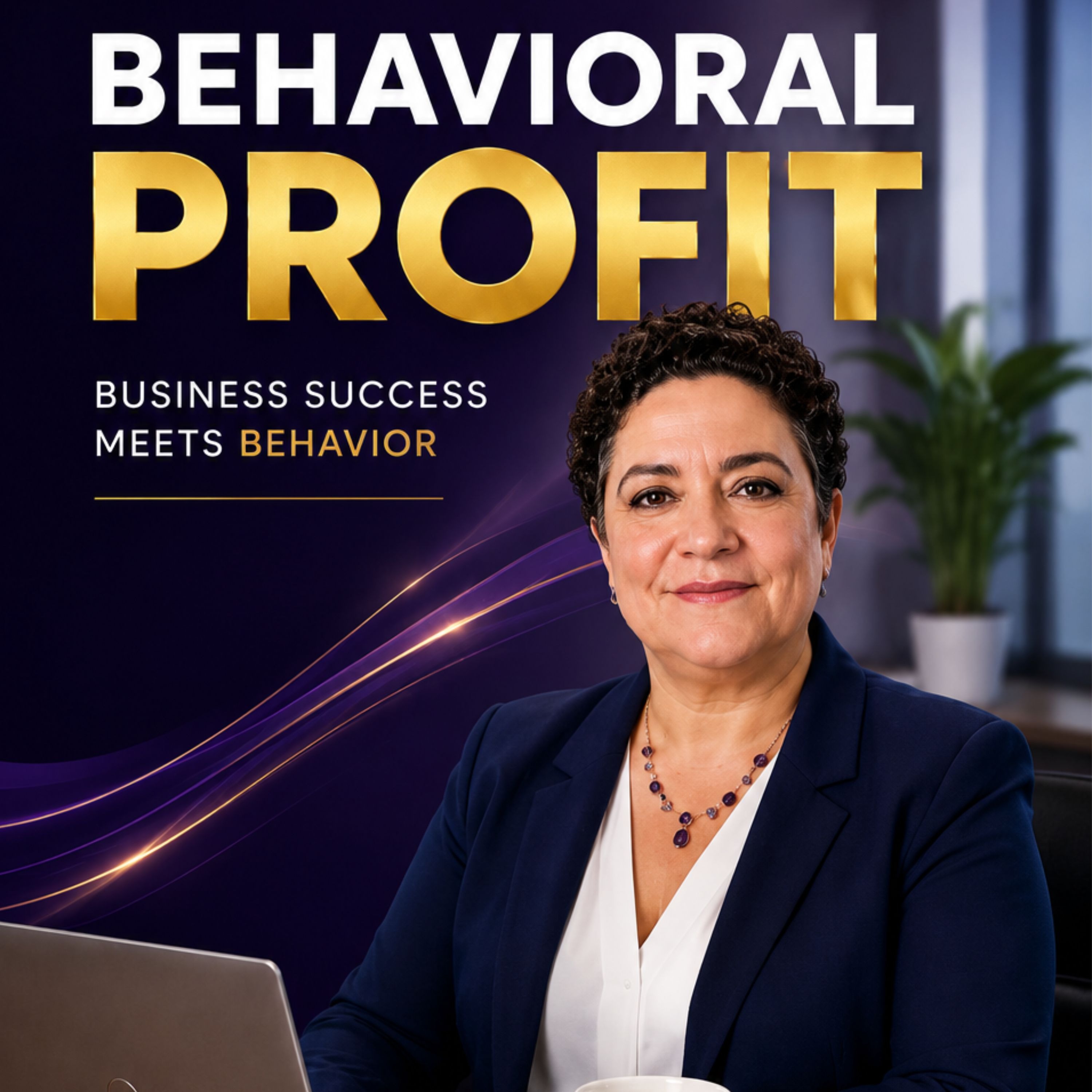
In this episode of Behavioral Profit, Debbie Longo speaks with Josh Block, President of Block Imaging, about leadership behavior, workplace culture, employee trust, and how focusing on people first helped his company grow through one of the most difficult business periods in recent history.
Josh shares how he unexpectedly became president of his family business at just 29 years old and spent the next 15 years building a people-focused company culture centered on trust, care, and long-term employee investment. Over time, the company grew into a $230 million healthcare organization with more than 400 employees.
The conversation focuses heavily on the beginning of COVID and the uncertainty businesses faced as the world shut down almost overnight. While many companies immediately focused on layoffs, fear, and survival, Josh and his leadership team chose a different approach. Instead of placing pressure on employees, they communicated openly, focused on protecting jobs, and made it clear that the company’s goal was to support employees throughout the crisis.
Josh explains that once employees felt protected and valued, they responded by stepping up for the company, supporting customers, and helping the organization continue growing during extremely difficult circumstances. Despite supply chain challenges and uncertainty throughout the healthcare industry, the company continued achieving growth year after year during and after the pandemic.
Throughout the episode, Debbie and Josh discuss leadership, humility, employee engagement, workplace culture, accountability, emotional intelligence, company growth, and why businesses often fail when leaders blame external situations instead of examining internal behavior and culture. Josh also explains how leadership requires creating clarity and stability for employees during uncertain times rather than allowing fear to control decision-making.
The conversation also explores mentorship, personal development, leadership training, and how strong cultures are intentionally built over time rather than created accidentally. Josh shares that successful leadership is not about perfection, but about consistently investing in people and creating environments where employees feel valued and supported.
This episode explores leadership behavior, workplace culture, employee trust, company growth, crisis management, emotional intelligence, resilience, accountability, organizational behavior, and the connection between people-first leadership and long-term business performance. It reinforces the idea that businesses become stronger when leaders focus on supporting people instead of operating from fear and control.
Contact Debbie Longo, Executive Behavioral Coach:
Website: https://www.debbielongo.com/
Email: debbie@lifeinbloomny.net
LinkedIn: https://www.linkedin.com/in/debbie-longo-life-in-bloom-ny/
Facebook: https://www.facebook.com/debbie.longo.2025
Instagram: https://www.instagram.com/debbie.life.in.bloom.ny/?hl=en
Contact Josh Block:
Website: https://peoplematteratwork.com
Email: josh@peoplematteratwork.com
Welcome to The Behavioral Profit. I'm Debbie
Longo, transformational coach. This show is about
one thing, why businesses don't perform the way
they should. Most leaders think they have a strategy
problem, but they don't. It's behavioral. It's
how decisions are made, how pressure is handled,
and how people operate inside the business day
to day. On this show, we break down what's really
driving missed targets, stalled growth, and poor
execution, and what shifts when behavior changes.
Because when behavior changes, performance improves
and and that's where profit comes from. We have
a very special guest today, Josh Block, and we're
gonna take a closer look at what's really going
on inside their business, what's working, what's
not, and where behavior may be impacting performance.
Good afternoon, Josh. Welcome to the show. Thank
you so much for having me, Debbie. It's good
to be with you. Thank you for being here. I appreciate
it. So I am going to ask you to introduce yourself
for a few minutes. Tell us who you are and talk
about an example or an experience that you have
had in business where there was a problem or
an issue or just something happened that it needed
to be changed. And what was that process of the
change and how you got through it? And then what
was the end result? Then the end result should
always be positive. Now I do this show for a
few different reasons. And one reason is because
the obvious reason is because a lot of people
have issues and problems and challenges and stuff
in their business. And I do this podcast to explain
about all different examples that they don't
have to necessarily identify with that specific
example. But the process that we go through is
how they can get through with their issue or
whatever it is. So what they would do is if whatever
we're going to talk about, they would take that
out and then insert their own problem in there.
and then go through that process. So it's kind
of like similar to that. And then also maybe
people don't know that their business can actually
change. Maybe they accept it being less and less
every year and the profits going down every year
because that's just the way the business goes,
which is 100 % not true because any business
can do better than what it's doing now. There's
no such thing as staying stagnant and there's
no such thing as going backwards. There is a
such thing as that, but we don't want the business
to do that. That's one of the main purposes about
what we have this show. And it's to help the
listener, the business owner, basically, or whoever's
listening, basically. And there's also not going
to be any promotion on this podcast, but we'll
give information at the end. So when you. When
you go down to show notes, you could see all
the links and stuff to contact the guests and
the host and stuff. So if you could do that for
me, I would appreciate it. Thank you. Yeah. So
I'm Josh Block and I have been the president
of Block Imaging for the last 15 years. And when
I became president, it was a bit of a unique
situation where I was 29 years old. I was a sales
rep for our family business, which is in radiology,
equipment, parts and service sales. and went
from sales rep to president over the course of
a weekend unexpectedly. fell in love with this
idea of culture and creating a place where people
love to work and ultimately drive remarkable
performance, grew the company pretty significantly
over the next 15 years. So today we're about
a $230 million organization with more than 400
people. And the situation that comes to mind
when you talk about behavioral impact and really
shifting the trajectory of an organization is
at the beginning of COVID. And I was in Cancun,
we were with some friends on vacation, and little
by little, the world started to shut down. What
was once far away began to make its way across
the West Coast, and before you know it, the NCAA
tournament was canceled, and the Masters was
canceled, and our kids' school was canceled.
And so as we were returning back to Michigan
and beginning to lead the company through this,
it was a healthcare crisis, and we're in the
healthcare space, and people were afraid. some
afraid of their jobs, some were afraid of their
health. And it was a very complex situation.
And so it was a great opportunity to look back
at what we value and how do we provide a sense
of security. And so when I returned back to the
office, we had a company -wide meeting and we
have a bunch of long -term targets and goals.
And yet what we did is we just said, hey, all
of that, it's not that it's not important, but
right now our main focus in... navigating what
is going to be a pandemic for maybe a few weeks.
turned to be a few months, turned to be a few
years, is our goal is to employ each member of
this team from start to finish. We can't promise
that's what's going to happen, but that's our
goal. And what was powerful is we just started
with a vision. This is what we're after as a
company. And fast forward a number of months,
there began to be some subsidies to provide for
people in the midst of unemployment. And what
happened is instead of people going home and
getting paid to go home, They continued to show
up, they reciprocated, served the company, served
our customers, drove the company forward because
first we said, we're going to take care of you.
And then the people responded and said, no, we're
going to take care of the company. And so that's
one of the situations that comes to mind that
when we look through a window and see other people
and we actually care for their needs and address
their security, they reciprocate and respond
in some really remarkable ways. Yeah, that was
very, very good. Thank you. And that's an excellent
example because I have a very big example about
COVID, which is how I wound up going on my own
and starting my own business. But I've been in
this business for a long time. But the point
is that You were able to overcome that and you
were able to say that we need to take care of
our clients and we're not going to let COVID
affect the business and affect the sales. So
there are tons of companies, which I'm sure you
know that went bankrupt, had to file bankruptcy.
lost a lot of profits and money and employees
and stuff because a lot of people got COVID just
that one reason. I mean, there's a lot of reasons
from COVID, but a lot of people got COVID and
people were afraid of getting it and stuff. So
the companies, and this is one of the companies
that I helped too, the companies blame the employees
and they blame COVID. And that's the problem
because that's not what we want to do. That's
not an effective way of running a company because
it doesn't matter if it's COVID or a recession
or a bunch of employees quitting at the same
time. just not doing good one year and sales
going down the tubes. None of these things matter.
It's about your positive, the business owner
and the executive, their positive behavior and
positive outlook about how they're gonna get
through this. trials and tribulations that the
company is having without affecting the company,
the employees, the sales, and the profits. So
what was the part of the process that you went
through when you literally made this transformation?
And then I know it took years, which for most
companies did, even though some tried to get
out. Some tried to get over it, some did, some
didn't. But what was your process and your thinking
from when all of this happened that you just
talked about to when you were successful, when
you got over the hump, when the whole thing was
over or you just went through this one little
piece and then you got through it and you came
out the other side. So what was your thinking
and your process during that time? Yeah. So for
us, it was a refining fire. It really, it brought
our team together in a unique way. And it was
an opportunity to express what I talk about in
People Matter at Work as thoughtful decisions,
using careful consideration of the needs of others.
And it's, if you're at the helm, whenever you're
driving a car, you're very comfortable when you
ease to the right or ease to the left. You know
exactly where this car is going to go. It's different
to be in the passenger seat and it's very different
to be in the trunk and you're getting, you're
having all these wobbly feelings. And so that's
what, what we're really trying to do is provide
clarity to people who are not in the driver's
seat. They don't have their hands on the wheel
and they're trusting you to drive safely and
effectively. And so, yeah, it was a situation
where we had a lot of challenges. There were
supply chain difficulties and, and healthcare,
there were all sorts of capital challenges. And
yet we had an, we had a great year in. had a
growth year in 2021 and then another growth year
in 2022. And I really believe all the work we
had done to invest in our team and to have a
strong culture helped us get through COVID and
not just get through, but really become stronger
in the face of difficulty. Yeah, and that's very
good. And the very good point that you had made
before was that you put the people first. Sure.
You put instead right. above the business owner,
above yourself and your. shareholders and your
board or whatever, however you run your company,
because a lot of businesses, when they do really
good and they gain profits every year, then all
of a sudden something happens. Like I said, like
COVID or recession, these things are not plans.
They just happen within like a few months time.
But you don't know how it's going to affect the
company. And then all of a sudden. the business
owner wants to say, I have to now try to control
all these people and they're quitting and I don't
know what to do. And they're not putting them
first. They're just constantly making excuses
as to why their business is failing. And they're
not looking at themselves because when I put
my employees and my, whoever I'm working with
first, right? Then I am not only creating humility,
right? I'm getting rid of that control, that
power, that ego. And when I do that, my company
will be 100 % become successful and be able to
get through that. So it's kind of like a snowball
thing. One thing affects the other. But I want
to be as humble as I can where I am not putting
myself first and this really goes for any situation
But this is really like a super duper traumatic
thing that happened because, like I said, nothing
was planned. So you have to be like a good business
owner, like all the time to really just to know
what to do when that's why a lot of they weren't
trained this way. So that was my other question,
too. Did you have any special training to know
to do this? Or did you do you did you do this
naturally, like in your whole life? during business
or most of your life or were you influenced by
somebody? or something like that, because this
is a practice that it's like learned, basically.
I don't think it's part of like a normal business
practice kind of thing. To my knowledge, it's
really not. I mean, I'm not in every single industry
in the world, but to my knowledge, it's really
not. And a lot of the guests and stuff that I
have had that have to do with COVID and my clients,
they didn't really know what to do. Sure, I think
that. I think a lot of school is focused on technical
things. It's just the smart side of the coin
is accounting and finance and HR and IT. And
there's this element of leadership, which there
are more leadership MBAs than ever before and
opportunities for graduate level classes and
leadership. But for me, I think there are a lot
of people who had invested in me up to that point.
In my book, I have pages of acknowledgments of
people who had poured into me. My parents, my
dad, very hard worker, loved business. My mom
loves people incredibly well. And so I think
it's a mix of who I was wired to be, the people
who invested in me, and then also some of the
things that I had the privilege of learning in
my 20s before becoming president. Yeah, because
that's a good point. Because if I go to school
or I get some type of edu - They're going to
say, do this, this and this and this just to
get through it fast. So you have an outline,
you have a basic frame, a basic skeleton of how
to run your business. But I want to go past that.
I want to do constantly doing research and all
these different things. and maybe get a coach.
Obviously, I'm not promoting myself, but I'm
just saying there's a lot of somebody could get
counseling or something like that to constantly
be expanding their knowledge to help them to
run their business. And some things you have
to kind of like look up. You have to like research
what's not. Some things are obvious. If I would
like to search stuff. terms and different things
on the Internet to gain my knowledge about how
to run a business. But a lot of things aren't.
So to me, it sounds like what happened to you
and how you knew about it and everything was
just the way that the cards fell, was just the
way that your life turned out based on all these
people and things and stuff in the past. Because
that sounds like everything just came together
and you were able to know what to do with your
business and how to help your business to survive
during COVID. So this is the thing. So that's
why we have this show to show that and explain
that, that these are all different ways that
a business can help to survive. So in any situation,
how do you feel in your business and maybe your
life too, whatever you want to say, Right now,
right this second, based on everything we just
talked about in this podcast and your business
and your feeling and your thinking, how do you
feel? Yeah, I'm super proud of our team and organization.
And I recognize that you never arrive in raising
kids or in building a culture or in creating
a thriving team or... or business for that matter,
there's no destination point. And so as much
as I'm proud of the story to this point, it's
my like invitation and my challenge to our team
to keep living it out. Culture is not stagnant.
It's always evolving. And so what does it look
like to enhance that the company looks different
when there are 30 people and when there's more
than 400. And so how do we actually embody and
live out a strong culture? in the midst of growth.
And so that's, so I'm both proud and I'm like
kind of the cheerleader of encouraging and championing
them to keep living it out every single day because
a culture doesn't get created by accident. Yeah,
that's good. And then you carry through, you
continue to do that because you know what to
do and you know that it works, obviously. You
might've known it worked before, it's gonna work
beforehand, but still. Now you really have the
proof because we have this situation that we
never thought that we would be into this extreme
thing. Sure. So that was good. And that was a
very good way to close. And then in closing,
I would like to say that anybody, any business
can get through any problem or issue that they
have, providing that they create the willingness
to change, to look for the help to look outside
of themselves and ask yourself, is it me? Am
I able to do something to change the business?
Am I gonna keep pointing the finger and blaming
everything on my employees? my board, my shareholders,
whatever kind of business it is, or am I able
to look at myself and kind of think outside of
the box a little, and am I able to do that where
I can? influence my company enough to get out
of these issues that we're having and then therefore
increase sales and profits. And that's really
what behavioral profit is, is that I'm changing
my behavior. And then ultimately that increases
sales and profits. That's really, there's a lot
of stuff in between, but that's really, you know,
what the end result is going to be. So, so yeah.
You want to say anything else for closing? Now,
if people are interested in hearing more, they're
welcome to go to Amazon and purchase a copy of
People Matter at Work or go to peoplematteratwork
.com. And they'll finally, they can email me
at josh at peoplematteratwork .com. I'll put
all the links to your book and everything after
the show notes so they can look at that also.
So thank you. Before we wrap up, I want to leave
you with this. That's what behavioral profit
is all about, understanding what's really driving
performance inside a business. If something isn't
working, it's easy to assume it's strategy, the
market. or external factors. But more often than
not, it's how the business is operating day to
day. Once that shifts, everything else follows.
If your business isn't performing the way it
should, there's a reason, and it's not random.
If you want to identify what's driving your results
and fix it, connect with me directly. Thank you
for listening. I'll see you on the next episode.
And thank you, Josh, for being on the show. I
really appreciate it. Thank you, Debbie.