

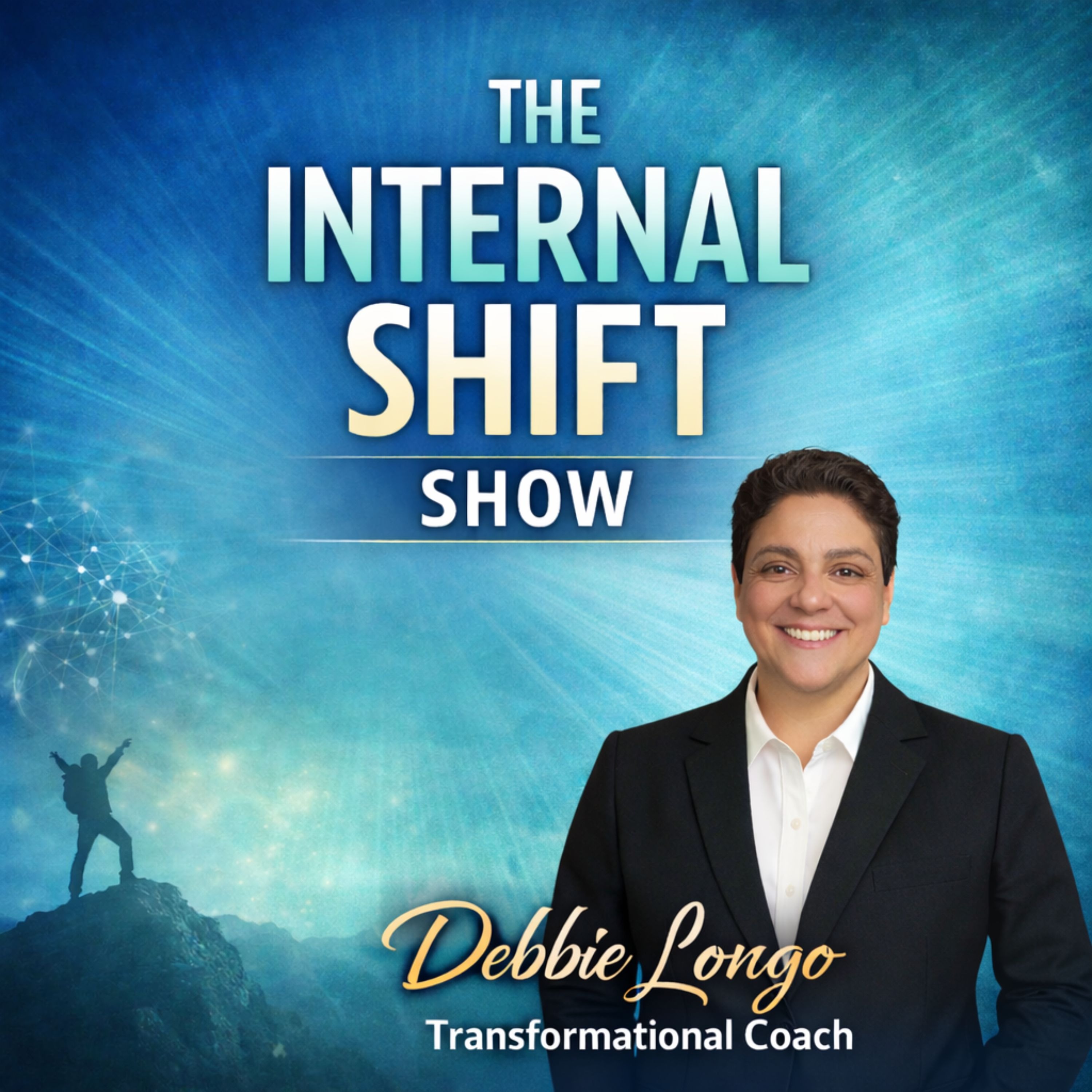
In this episode of The Internal Shift Show, Debbie Longo, Transformational Coach speaks with Zolal Habibi about a life shaped by loss, resilience, and a commitment to something larger than herself.
At just seven years old, Zolal lost her father, a writer and human rights activist, to political violence. What could have defined her life through grief instead became the moment that reshaped how she saw the world. Rather than identifying as a victim, she made a decision early on to view her experience through strength, responsibility, and purpose .
That internal shift influenced every decision that followed. From understanding the broader reality of injustice to choosing action over helplessness, Zolal committed her life to advocacy and raising awareness. She went on to join the Iranian Resistance and has spent decades working toward freedom, accountability, and change.
This conversation explores trauma, identity, responsibility, and the power of perspective. It reinforces that even in the most extreme circumstances, individuals still have the ability to decide how they respond—and that response can shape not only their life, but the lives of others.
Contact Information:
Debbie Longo Transformational Coach:
Email: debbie@lifeinbloomny.net
Website: https://lifeinbloomny.net
LinkedIn: https://www.linkedin.com/in/debbie-longo-life-in-bloom-ny/
Zolal Habibi:
Website: https://www.ncr-iran.org/
Additional Resources: https://maryamrajavi4change.com/ https://iranfreedom.org/ https://oiac.org/
LinkedIn: https://www.linkedin.com/in/zolalhabibi
Email: zolalhk@gmail.com
Welcome to the Internal Shift Show. I'm Debbie
Longo, Transformational Coach. This show focuses
on how internal decisions shape direction, progress,
and long -term outcomes. Today's conversation
uses real -world experience to examine how subtle
internal shifts can influence the way people
move forward. I'm joined by a very special guest
today, Zolol. Good afternoon, Zolol. Welcome
to the show. Thank you for having me, and it's
a pleasure to be with you. Please allow me to
greet those who are tuning in to the podcast
today. Thank you. I really appreciate you being
here. I'm going to ask you today to tell your
story and point out a point in your story where
you went through a life change event or a traumatic
experience or something where you went through
a process and then the end result and the end
result should always be positive. Now, I do the
show for a few different reasons. And one main
reason is because everybody has their own individual
story, but there are points to other people's
stories that other people can relate to. OK,
and maybe somebody is stuck in a situation that
they don't know how to get out of. Maybe somebody
just thinks that that situation is normal that
they're in. And they don't realize that if they
get out of it or they change, their life could
be a little better. And sometimes taking a little
step, a baby step, right, is good because then
they could see that maybe that process might
not be as difficult or as detailed as they make
it to be. because sometimes things are a lot
easier than what we we put in our head. And also,
I don't believe this such thing as any negative
situation, because if I don't think it's negative
and I know it can turn into a positive, then
it's not. So it just depends on how I think that
it is. This is what we're trying to do here.
And I hope that the listener can really listen
to really understand what your process is and
try to relate that to their own situation or
scenario. So if you could do that for me, I would
appreciate it. Thank you. Sure. I guess I'll
introduce myself a bit first to be able to get
into that. I'm, as you mentioned, my name is
Zola and I'm a activist with the Iranian resistance.
I've been a member of the Iranian resistance
for almost 26, 27 years now, and I'm a member
of the Foreign Affairs Committee of the National
Council of Resistance of Iran. I belong to a
generation that unfortunately I've never actually
had the chance to see Iran. I was born and raised
abroad. My parents came to the U .S. before the
revolution, so I was born in the U .S. and raised
there. But I became acquainted with the situation
in Iran very early on, with the human rights
situation and what people were going through.
And that was always part and parcel of my life.
But I always thought, I mean, I remember meeting
people who were, like, victims of torture when
I was about four, five years old. And I always
thought, like, that's in Iran, and we're here,
so we're fine. It's devastating, but at the end
of the day, we are in a difference, under different
circumstances. And I guess I, in a way, knew
that this isn't something that everyone benefits
from. I realized that from very early on. And
so I guess I didn't take it for granted, the
fact that we were living in a democratic society
and freedom and whatnot. But when I was seven,
things took a turn. When I was seven, the Iranian
regime had my father killed. My father was a
prominent writer and a human rights activist.
And that really transformed everything in my
life. You can imagine having to deal with that
as a seven -year -old. And on the other hand,
it wasn't just my life that was being transformed
because that summer, they made a regime actually
have 30 ,000 political prisoners are executed
in just five, six weeks. And so it made a major
change or shift in all of Iran's society and
also in our history now and the impact that it
has had to this day, it continues. And I remember
at the time I was very attached to my dad, especially
since my dad was a writer. He was at home more
than my mom was usually. And so I was like daddy's
little girl. That was like the connection that
I had. So losing my father was very, very difficult.
And I mean, I think I found out about his death
like two months later. My mom, I guess she was
trying to extend having to tell me this as much
as she could. And but the reality was I actually
ran into a I guess there was a page in a newspaper
with three pictures of my dad and a poem dedicated
to my dad after he had died. And that is how
I found out that my father had been killed. And
but the interesting part was that they had told
me that my dad was on a trip because my dad traveled
a lot because of his work. He would go and give
speeches or take part in conferences or whatnot.
So that was normal to me. But in the dedication
of this poem, it said, a poem dedicated to Zola
and Masiya as they say farewell to their father
who's gone away or traveled or something like
that. And the translation will be. And so I was
like, since when do they write poems when my
dad travels? And so my mom walked in saying that
I'm looking at this page and realized that I
probably figured out what was happening. And
so she just grabbed my hand and we went home
and she told me that, you know, this summer your
father was killed by the regime and a lot of
the people, a lot of people that you actually
knew at one point in time in your life have also
been killed. And she told me like a few of those
cases. And I remember crying for like three hours
straight until we heard the school bus come.
And my brother was three at the time and he was
in, I guess, kindergarten. And he was coming
home. And so my mom was like, so that if he sees
you crying, he's going to know something is wrong.
And you're going to have to just control yourself
a bit. And I remember like running out of the
room, trying to get a hold of myself and just
be able to get things together. And in the mentality
of a seven year old, I started talking to myself,
I was like, you know what, crying is not going
to solve anything. Your dad's not going to come
back if you continue to cry. And there was a
story back then that we used to, like a children's
story that we used to always listen to. It was
the audio cassette back then. And it was the
city without smiles. The story goes, there's
a tyrant who doesn't have a smile. And so what
he does is he takes away people's smiles to see
if it fits his own face. And no, everyone's smile
is unique to them, so none of them match. And
so he's taking away people's smiles. And so that
was like the story. And I thought to myself,
well, your crying is only going to make that
tyrant happy. It's only going to make Khomeini
happy. So as a form of like resistance, I chose
from that moment on never to cry again. And because
I didn't want to give them that satisfaction,
I guess, in my own mentality. It started with
that, to just take a stance and just be defiant
and resist in face of tyranny, no matter what
shape and form it came in. Actually, I didn't
cry for another decade practically, even though
there were a lot of ups and downs along the path.
just unfortunately, two years after I had to
be separated from my mom because of the first
Gulf War. And then just step by step, there are
so many different obstacles in my life, but I
was able to overcome them because of that, I
guess, mentality, but also like how I guess it
just shifted my perception of it. And I think
one of the things that helped me back then was
understanding First of all, understanding the
bigger picture, knowing that I wasn't the only
victim, knowing that I wasn't an exception to
the rule. There are a lot of people who are suffering,
understanding that this is the world that we
live in. This is how dictators are able to implement
their power and to always see myself. Instead
of seeing myself as a victim, seeing myself as
actually one of the lucky ones. I truly saw myself
as one of the lucky ones. Even at the age of
seven, eight years old, I remember always thinking
that whenever people were like, oh, it's so devastating
that you've lost your father. I never had any.
I mean, of course, I missed my dad, but I had
I never had any regrets over the fact that he
had given his life for freedom anyway. I always
held my head up high. to say that, yeah, that
was my dad. He didn't just preach. He didn't
just write to people and give them ambition to
join the fight and continue to fight against
the regime. He actually lived by those words.
And he actually showed in practice that, you
know, there are certain things in life that are
more valuable than, they're much larger also
than life itself. And those are the things that
are worth. making a sacrifice for. And so I think
that my parents always were like the greatest
role models I could ever have, not through their
words, but through their own actions. And so
I think it just put a lot of things into perspective
for me, like a lot of things that may have seemed
trivial for a lot of kids my age, even growing
up, they were in that trivial to me because I
knew that life is much more complex than that.
But I also had met so many people who literally
had a worse case scenario than that. than we
did. As I said, I never had to live under those
circumstances, even though that was like what
the Iranian regime did. But I had friends who,
for instance, they were taken to prison with
their parents at the age of five. They were the
only ones who were walking in the prison hallways
without a blindfold. So they're the actual true
witnesses to the atrocities of the regime. I
had a friend who, unfortunately, she had lost
her father under torture. But as a method of
the torture, the regime would make her watch
her father be tortured to break her father that
way. Because no parent wants to have their children
see something like that. And even though she
had blocked it out of her memory, like when you
spoke to her during the day, but she would actually
have nightmares about it. And when she would
break up like with a fever and everything is
screaming, she only said like, this is what you
had in that room. She's like, no, I don't have
any recollections of that. And I don't even think
that happened. she had locked it out of her memory,
but it was still with her. And so I had seen
that. I had friends who had lost both of their
parents or like the entire family had been executed
by the regime. So that always brought a sense
of, I guess, in comparison. I never saw myself
as like the victim or someone who was just dealt,
I guess, a bad set of cards in life. I always
thought that I was one of the lucky ones. And
I think that really changed my view on things,
but also to always see myself as an agent of
change. Going in from childhood, I would go to
info booths and try to raise awareness on the
situation in Iran. I think I was about 12 the
first time that I went through the halls of Congress
to try to raise awareness and gather signatures
in regards to the supply of people inside of
Iran. So whatever. I came face to face with this
situation, I always thought, well, what is your
responsibility? And what are you going to do
about it? Instead of waiting around and being
like, why is it this way? And why isn't someone
else doing something about it? So that really
helped form who I am, I guess, today. And I mean,
fast forward, I mean, there are a lot of, as
I said, ups and downs along the way. But when
I was after graduating from high school, I came
to across roads again. And that was I had just
graduated. I had gotten full scholarship to go
and study medicine. That was like the goal. But
that summer, general uprisings broke out in Iran.
And that was the first time since the 1980s that
we were seeing uprisings in Iran. And it was
also the first time I was being televised. It
was the start of cable television and CNN and
things back then. And I remember seeing those
scenes and thinking to myself, what is your responsibility?
What are you going to do about it? Are you going
to be just a bystander and just watch from abroad,
like what is being done to our people? Or do
you have a responsibility here too? And especially
because it was people from our generation, like
the generation that was born after the revolution
that were coming to the streets. So that is when
I actually decided to join the Iranian resistance
and then spend. till today. It's been, as I said,
26 something years. And I have been a member
of the resistance ever since. And I think that
was like the best decision that I ever made in
my life. Yeah. So that was excellent, excellent,
excellent. Thank you for that. I really appreciate
that. So there was some things that I was thinking
about when you were speaking. And unfortunately,
sometimes we have to go through traumatic experiences
like you were. talking about in order to see
what path we need to go on or maybe I'm on a
certain path and I see something or I witness
something or I feel something and now I know
that I need to go on a different path. The path
that I'm on is not correct or it's just dead,
basically, because I believe that there are many
different paths that people can go on, that people
are able to go on. Some people think you live
and you die and you're on one path and that's
it. But the thing is that we have the ability
to think for ourselves because we're human beings,
we're not robots. And that enables us to make
decisions, go through changes, pick what path
we want to go on. different things like that.
Now, the other thing that I was thinking of was
that things influence us. Government influences
us in a big way. But not only that, social, those
in our community, our peers, there's a lot of
things that influence us. And they could influence
from the negative or from the positive. It really
depends on what it is. what the person is, what
the situation is. So there's all different examples
of this, but you gave a story of a negative thing
that you saw, that you witnessed, that you heard
about, and you turned that negative thing, those
situations, everything that you spoke about,
and everything that happened that you witnessed
and heard witnessing or whatever, and you turned
those things into a positive, right, by joining
the resistance and getting people to sign things.
And when we do that, not only do we turn the
negative situation, whatever, into a positive,
but I can't change Iran and any other country
from killing people, from changing their government.
But I can make a difference in the way that I
know how in the situation that I'm in, in the
country that I'm in. What happens then? That
might help one or two people. That might help
somebody that their parents are there, like the
several experiences that you had thought about.
Maybe that might change their attitude or their
thinking. So we do things in a positive way that
we don't really know who we're helping, who we're
changing, and what the outcome is going to be.
I'm just knowing that I could take that negative
situation, that life change or whatever it is,
and if I turn it into a positive, I know that
good things will happen. And I don't know what
those things are. And that's really, to me, what
my purpose is in life. Now, that's me. because
I'm a coach and I'm not here to promote myself.
But the point is that this is what I do. One
of the things that I do and one of the things
that I teach people, because do I have a purpose
in life? Is this part of my journey? What? What
am I doing to change? What am I doing to change
my life? What am I doing to get out of these
negative instances, circumstances, different
things like that? Is this the way that I want
to be? Do I want to hear all this stuff that
happens in Iran and then feel sorry for people
and then cry at night and that's the end of it?
And sit in sick and suffering or whatever? Or
do I want to do something to help those people
to change? And I don't know what that's going
to be. I just don't know. I'm not a psychic.
And even a psychic wouldn't know because they
don't know everything. Nobody knows everything.
But I know that if I'm doing something positive
and a lot of groups and stuff do it this way,
they don't know what's going to happen. They
know that their mission is to put one step forward
and then another step forward and another step.
And that will inadvertently help. Hopefully a
lot of people, but if I'm helping one person,
that's a win. That's really the bottom line.
But of course I want to help a lot of people.
That's just the type of person that I am. But
things like this also, the resistance and all
these different things that we're talking about
here, that multiplies. Because why? Because something
that I do that's positive is always going to
multiply because I want to bring positive people
into it. So I'm going to meet people. some way,
maybe on the internet or create a group. And
that is going to bring people who are interested
in that also. And now I'm multiplying. I might
have a group or I might join a group that has
we're just talking about group because this is
what we're talking about here. This is just one
example that has maybe five people, 10 people.
And then before I know it, there's like 100 people
in this group just from like talking or talking
to people that I know or associating with people
in another country, whatever it is that I'm doing.
And when things happen like that, you're going
to wind up helping a lot of people. And that's
just like that's just the way that it is. That's
just like a statistic, basically. So my question
is that your process from when you were seven
and you found out about your father and all the
things that he was doing and Up until that, between
that and when he died, what was that process
like for you? What was your thinking and your
feeling during that whole process that we just
discussed about? Like, do you mean from like
my childhood until when I was seven and he died?
Yes. Well, I mean, I always took pride in the
fact that in my parents, my parents, I guess
they had a very unique way of raising us in a
way. They would... even when I was like two,
instead of telling me what's right and wrong,
they would explain everything to me and then
they would tell me to choose. They would be like,
what do you think? What do you think is right?
What do you think is wrong? So they had, I guess
that also makes you grow up really fast, like
understanding what is going on. They don't treat
you like a child. They treat you like an adult.
And so I think I had a greater understanding
than most people like my age at that time even.
And as I mentioned, because of the things that
I was coming across, as I said, I have vivid
memories of a two -week period that people, a
group of people who were victims of torture,
people who were political prisoners who had escaped
Iran, they came and they stayed at our house
because they were going to the U .S. Congress
and to the United Nations in New York to testify
about what they had suffered. Of course, everyone
was trying to shield me from hearing about these
things or knowing these things. But as a child,
you're very intrigued by meeting new people and
hearing their stories. And so I kept on pursuing
them. I was like, you guys have to tell me your
stories. And they wouldn't. And there was one
of them that I had recognized because I had seen
posters of how his feet had been tortured and
everything and indifferent. events or in back
then in the protest or in exhibits and things
and I was in Iraq and I was like, you're that
guy. I know your story. I know that your feet
are like completely black from torture. And I
know all of this. And so I personally forced
him to tell me his story. Of course, he told
me like the rated G version of the stories for
it to be okay for a child. But I remember him
telling me how he escaped prison. And also that
he had he told me that from day one that they
were with us, that he has a daughter one year
older than me, who was in Iran at the time. And
I think that just these, meeting these people,
coming across these people, having that opportunity
to have these discussions with so many different
people, it really shaped, I guess, who I was.
And so that's, I think that's one of the reasons
that I was able to cope with the loss of my father
the way that I did, because I had all of this
process behind me and I had talked a lot with
my parents about these things and what was going
on. And having that understanding really helped
in being able to cope. So I think awareness is
always something that really does help in how
you're able to overcome different issues. So
I think that played a major factor. And also
the fact that, as I said, I was always home with
my dad. most of the time. So I, I cherish every
second of that. And I try to keep those memories
alive in my, and never to forget them. And here
again, I saw myself as the lucky one because
unfortunately my brother was only three at the
time. So he has no recollection of our parents
and how it was and things, but I do. And so that
was really important to me. And then as I started
growing up, I made a It was important for me
to actually go and read like my father's books
or the articles that he wrote or listen to some
of the interviews that he had done to be able
to have a better understanding of who he was,
what he stood for, and to be able to continue
that path. And I remember my father, I mean,
when he was killed, it was about a few weeks
before his 36th birthday. And I remember like
throughout these years, a lot of times I thought
of that. Right now, I have outlived my father,
but thinking about how he was able to accomplish
so much in those years, to this day, I still
get approached sometimes, like at a rally or
here and there, all around the world, both in
Europe and in the US by people who, when they
realize I am my dad's daughter, they come and
impress me and they're like the impact your father
made on our lives with you know his understanding
or how he explained things or like his this book
or that book or whatnot and when i see that but
this is 37 years later but people's lives are
still impacted by my father and by what he did
and that always reminds me that you can make
such a you could leave a great impact or imprint
in society. What's important is how you use your
time in this world and how much you try to give
to others, because that's all that will remain
at the end of the day. Yes, agreed. And that
was excellent. Thank you very much. I appreciate
that. So the last question is, how do you feel
today? How do you feel this minute based on this
whole podcast, everything that we discussed and
your story and everything that you just told?
How do you feel? Well, right now, in general,
it's a very critical time for our people today.
I mean, since February 28th, a war has started
in Iran. But from the start of 2026, we have
seen the uprising in Iran and the thousands of
people who were killed by the regime and everything
that has happened. Unfortunately, in the last
week, we have witnessed six political prisoners,
four of the detainees from the protests being
executed in Iran and all for just standing for
freedom. for just standing to be able to give
that to the people of Iran. And among them, you
see people as young as 18, 19 years old who were
executed and people in their late 60s who were
executed. So this fight for freedom continues
on a daily basis and the people of Iran are paying
the price for it. Our message to that, I think
more than ever, I see the fall of this regime
nearing, but The reality is that the solution
to Iran is neither war nor appeasement. It's
to support the people of Iran to bring about
change. And I think our people have that capability
and that potential to bring about that change
because the people who have paid such a grave
price already, 120 ,000 people have been executed
in Iran for standing for freedom, for supporting
the People's Majority Organization of Iran for
standing for democracy in Iran and wanting a
secular democratic republic to be able to form
in Iran. So after a century of dictatorships
under the Shah and under the Mullahs. So I think
that more than ever before, we are nearing that
point, but that change has to come from the people
of Iran. So I hope that we could bring that change
as soon as possible so no other child has to
suffer the way that we did. No other child has
to witness their father or mother being executed.
Unfortunately, one of the people who was executed
last week, his wife is pregnant right now and
the regime didn't even allow him to ever see
his child, unborn child. He was arrested during
the protest in Iran and he was 32 years old.
He was arrested in January and executed this
week. So that is the brutality that the people
of Iran are facing on a daily basis. But on the
other hand, there's a lot of trouble. there's
a lot of determination to bring about change.
And we have a saying in pricing, we say, no one's
going to scratch your back except your own finger.
So that change has to come from the people of
Iran. This democracies can't be installed. It
has to come from the people of Iran. And we hope
that we will be able to see that the dawn of
freedom soon in Iran. Yeah, excellent. Thank
you for being on the show. I really appreciate
it. That was a really good way to close and I
just want to reiterate like we were talking about
before is that there are influences in our lives
outside influences But we don't have to let those
things Affect us in a negative way and we don't
have to sit in suffering and complaining and
suffering through the losses and everything because
that's just going to make me more negative. I
want to do something positive to help people.
whether it's my own ethnicity or maybe somebody
in people in my society, whatever it is, I want
to do something positive and that will inadvertently
help people. That's just for the positive way.
That's just how it works. That's just how the
world works, how the human beings work. And this
was a very, very excellent example of this because
this is exactly what you did. One of the things
that you were talking about, there was a few
different things here that we were pointing out
during the podcast, but this is really what stands
out to me and this is a lot more common than
what people think. Because it's easy to sit in
suffering and it's easy to sit in negativity
and just do nothing and complain. But it's a
lot to do something about it to help people.
And the rewards I get for that are just amazing.
They always are. So thank you for that. I appreciate
it. What stands out from this conversation is
that meaningful change is built through consistent
internal decisions, not dramatic moments. If
something resonated with you, consider where
those internal decisions are already shaping
your path. This has been the Internal Shift Show.
Thank you for listening and thank you, Zolal,
for being on the show. I really appreciate it.
Thanks for having me. It's been a pleasure.