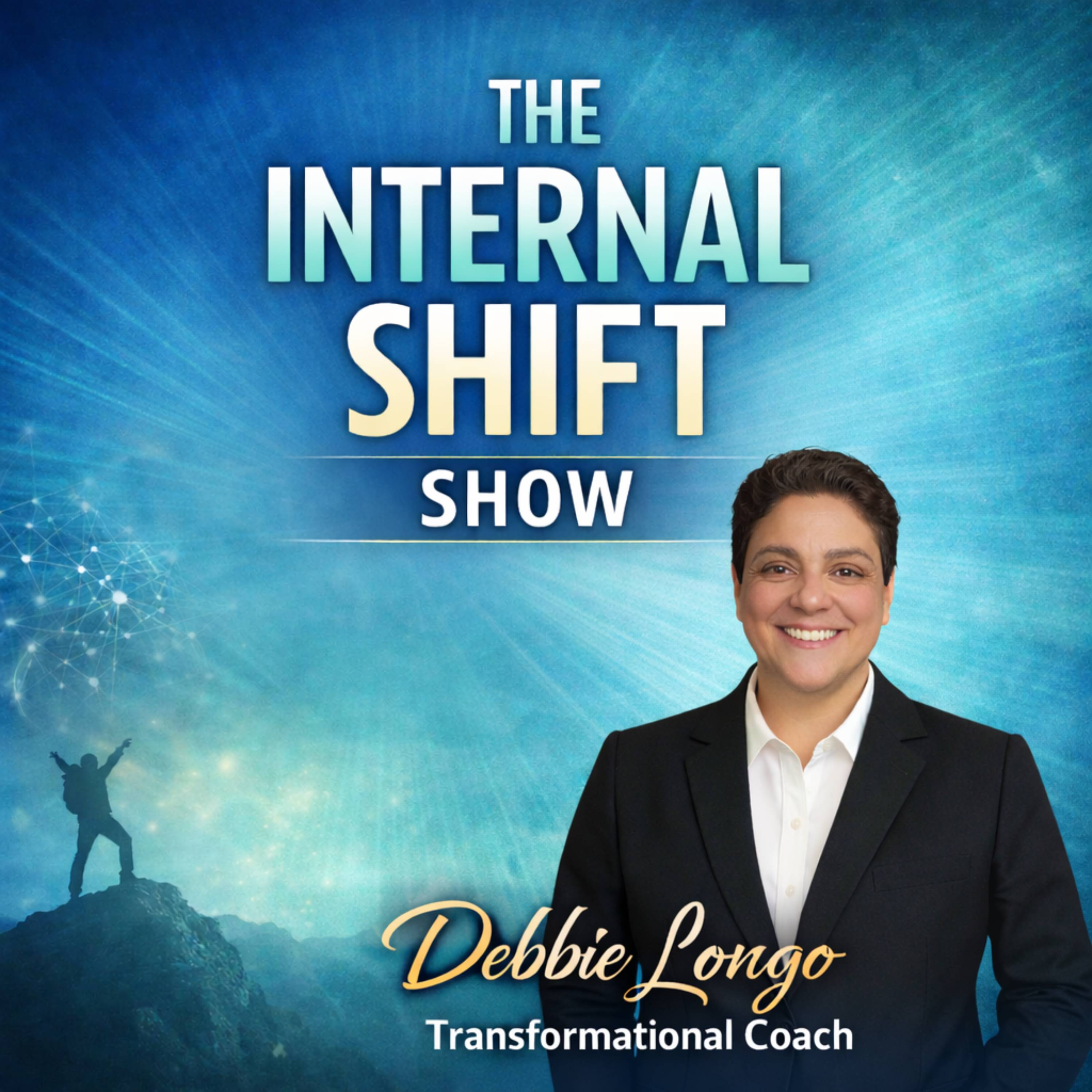
In this episode of The Internal Shift Show, Debbie Longo speaks with Carine Van Hee about toxic relationships, emotional abuse, healing from manipulation, self-awareness, and the internal shifts that helped her understand lifelong relationship patterns and rebuild her life.
Carine shares how she grew up believing she came from a loving family, never realizing many of the relationship dynamics she witnessed as a child were emotionally unhealthy and controlling. Although she believed she would never stay in an abusive relationship, she later found herself trapped in toxic emotional patterns without fully understanding what was happening.
A major turning point came while sitting beside her mother’s deathbed, when Carine realized for the first time that her mother had spent more than 65 years in a toxic relationship. That realization forced her to confront painful truths about her own life, including the emotionally abusive relationship she experienced with the father of her son.
Throughout the conversation, Carine explains how confusion, manipulation, isolation, and emotional exhaustion made it difficult to recognize the abuse while she was living through it. Like many survivors, she questioned herself constantly and struggled to understand why the relationship felt unhealthy even when others around her viewed it as normal.
After leaving the relationship with her infant son, Carine focused on protecting and supporting him before eventually realizing she also needed to heal herself. She began therapy, studied family science and psychology later in life, and spent years learning about toxic relationship dynamics, emotional abuse, trauma responses, and healing patterns.
Carine explains that one of the most important internal shifts came through awareness — learning to pause, observe situations clearly, and recognize unhealthy patterns before reacting emotionally. That awareness helped her rebuild confidence, reduce shame, and understand that what happened to her was not her fault.
Today, Carine openly speaks about toxic relationships and emotional abuse to help others recognize harmful patterns sooner and understand that healing and rebuilding are possible.
This episode explores emotional abuse, toxic relationships, trauma recovery, self-awareness, healing, resilience, emotional manipulation, personal growth, and rebuilding life after abuse.
Contact Debbie Longo, Executive Behavioral Coach:
Website: https://www.debbielongo.com/
Email: debbie@lifeinbloomny.net
LinkedIn: https://www.linkedin.com/in/debbie-longo-life-in-bloom-ny/
Facebook: https://www.facebook.com/debbie.longo.2025
Instagram: https://www.instagram.com/debbie.life.in.bloom.ny/?hl=en
Contact Carine Van Hee:
“Is It Me? The Hidden System Behind Toxic Relationships” is available on Amazon Kindle, Apple iBooks, Google Books, Kobo, Amazon.de, and Thalia.de.
Website: https://www.carinevanhee.com/
Email: carine@carinevanhee.be
Welcome to the Internal Shift Show. I'm Debbie
Longo, Transformational Coach. This show explores
how the way we think, decide, and respond internally
influences where we end up over time. Today's
conversation draws on real experience and expertise
to look at how small internal shifts can change
direction, momentum, and outcomes. We have a
very special guest today, Karen. Good afternoon,
Karen. Welcome to the show. Thank you for having
me. Thank you very much for being here. I appreciate
it. Today, I'm going to ask you to tell your
story and point out something in your story that
where you had a life change or a traumatic event
or something that happened to you, where you
went from a negative and you went through the
process and now you came out as a result. So
the end result should always be positive. And
I do this show for a few different reasons. And
one of the main reasons is that everybody has
their own individual story. But there are things
in other people's stories that people can relate
to. Now, if somebody feels stuck or they feel
like they're in a negative situation or a situation
that they don't want to be in or a feeling something
where they want to. They don't want to be in
that space anymore. They might not know that
they can get out of it. They might not know how.
They might not understand that they don't have
to stay in that, that really there's a light
on the other side of the tunnel. And now, by
seeing your story, sure, there's a lot of people
that can relate to what your story is, and I
don't even know it yet. Because a lot of times
we all have very similar stories. And that's
why this is not as difficult as people are going
to think it is. And that is really the most important
reason why I do this. So if you could do that
for me, I would appreciate it. Thank you. Thank
you. Let me just try to think out loud. When
I was about 13 or 14 years old, I always believed
I would never end up in an abusive relationship.
I think we all think the same. The moment he
hits me or she hits me, I'm out. I was convinced.
I had seen it at home, so I thought it was good.
And then when we think of relationships, when
I look at my relationships, when I look back,
I have been in really difficult relationships,
both at work, with friends, in romantic relationships,
so there was something going on there and I didn't
know what it was. And it was when I got... It
took me a long time to discover the hidden system
behind toxic relationships, actually. It was
on a Sunday afternoon when I got a text message
from my brother who said to me, mom is not doing
well. And so I'm Belgian, but I'm living in Norway.
So I took the flight home. And it was only when
I was sitting next at my mother's death, but
actually that I for the very first time in my
life understood that both from, I could feel
it in my body, that there was something wrong.
with the relationship between my mom and dad.
And it was actually there that for the very first
time I understood that she had been in a toxic
relationship for over 65 years. And it was like,
it hit me so hard. I didn't know anymore what
to think, how to feel, how to... It was devastating.
And I remember that I took the plane home and
I was like, I felt like I was intoxicated. I
couldn't think anymore straight. And that's when
I decided I need help now. So I have been in
therapy for several years because of the problematic
relationships I have been in. So I took contact
with my therapist again and said, can we just
have some sessions because this is not going
well. And so I've been in therapy for eight months
again. And once I was in therapy, I understood
I could really, I was in therapy and at the same
time I started to investigate what was it with
my mom and dad that was so strange. and what
is a toxic relationship and what is narcissism
and all that. And as I delved more and more into
that topic, I for the very first time also understood
that I had been in toxic relationships. Because
when you see the pattern, when you dive into
the pattern, you see the pattern, you understand
the pattern, which is complex and layered and
huge. But once you recognize the pattern, you
can actually see how it functions. And this is
why for the first time I could understand, but
you have also been in toxic relationships, Karen.
And this was like what happened to me in that
moment when I understood that the relationship
that I had with the father of my son, that it
was toxic, that it was mental abuse, that it
was a pattern that was being used and it was
a system being used on me. I could feel like
the whole shame. It was like I felt like 20 kilos
lighter. It was amazing. And that's when I decided
I'm going to stand up, I'm going to talk about
the hidden system, because more people need to
know. If this is the effect it has on me, that
I don't feel ashamed anymore, that I can see
clearly what happened, that I can see the devastation,
but also, oh, wait a bit, it's not me. I can
heal. It's something happened to me, but I can
heal about, I can heal. And then it's when I
decided I'm going to stand up, I was hit by,
like I could feel huge anxiety coming up. So
I talked about it with the therapist and I said,
I'm not an anxious person. I've traveled South
America with a backpack when I was 32 years old
as a woman alone. So I'm not an anxious person.
What is this? And then we talked about the fact
that if you have survived abuse, that you can
easily be triggered in anxiety and in fear and
PTSD and all this stuff. And then I said, I'm
going to do it anyhow. because I could feel like
it's a moment in life when it feels like the
universe is grabbing you by the shoulder and
whispering in your ears, why the heck did I give
you all these gifts? It's time to use them now.
I could really feel that pull. And then I decided
I'm going to stand up as a survivor, I'm going
to talk about it, because I could either just
take all the insights and the experiences that
I lived through take it with me in my grave,
or I could at 62, because I'm 62 years old, I
could stand up and just talk about it and not
feel ashamed. Very good. Thank you for that.
I appreciate it. So what was your feelings and
thinking when you recognized all of this abuse
coming? realizing that all of this happened.
Did you feel that you could do something about
it? What was your thinking and process behind
that? Can you elaborate a bit more on that? Yeah,
well, you said you were abused in your early
life. Yeah, my father's in narcissistic behavior.
And then you were abused in a relationship. Mentally.
So between those two times, So we're going to
separate it between those two times. How did
you feel about the abuse? Like, what was your
thinking? What was your feeling? Did you think
that it was normal? What was your thought process
around that time? Oh, I think this is a very
good question, because the first when I refer
to my upbringing, when people have asked me when
I was a teenager, how is your family? I would
have said, I come from a happy family. Because
I had like a loving, caring mom, you would look
into her eyes and you would like feel unconditionally
loved. She was that really warm human being.
And my father was the opposite. He was like analytical,
strict and severe. That's how I thought about
him. I could feel the, when I was like about
20, 21, I could feel that he started to become
more and more dominant. But I saw that like,
this is a generational thing. This is like, this
is my dad's generation. Like he's the father
of, he's the dominant figure in the family. He
decides everything, he brings in the money. So
yeah, I mean, I didn't see that as a problem
and nobody in my surroundings did see it as a
problem. Nor did my siblings see it as a problem.
So we were... we all thought we came from a happy
family. And it's like strange when you discover
that it's not that. So when I then transfer that
into the abusive relationship I was in, when
I was going through the relationship, I could
feel I was confused. I think this is the biggest
word I can use. When it started, we all talk
about love bombing. It started really, really
lovely. I met this human being. He was lovely,
energetic. positive, good vibes, supportive guy.
You had lots of things in common. It was just
wonderful. So when it gradually went down the
road, I didn't understand that. I had huge whys
and I didn't have a language to explain what
happened to me. I didn't understand because I
didn't know about the hidden system behind toxic
relationships. I felt confused. I felt tired.
There was a huge sense of unpredictability. I
didn't know what was coming. And I just started
to ask myself, is this normal? And I just didn't
have any role models. I didn't have a manual.
I didn't have the language to explain what was
happening to me. And I remember that I was asking
one of my friends, it was in the first year,
I'm dating this new human being and this new,
this wonderful man. And I'm just not sure there
was some signs. And she said to me, are you joking?
He's like the loveliest creature I've ever met.
You're so lucky to have him." I said, yes, but
they said, no. Karen, in all relationships, you
have ups and downs. It's just normal. And I remember
I talked to somebody else and she said to me
when I was twice said, no, no, no, no, let me
explain. And I gave her an example. She says,
yeah, but this is a very manly thing to do. And
that was it. So I felt like I was being pushed
back into the relationship and yeah. And then
the system starts and then you get isolated.
And then then it just goes from bad to worse.
So, yeah. Yeah, that was good. Thank you. So,
you know, you mentioned several times about the
therapy. So what made you decide like you were
explaining that you thought that the behavior
in your early days was normal in this? So what
made you go from thinking it was normal to not?
to do staying in it or to saying, I want to change,
I want to do something about it. Right. Now you
mentioned therapy, so I'm sure that was one of
the reasons. But what was your thinking in between
those times? Why did you go to therapy? How did
you choose therapy? Did somebody introduce it
or did you do research? How was that process?
I never went into therapy because of my upbringing,
because I just didn't ring a bell. My father
is a very, very manipulative man, but very subtle.
So it's very difficult to feel it. So I've never
been into therapy because of him at the beginning.
I decided to go into therapy because after the...
So I left the abusive relationship with a baby
of 10 months old. And I was all focused on him
because I wanted him to have a better future
and wanted him to be supported by myself. I just
thought of him, not about myself. It took me
about two years before I understood that perhaps
you should do something about yourself as well.
And it's because I could feel that I was still
attracted to people, to men that didn't seem
like healthy to me. So this was like a really
soft voice that said, but this is not going to
repeat the pattern, Karen. Don't. And that's
where I decided I have to go into therapy because
there's something wrong with me because I keep
on having this tendency to fall for people that
are not my people, that are not healthy, that
are toxic. And that's why I decided to go into
therapy. Good. That was interesting. Thank you.
So I was just thinking of a few things while
you were talking. And sometimes I first want
to say that I'm not a therapist. I'm not a psychologist.
I don't have any schooling or training on any
type of these subjects or careers or anything.
But it's my experience from even my own story,
but working with people, coaching people. and
directing people for 23, 24 years, however long
I've been doing it, is that a lot of times, the
patterns and the behaviors that I grow up with,
I think are normal. And I think that's just the
way that it's supposed to be. And then what happens
then? I model that, then if my mother or whatever
had two kids, now I'm gonna have two kids. And
then I'm gonna treat them the same way. So I'm
doing this I'm repeating the same exact thing
not realizing right until A lot of times is just
one example out of many. I keep hitting a brick
wall so we keep arguing and then the Children
might rebel against me in like a hundred different
ways. So I just keep hitting this negative feeling
that I just I just don't want to treat my kids
like this. And I don't want to continue with
this type of behavior. And it's just a matter
of the willingness to want to change. But to
have the awareness that something is going on
here, there's just something that's just not
right. Even if I think... It's normal i don't
have to necessarily think like. Oh this is not
something i don't want to continue this way or
just a way to identify just one feeling i'm just
angry i'm angry all the time. just to say one
feeling and then to connect that feeling with
a situation or whatever is happening in my life.
And I don't want to feel I just don't want to
feel this way anymore. I don't want my life to
be this way. And there are tons of people like
this. And I have helped and coach tons and tons
and tons of people with these situations. Now,
the things that I mentioned in this podcast,
I don't make them up. These are things real life
things that I have experienced from people that
I've worked with This is not just stuff that
comes out of my brain because so if I can just
do this little bit because I don't believe that
there is any negative situation in anybody's
life and sometimes if something happens we can
always change that into a positive and there
is always a light at the end of the tunnel, but
if I get into a scenario or a situation where
I can't get out and I don't want to, and I think
that it's normal, and I think this is the way
that I'm gonna be for the rest of my life, and
I don't see it as a problem or a negative situation
or an issue or whatever it is, then that is going
to continue until I do something about it. Now,
what am I gonna do? Well, to me... taking action
is always good, like you went to therapy and
all this. But the first thing I have to do is
think. I'm thinking about, I want to get out.
Whether it's like, let's say it's a relationship
or something like that. I'm done. I'm sick of
it. You know, I want to get out. So now I'm making
a decision to get out. And that is part of the
action that I'm doing. And now I want to do some
type of action. So you talked about, I asked
you about the, how'd you get into therapy and
all these things, you explained that process
for us. And that was a very, very good way that
you explained it. But what about for the listener
that is in this situation, I can tell you it's
common, I hate to say it, but what about for
the listener that's in this situation, what are
they gonna get out of this? And I think that
if they just think about, They don't have to
think that it's not normal. They could think
it's normal. But if they just want to say to
themselves for one second, I don't want this
to continue. Just one thought like that quick
thought, then they might be able to help themselves
that way, because it doesn't have to take a lot.
I don't think this life is difficult because
I've been difficult and now I'm easy. So I don't
think it's that difficult. I don't think anybody's
life should be really hard. It's just a matter
of how do I view it? How do I perceive it? How
do I want it to be? Do I want to fulfill my goals
and dreams? If the person thinks they want to
sit in their sick and suffering and that's fine
with them, then that's totally fine with me because
that's a life that they choose. You didn't choose
that life. I didn't choose that life. And that's
really the bottom line here. This is really what
we're trying to to talk about here. How do you
feel right now, right this second, based on everything
that we've just discussed this whole entire podcast,
everything that you said? How do you feel now?
I feel proud that I've come that way, that when
I look back at all the problems that it took
me so long to understand what my life was all
about. It took me so long to see. Steve Jobs
says, you cannot project what your life is going
to be, but when you look back, you can connect
the dots. This is how I feel today. And it's
such a relief that for the first time I can understand
why I am here on planet Earth and how I can be
of meaning to others. And I didn't see that for
a very long time, but it is something else that
struck me in what you said. And it is, I'm going
to make a side thing now, if you allow me. It's
awareness. I think awareness of who you are,
who you want to be, what's happening to you.
Take a breath before you react to somebody, before
you take yourself down. Awareness is key. You
cannot change your life if you're not willing
to stop for a moment. look around you, see what's
happening and being aware of the problem, how
difficult that is. And I know when you're in
a toxic relationship, it's so confusing. It's
like you can't see clear. You have brain fog
all the time because they don't let you sleep.
There's so many things coming your way that it's
very difficult to see clear. But the moment I
was aware of what was happening and I didn't
know I was in a toxic relationship, but I knew
it was triggering and it was not healthy and
because it was it was because I took a breath
one breath before reacting and it was like a
small stop of I'm not gonna react I'm gonna just
see what's happening and that made me that was
like a pause and because of that pause I could
think more clearly because of the thinking more
clearly I could become more aware because of
becoming more aware I could take action I could
decide to go so it was like these very tiny steps
that led up to awareness that saved actually
my life. But how I feel today, it took me, I
think I can almost buy a house with the therapy
that I followed. I also studied again when I
was 45 years old because everything was so confusing
and I still didn't have the answers to all the
whys that I had in my brain. So that's why I
did it again when I was 45. I studied family
science, psychology, where you get all the systems
that family work together or don't work together.
So there's lots of insights in there and still
I didn't get all the answers to my questions.
So this is only when I discovered the pattern
behind toxic relationship that everything fell
into place and that I could feel like Oh my God,
I'm not ashamed anymore. I can decide again.
I can rebuild my life. The wise have been answered.
I'm so happy. And I can be of meaning to others.
I mean, I wish I had somebody like a role model
that I could ask, is this normal? I'm going through
this difficult situation. Is this normal? Can
you help me out? So I'm really happy. I'm just
proud of the fact that I decided to leave and
to rebuild my life and to go and check things
out. I started meditating. I started since I
live here in Norway, I started bathing in the
sea. So it's cold water bathing. All these kinds
of stuff have helped me. It's just like rebuilding
your life step by step by step. But it's possible.
Yeah. Yeah. Very good. That was a very good closing.
And in closing, I would like to say that anybody
can accomplish anything as long as they create
the willingness, the awareness and They take
the action. They take the actual physical action
to do something about it. Because I'm pretty
sure that there are several people around you
that can help you in all different ways. And
now it's just a matter of the individual saying,
I don't want to be in this situation anymore.
I'm sick. I'm suffering. And I just can't take
it anymore. And I have to do something different
because their life can be better. I know it.
I went through a negative, came out a positive.
You did. All my other guests on this show did.
So it's definitely, definitely, definitely positive.
But that is up to the individual to decide. That's
the only person that can decide whether they
really want to live a different life or not.
Yeah. And sometimes just to If I can, when you're
in a toxic relationship, you need help. You really
need help to get out. I tried it on my own and
it's so hard. And because of the fact that what
an abuser does when they feel that you're going
to leave is they're going to start spreading
stories that are not correct. And then you have
people, family and friends that are going to
enable these stories, which make it even more
difficult to leave. And it's going to feel like
you're re -victimized again. So it's really very,
very good to connect with people who have an
understanding about difficult relationships,
toxic relationships, go to a family justice house,
but speak to specialists about it so that you
can get some help and support. Don't do it alone.
Yes, agreed. Thank you for that. So as we close
this conversation is a reminder that progress
really comes from one big decision, but from
the internal choices we repeat. If something
from today's discussion connected with you, take
a moment to notice how those internal choices
showed up in your own life. This has been the
Internal Shift Show. Thank you for listening
and thank you for Karen for being on the show.
I appreciate it. Thank you for having me.