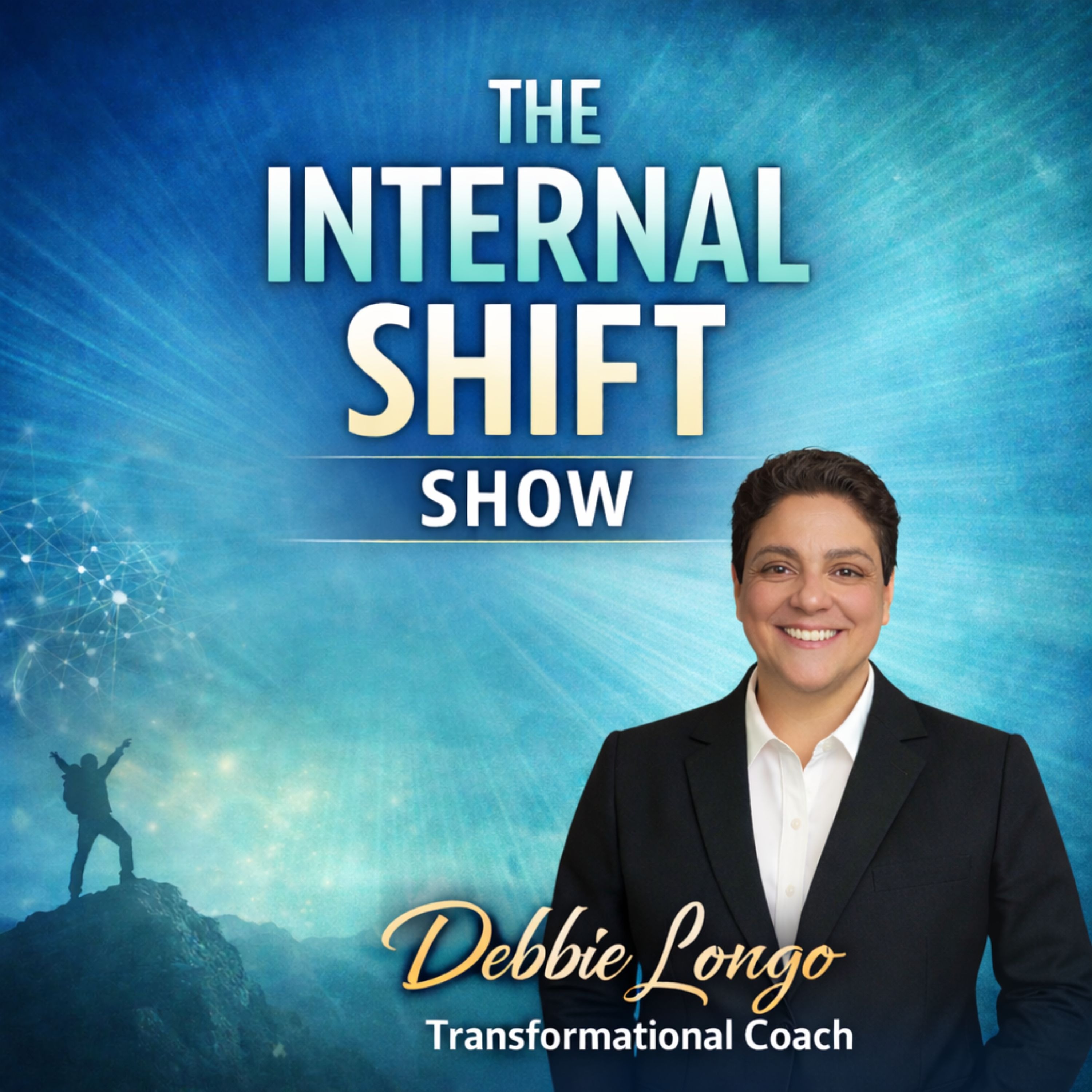
In this episode of The Internal Shift Show, Debbie Longo, Transformational Coach speaks with Belinda Coker about the internal turning point that transformed her life from burnout, depression, and disconnection into clarity, health, and purpose.
At 55, during the pandemic, Belinda found herself overwhelmed by years of accumulated stress—divorce, motherhood, career pressure, and identity loss. She was exhausted, unhappy, and relying on habits that were pulling her further away from the life she wanted. The turning point came when she looked at herself honestly and made the decision that something had to change .
Instead of looking for a quick fix, she returned to something she once loved—hiking. That single decision led to a series of small, consistent changes. Over time, those changes reshaped her habits, mindset, and direction. What started as a simple step became a complete life transformation.
Belinda went on to rebuild her life around health, nature, and simplicity. She left the corporate world, reduced unhealthy patterns, and created a lifestyle centered on fulfillment rather than pressure. Today, she spends much of her time hiking around the world, living with intention and clarity.
This conversation reinforces that change does not require a complete overhaul overnight. It begins with one honest decision and one small step in a different direction. From there, momentum builds, and everything starts to shift.
Contact Information:
Debbie Longo Transformational Coach
Email: debbie@lifeinbloomny.net
Website: https://lifeinbloomny.net
LinkedIn: https://www.linkedin.com/in/debbie-longo-life-in-bloom-ny/
Belinda Coker
Email: wanderingbelinda@gmail.com
Welcome to the Internal Shift Show. I'm Debbie
Longo, Transformational Coach. This show explores
how the way we think, decide, and respond internally
influences where we end up over time. Today's
conversation draws on real experience and expertise
to look at how small internal shifts can change
direction, momentum, and outcomes. I'm joined
today by a very special guest, Belinda Coker.
Good afternoon. Welcome to the show, Belinda.
Hi, Debbie. How are you today? I'm doing very
well. Awesome. I am going to ask you today to
tell your story and point out a situation or
a traumatic event or a life change or something
where you went from a negative to a positive
and you Had this thing happen, you went through
the process and the end result should always
be positive, right? Now, I do the show for a
few different reasons. And one main reason is
because everybody has their own individual story,
but there are things and other people's stories
that people can relate to. Maybe somebody is
stuck. in a situation, a negative situation that
they don't know how to get out of. Maybe somebody
is in a situation where they think it's normal
and that's just the way that they're going to
be. That's the way their life is going to be.
But I don't believe that there is any negative
thing or issue or problem. that the individual
cannot get through, because anything that's negative
can always turn into a positive. I could always
transform that and make that happen. But that's
completely up to the individual whether they
really want to do that or not. Because the first
thing I need to do is create the willingness
and say, there's something wrong and I feel that
I want to change and I just want to make a little,
very small... minute step to do that and just
to see how that works out. Because everybody's
life can always be better. So I'm going to ask
you to do that. Thank you. Back in 2020, so it
was right during the pandemic, I turned 55. And
one day I kind of had menopause a little bit
later than a lot of women. But one day I looked
in the mirror, proverbial. the mirror or whether
it was proverbial or not, I looked in the mirror
and I did not see what I like. I did not like
what I see. I was super burnt out. I was suffering
from depression. Ten years after a horrible divorce
where I really didn't come out on the good end
of it. So I really was at my wits' end and also
with menopause. I call it middle -essence. So
middle -essence is very similar to adolescence.
We've got all these hormonal and body changes
and transitions and identity transitions. But
the problem with middle -essence is that we've
got all this other baggage that we've collected
along the way. When people are 55, middle -aged,
they are looking back on their lives at all the
woulda, shoulda, coulda's and they're kind of,
and people might have aged parents where you
were children. sick partners, all sorts of things,
and everything seems compounded. And that's how
I felt. And I was drinking way too much. I was
depressed. And for years I had worn a corporate
hat. a mum hat, an ex -wife hat, a partner hat.
And I felt like I was pulled in all sorts of
directions. And I looked in the mirror one day
and I just thought, I can't do this anymore.
And I really, really, really felt down. And back
during that time, we were able to go to psychologists
quite easily under the government. And I kind
of went to a psychologist and I had one session
with her. And I kind of felt I walked out of
there and I thought, you didn't help me at all.
I thought, I need to do something. I decided
I wanted to go for a hike. I really enjoyed hiking.
35 years previously, I'd enjoyed hiking. I grew
up in New Zealand and spent most of my adult
life in Australia. In New Zealand, amazing hiking,
all through high school and university, lots
and lots of hiking. I went and bought my first
pair of hiking boots from 35 years. and I joined
a meetup group and I went on a hike. Now just
imagine I am quite unfit, I'm overweight, and
I'm drinking power too much and not in a good
mental space at all. So I went on this hike and
everybody else in the meetup group was 70 or
80 years old. And it wasn't a long hike, it was
maybe 17 kilometers, 12 miles, but it was down
a steep gully and up the other side. And I And
they were sprinting down along the trail and
up the other side and they were all glowing,
absolutely glowing. And I looked at them and
I thought, I want that. Not only do I want that
glow, but I want to be that when I am that age.
And the way that I'm going at the moment, I'm
not heading in that direction. So I started to
make small changes. The other thing is, is that
this hike, it just gave me this huge endorphin
rush. And I came out of there with, I was literally
on a high. It was as if somebody had. It spiked
my drink. I mean, that is, I felt so good, you
know, and nature is an amazing thing. And this
is what I teach now to people who are midlife
or who are not in a good space is how good nature
actually is for you. All sorts of, for all sorts
of reasons. So. I started to hike and I started
to really get in touch with it. And so much so,
as I said, I was drinking quite a lot. And then
I thought, right, when you replace something
you love, suddenly the need and the want for
alcohol starts to subside. Now, I'm not saying
it's a perfect, just wave your magic wand and
all of a sudden you no longer drink. What I'm
saying is that when you fill up your life with
things that you used to enjoy or things that
you love, suddenly you say, oh yeah, a glass
of wine. Oh yeah, sure, sure. It's not a, oh
my God, it's wine time. That suddenly goes and
And so I started to go on hikes and I started
to also do overnight hikes and actually spread
my wings a little bit further and where I would
camp out at solo hike. And then I got to a stage
where I decided that I wanted to do some really
serious hikes and I really pushed myself. I pushed
the boundaries more than I probably ever could,
but I kind of feel I was a little bit desperate.
I knew that I had to do something because I really
didn't like the way that my life was going. It
really was. I was quite scared. I was quite scared
for myself. I was really wasn't in a good place.
So I ended up over the next couple of years doing
some pretty amazing hikes, like, for example,
the. a traverse over the Arctic Circle and Greenland
solo, and then across the Red Centre in Larapinta.
And I've kind of created a life for myself where
I've left the corporate world and I now hike
and enjoy the great outdoors literally full -time
at age 60. I turned 60 on the trailer last year
and I've never felt fitter and I've never felt
happier and I just, I'm in a really good place
now and I just, and as a part of my platform,
SoulTrader, is all about encouraging women, especially
those in midlife, that it is so easy to feel
that you're stuck in a rut. It is so easy. And
everyone sort of throws all these, take mushroom,
do this, do that, do that. And you're bombarded
with things that you. feel that you should do.
Like your Instagram feed, it's just full of things,
products that you have to buy, this and that.
And you look at these middle -aged people bouncing
up and down like they're teenagers. And you sort
of put yourself up against those people and you
go, well, I don't feel like that. Well, all I
can say is it just takes baby steps and find
something that you really, really love and something
that inspires you, creates you, but also and
challenges you because confidence shows up after
you do. And that's what happens with happened
with me. Very, very good. Thank you. I really
like that. That was excellent. A few things when
you were talking, I was thinking about the first
thing is that I've been doing this a long time
and I've helped a lot of people. And the classic
thing is always. The older they are, the more
baggage they have. And that is a great reason
for them not to change. Oh, I'm over 50. I can't
go back to school. I can't change my career because
I'm too old. Oh, I've had all this stuff happen
in my past. There's no way that I could fix that.
There's no way that I could feel better. That
stuff is going to stay with me, you know? And
none of these things are actually true because
there are tons of people that have overcame that
in a million different ways, you know? But these
people have this mindset that this is the stuff,
the type of thing that they put in their head.
Now, the other thing I was thinking, which, like
I said, is always can be that there's ways to
get through that. So the other thing I was thinking
of was that it seems like you just knew and felt
what you wanted to do, which one thing that you
point out, right, was the hiking. But here's
the thing. Well, first of all, being drinking
a lot, right, is very complicated because you
have the heavy drinker and alcoholic, which obviously
we're not going to get into here. And you told
your story, which is your example, about how
you stop drinking or slow down or whatever it
is. And that's fine. But everybody has a different
level of that. Everybody has a different level
of drinking. Now, that's one thing I wanted to
say. So the other thing is that it seems like
you just knew that was what you wanted to do.
Now, the people who take. mushrooms and all these
things like like mushroom mom that they have
now all these different things that they have
where It's you take a little bit of it or marijuana
makes you feel calm and all this stuff It's not
a big deal if you take a little bit of it, but
here's the problem with that It's something outside
of you that's making you feel good inside. Now,
when you do hiking and nature and different things,
you're absorbing that. Yes, it is something from
the outside, but you're absorbing that and that
is naturally making you feel good. And that's
different than taking mushrooms or a drug or
alcohol or something. That's a complete, because
that's a natural thing. So you're feeling that's
a completely different thing that you're feeling.
And this is... Human being you know what I mean?
This is not like it's different for everybody.
This is how a human being is This is how we operate
so anybody can do this now Like I said the the
drinking part is that's a completely the individual
needs to diagnose that for themselves through
therapy or whatever but my question for you is
when you went through the process of Getting
the divorce and that made you realize that you
wanted to height What happened in between that
time? What was that process that made you really
want to say? I know I really need to connect
with nature, and this is how I'm going to change
the drinking and all these other negative things
that you feel. You just mentioned a bunch of
them. What was that process like? So that was
basically a 10 -year period. So I kind of got
divorced, and then this whole epiphany, I should
say, didn't happen until 10 years later. it really
had taken its toll on me, body -wise. I looked
in the mirror and I looked tired. I looked old.
I looked beat. And so I can't say it was just
one thing. It was an accumulation of a zillion
things, of a decade of Can I say struggle? It
was struggle. It was mental struggle, but it
was also, it was struggle as a solo mother. It
was struggle with all sorts of things. And it
just compounded. The whole thing compounded.
And it wasn't, and it was just one day when I
basically said, I need to change. I really need
to change. I need to do something for myself.
And I had, I'd seen people hiking and I thought,
gosh, I should get back into that. Yes, I should
get back into that. And that was one of the things.
It was something that I clung onto from a long
time ago. And I knew that I was in my happy place
way back when I was in university. And it was
almost as if I was reaching out for anything
that would make me happy. And I knew that that
was it. I was probably in no fit state to go
on a hike. When I say no fit state, I was fine.
It wasn't that I was drunk or anything. I wasn't
fit. I wasn't particularly fit and healthy. But
I just want to say one thing more towards the
drinking. I probably was a functional drinker,
but I found just by organically by filling in
my life with other things, the need for alcohol
started to dissipate. Has it still gone? No,
not really. But what I'm trying to say is, is
that, and the other thing is, is I started to
sew as well. And I knew Friday nights was my
sewing night. I would just drink tea on a Friday
night. I wouldn't even consider having a glass
of wine because I was sewing. So I think what
I'm trying to say is that for the first time,
I actually filled my life with something else.
And then all of a sudden it was just like, oh,
no, it's Friday night and I haven't had a glass
of wine. And it was almost like a. And so when
I go on these multi -day hikes, I don't miss
alcohol at all because my life is filled with
something else. You know, but and that that that
is my story. I would hope that somebody else
would find that find that as well. Yeah. Did
I answer your question? Sorry, I just. Yeah,
you definitely did. That was wonderful. That
was very, very good. And the one thing also quickly.
that I was thinking of is that you, it seemed
like you just knew and you had a little bit of
warning signs and stuff, right? Things happen,
right? Thoughts or whatever. And you had these,
you said you got help. You saw the people that
were older, that were hiking, that you wanted
what they had. Was there any other, that you
didn't mention, any other type of professional
help? or any other signs or anything that you
had come to you, or we know that you had it in
your mind and heart and all these things, but
was there anything else, I know you mentioned
like two or three, but was there anything else
that you didn't mention that helped you to get
to where you are today to accomplish your ultimate
goal? No, and I did go and see the psychologist
and I just walked out of there going, well, my
thought was, you were no help at all. That's
how I felt. And that's probably a very unfair
thing to say. I was probably quite judgmental
back then. It was just, you know, like, oh, poor
me, pity party. I thought, right, OK, well, I
don't want to take drugs. I didn't want to take
any antidepressant drugs. And this is one thing
that I really didn't want to do. And so I just
thought, right, OK, I need to do something that
makes me happy. And that's what I did. It doesn't
have to be hiking, but I mean, the thing is,
is that when you're out in nature, nature meets
you exactly where you are, and there's no judgment.
You can look the way you, you can think whatever
you want to think. You can look however you want
to look. It doesn't matter. There's no judgment
whatsoever. It's just you and literally raw beauty
around you. And that can be very, very healing.
It really can. Yeah. Yeah, that's very good.
That's very true. So my last question is, how
do you feel today, right this second, based on
everything we spoke about, your story and everything
we just talked about in this podcast? How do
you feel right now? I feel great. I'm a little
bit homesick. I'm living up in the Northern Hemisphere
so that I can... hike the European trails. So
right now, I'm feeling a little bit homesick,
but I have just lived through a Scottish winter.
And a Scottish winter is very gray, very cold,
and very wet. So part of me is my kids have all
left university. And I am missing everybody.
I'm missing my homeland as well. So I think that's
about it. I've forgiven myself for not, for the
would -or -could -or. shoulda things, you know,
and I've forgiven myself for all of that. And
I think I just love my life now. I really do.
I hike for six to seven months of the year. I
turned 60 on the trail last year. I'm very healthy
and I'm fit and I've got my health, which is
so important to me. I've got my health and And
I feel really good within myself. I've met the
man of my dreams at my age. And yes. And so life
is good. Is it perfect? No, of course it's not.
But nobody's life is perfect. And you just have
to say, look for the goodness in your life. And
lots of people say to me, so how do you afford
to hike around the world and live all over the
world and travel all the world? Well, I actually
live very frugally. My partner and I, we enjoy
the simple things in life. And when you can strip
back and enjoy the simple things in life, just
things change. It just life looks a lot rosier.
Yes, that was very good. Thank you. And I really
appreciate that. And that was a very good way
to close and closing. I would also like to say
that. anybody could get through anything like
we just spoke about. I just went through a whole
thing at the beginning of this podcast. And you
are an example of that because what happened?
You went from a negative situation, the way that
you were feeling, whatever, until now. And now
your life not only is it good, it's completely
different. So you literally did a 180. and you
changed your whole entire life. Now, a listener,
somebody who's listening to this, doesn't necessarily
have to do that to make themselves feel happier.
They could take one small step forward in a different
direction. Did you ever hear of the giant step?
The first step is the giant step. So they could
just do get out of their comfort zone for one
second. or two seconds to take a step going in
a different direction and see how that feels.
And if that makes you feel good, then take another
step because people don't have to sit in an abusive
situation, a thing where they're upset all the
time and they just feel, have negative thoughts,
okay? They don't have to sit. in these types
of situations or scenarios. There's always a
way out and there's always a way that people
can feel better than what they are. And it could
just be that or it could be a big thing. They
could be in an abusive situation. I mean, there's
a lot of really big things, but that's everybody
has their own story. So that's up to the individual
to know. So that was good. And also, like I had
said, drinking is very, very complicated. So
we told the story here, but I'm asking the listener
just to get professional help and get a professional
diagnosis if you feel that you're drinking because
you told your story, like I said, and it's good
for you, but that's not for every drinker. That's
all that I want to say about that because that's
just... A fact, you know, that's just how it
is because it's an addiction. That's why I said
that it's complicated. So as we close this conversation
is a reminder that progress really comes from
one big decision, but from the internal choices
we repeat. If something from today's discussion
connected with you, take a moment to notice how
those internal choices showed up in your own
life. This has been the internal shift show.
Thank you for listening and thank you, Belinda,
for being on the show. I really appreciate it.
Thank you, Debbie.