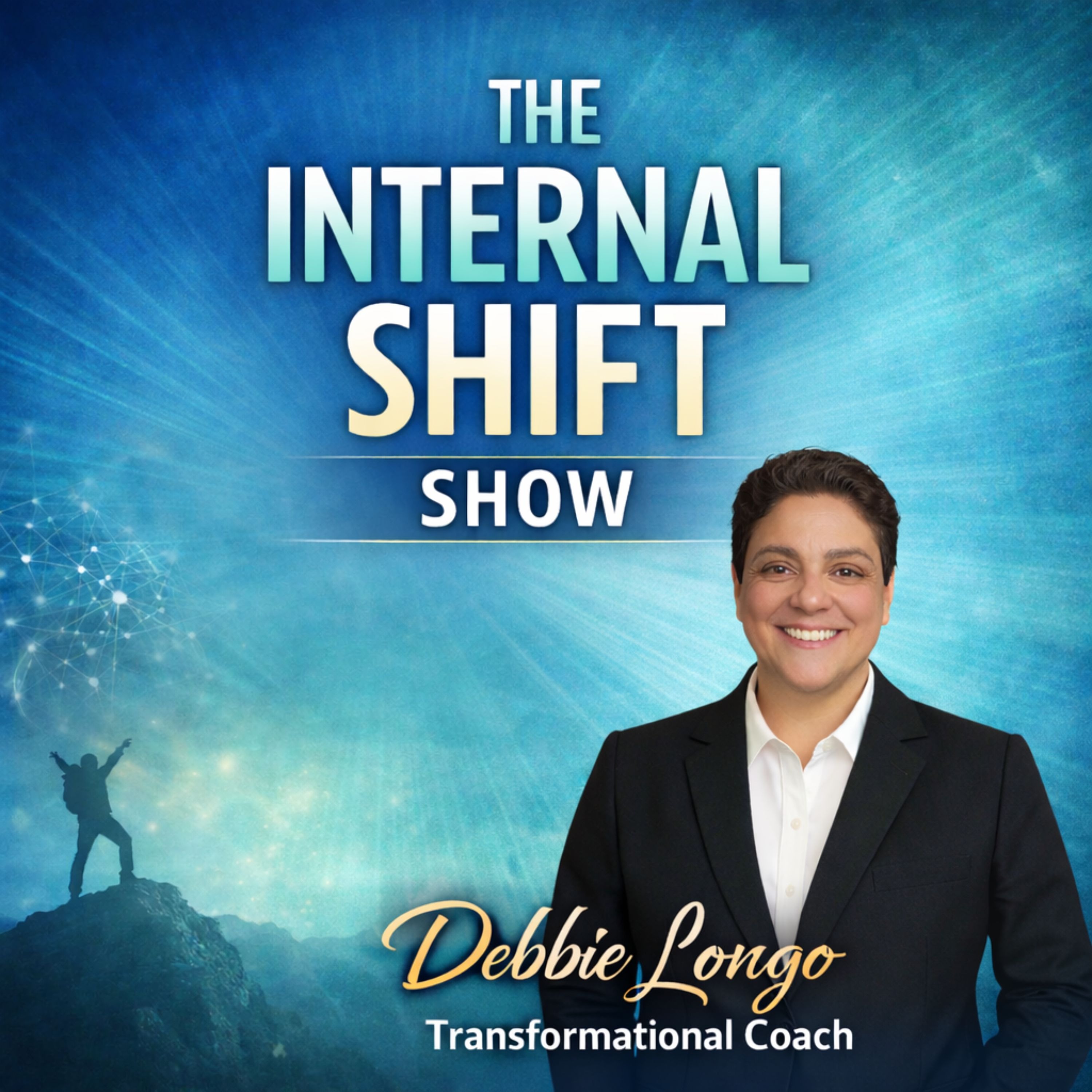
In this episode of The Internal Shift Show, Debbie Longo, Transformational Coach speaks with Al Isaacs about a life-altering discovery that forced him to completely re-evaluate his identity, past, and sense of self.
During the COVID pandemic, while dealing with career disruption and both parents facing serious health issues, Al received unexpected news from a doctor that changed everything—he was adopted. What began as a passing comment turned into a confirmed reality that reshaped how he viewed his life, family, and personal history .
The process that followed was not immediate clarity, but layers of realization. From understanding that his entire family knew, to managing internal thoughts of uncertainty and identity, Al had to navigate both emotional and practical challenges. Instead of staying stuck, he chose to move forward, seeking answers while also maintaining perspective on what truly mattered.
Through persistence and timing, he was able to find his biological family, including his sister and mother, leading to outcomes that exceeded expectations. More importantly, the internal shift came from how he reframed the situation—focusing on acceptance, gratitude, and the understanding that identity is not defined by a single piece of information.
This conversation reinforces that even the most unexpected and disruptive moments can lead to clarity, connection, and growth when approached with the right mindset.
Contact Information:
Debbie Longo Transformational Coach:
Email: debbie@lifeinbloomny.net
Website: https://lifeinbloomny.net
LinkedIn: https://www.linkedin.com/in/debbie-longo-life-in-bloom-ny/
Al Isaacs:
Website: https://www.alisaacs.com
Book: https://a.co/d/01V6kpXx
Welcome to the Internal Shift Show. I'm Debbie
Longo, Transformational Coach. This show explores
how the way we think, decide, and respond internally
influences where we end up over time. Today's
conversation draws on real experience and expertise
to look at how small internal shifts can change
direction, momentum, and outcomes. I'm joined
today by a very special guest, Al Isaacs. Good
afternoon, Al. Welcome to the show. Thank you,
Debbie. Appreciate it. Thank you for being here.
I'm going to ask you today to tell a little bit
of your story and point out a situation or scenario
or traumatic experience or something where you
made a major life change. So you were in a negative
situation, you went through a process, and now
the end result should always be positive. Sure.
And I do this show for a few different reasons.
And one reason is because everybody has their
own individual story, but there are parts to
people's stories that other people can relate
to. Maybe somebody's stuck in a situation and
they don't know how to get out of it. So this
will give a little sense and maybe a little motivation
or a little education that this person's been
through this And they got out of it. They went
through this process. They got out of it this
way. And I could do that, too. Or maybe they're
in a situation and they think that it's normal.
It could be anything. It could be an actual situation
or could just be like a negative thinking or
something like that, whatever the individual
is going through. If I don't believe that anything
negative should stay there. I think that anything
that I'm thinking that's negative, whether, like
I said, it's an action or whatever, can always
be turned around into a positive. And what's
going to happen then, that's going to make my
life a lot better than what it is now. But that's
up to the individual's choice. So if you could
do that for me, I would appreciate it. Thank
you. Absolutely, Deb. So to give you a little
bit of context, I'm in my 50s. I was a professional
comedian. an improvisational comedy instructor
in Long Island, New York, and a husband, father
of one. That started to change as it did for
a lot of folks with COVID. I stopped being a
comedian. Obviously all the clubs closed down,
all the theaters closed down, had to cancel all
shows, couldn't teach my classes. And that was
sort of the beginning of my issue. I mentioned
I'm an only child. My parents both became ill.
during the course of COVID, both were diagnosed
with dementia. My father fell and injured his
shoulder, and my mom was diagnosed with cancer
for probably the fifth time. So things weren't
looking so great. It was kind of a bleak time
for me. I don't drink, don't smoke, don't have
a whole lot of ices, but comedy was kind of my
therapy. Comedy was my way of working through
things. If I was feeling bad, getting up on stage
and working through it and making some folks
happy for half an hour made me feel better. So
that all being said, I didn't have that. And,
uh, one day I was at work designing websites
and I got a call from my mom's oncologist. Apparently
the oncologist had been trying to reach my mom
and talk about family medical history. My parents
are Jewish cancer prevalent in the Ashkenazi
Jewish lineup of people. And, uh, my mom kept
hanging up on the oncologist, wouldn't speak
with her. So I told the oncologist, well, give
a call back. I had a living nurse. living with
my parents, taking care of them 24 seven. Let's
get the nurse on the phone and maybe she can
be an intermediary for you. And she tried that.
And maybe five, 10 minutes later, she called
back, said, sorry, your mom intercepted the call,
hung up on me again. I don't know what to do.
I said, well, if you're looking for family history,
let me see if I can help you out. I'll be happy
to give you my family medical history, whatever
I know. And the oncologist said to me, well,
I don't need your family medical history. I knew
your mom and dad's since after all. you were
adopted and I didn't know that that kind of hit
me out of the blue. And quite honestly, my mom
with a dementia had been telling doctors pretty
wild stories for a few months. She would tell
one doctor she had surgeries that she never had.
She'd tell another doctor that the surgery she
did have, she never had symptoms. She would tell
a nurse about, she would tell the same nurse
the following visit that my dad was the one with
those symptoms. So it was a random thing and
kind of I laughed it off that this was just another
out of the blue, crazy thing my mom was telling
a doctor. And I went home and I messaged an aunt
with a dementia. If he had spoken to my mom for
five minutes, you would never know anything was
wrong. She just had her act down clean. But if
you spoke to her for half an hour, if you spoke
to her a couple of times in a row, a few days
in a row, you'd realize something was going on.
So for a lot of my family during COVID, especially
when they weren't seeing her in person, no one
thought anything was wrong. So me contacting
my aunt wasn't so much about the story. It was
just to say, oh, here's another instance of,
of mom's dementia. So I told my aunt what the
doctor had told me and there was radio silence
for probably a day and a half. And then I got
a message back saying, I always wanted to tell
you and she confirmed that I was indeed adopted.
Obviously it changed my life. I don't think at
the time I realized just how much because I was
still dealing with my identity as a comedian
being gone, my identity as a teacher being gone,
my parents being sick. At that point, almost
simultaneously, my dad was going into hospice.
So processing any of this in the moment, it kind
of just wasn't happening. But obviously, this
was a game changer for me. Yeah. Thank you for
that. I could imagine. I don't I don't know because
I've never had that experience, but I'm definitely
comprehending what you're saying. It just sounds
really unbelievable. So before your mother was
diagnosed with dementia. Yeah. And then in between
that time, like whatever happened before that.
like a few years before that or something. And
then she was diagnosed with dementia and then
you were told that you were adopted. So what
was the process between when you were diagnosed
with dementia and you found out that you were
adopted? I don't know how many, you know, how
much time that was in between that, but what
was that process like? What was your feeling
and thinking and different things like that?
Yeah, it was tough being an only child. I really
didn't have anyone else to lean on in taking
care of my parents. I was kind of doing the best
that I could. And a lot of times my hand was
forced where I was really trying to do my due
diligence and really trying to do my homework
and find the best help and the best. And it seemed
like before I ever felt I was ready, I had to
do something. I had to bring in a nurse. I had
to get my dad into a rehab center for his shoulder.
All these things that I thought I had the time
to do it. I'll say I didn't have that luxury
of time. And I was kind of flying by the seat
of my pants to get everything done. I was fortunate
in that, um, if you ever watched the show, everybody
loves Raymond. I used to work with Ray Romano,
uh, back in the day. And I, I kind of have his,
his fictional life is my real life. I bought
the house across the street from my parents.
So in a lot of ways, it made things a little
bit easier that I could get over there and take
care of them and keep an eye on them and watch
out. But it's just kind of funny the way the
universe worked, that that was the case, having
them that close to me for pretty much my whole
life. If the question is, did I ever suspect
that I was adopted? I never had any hint. It
was from my earliest memories, my parents, especially
my mom, We're always very big on telling me that,
Oh, you got your eyes from your grandfather.
Oh, you got your height from this one. Oh, your
musical ability or your entertaining you get
from this one. Mind you, every relative they
mentioned had passed on. So there is no way for
me to do any homework and find out, but they
were very big into, you know, so when everyone
asks me, was there ever a clue or any hint? I
never had any thought, any idea. One of the big
questions that folks ask me, since I found out
and put my dad into hospice within days, I never
told him that I knew. He passed away about three
weeks after I found out. And if you hid it from
me for 52 years, you had your reasons. I never
broached the subject with him. I would just like
to make a point now. I don't know if this has
anything to do with you or not. It was just something
that I was thinking of when we were talking,
and I hope it doesn't brush you the wrong way
or anything. No, no, no, no. The thing is that
I've for the amount of time that I've been in
this business and helping people, this is, believe
it or not, this does come up where either somebody
was adopted or they're an orphan. or they have
like a stepparent or something like that. If
I say and I teach this only because it makes
it like not better, but like easier just to live
basically where my mindset is different now.
If I say somebody's my father, it doesn't necessarily
have to mean that that is my biological father.
So did you ever hear of somebody say, oh, he
wasn't my father, but he was like a father figure
to me? So there are points in, and again, I've
dealt with this before, there are points in people's
lives where they have a parent. or they know
something, or they don't know something, and
then that knowledge or that parent, whether physical
or mental, goes away, just disappears. Either
maybe like somebody gets a divorce, like a parent
gets a divorce and then they remarry. There's
all different situations. And like your case...
Like I said, where you were, I don't want to
change your story around. That's why I'm giving
different examples here. The point I'm trying
to make is that when somebody is a parent or
like a brother or sisters that comes into a family
or somebody finds out something, right? That
they didn't know their whole childhood or somebody
comes into a family. because of a change, and
now the family's completely different. The idea
is to know and to understand that now that person
is my parents. Now those people are my sister
because those are the people either that raised
me or influenced me in my life, whether they
are biological or not. A lot of times people
will go by that, strictly by that, and say, well,
this person's not my parent because They weren't
my parents from birth. That's not my mother because
my mother didn't have me. Different things where
they solely think that that has to do with when
they were born. Who was there? You know what
I mean? Like the minute they were born, which
obviously you're not even gonna know that, but
it doesn't matter because I could think about
that and say because they weren't my parents
or they weren't there or... Like I said, I have
somebody that came into my life at a later date,
maybe from a divorce, that that person wasn't
there. You know what I mean? Like when I was
born or like my whole life. So therefore that
person doesn't count. But if that is, like I
said, whatever family member, I'm just using
family member as an example. There's tons of
examples of this. This is what we're talking
about here, right? The family. But if somebody
is now in my life, or I recognize something,
then I want to consider that as that is my sibling
now, or those are my parents now, regardless
of... what happened in the past, whether they
were there at birth or whatever they were there
when I was growing up or not there, because that's
what happened in the past. So that was my path
then. But now I have a different path because
now these people are coming in my life or I'm
finding out something that I didn't know. So
that changes my path. So this is my question
to you. You ready? Sure. What was your process
and thinking? after you found out that you were
adopted. You said a few things, but what was
the feeling? The feeling and the thinking and
from then till now, or from then till when you
started to really embrace it and get used to
it and different things like that. What was that
about? There were a few different steps to that.
The first one that I'll kind of tackle. was finding
out that my whole family knew, that everyone
in my family except me knew. That was tricky.
And it was tricky not because I was never angry
at anybody. And I think finding out when you're
52 versus when you're 18, 20, it's a different
thing. What was tricky was more in dealing with
my family that knew and maybe some of them felt
guilty about not telling me and they were afraid
I was going to be hurt and they were afraid I
was going to be angry. And I wasn't, I totally
got it. I knew the kind of folks that my parents
were and they were being loyal to them. They
were asked not to tell me. So they didn't tell
me. And afterwards they were asking me, please
understand. This wasn't, it wasn't my place.
They didn't want me to tell that I was fine with
that. And I understood that. And in fact, to
take that one step further, over the years, there
had been different family friends and family
members that all of a sudden I stopped hearing
from. And I never put two and two together either.
It was just kind of written off. There was some
offhanded excuse, but that was just kind of it.
And I came to find out that if you wanted to
be cut out of my life, if you want to be cut
out of my family's life, all you had to say to
my parents was, I think you should tell them.
And it was those folks. that my parents, I guess,
thought of as a threat, that they were going
to slip, that they were gonna tell me, and they
just took them out of the equation. That's kind
of a sad thing, looking back at some people that
I was pretty close with, but I didn't understand.
So that was part of it. The other big part of
it, which I think you'll appreciate, as an improv
comedy teacher, I taught improvisational comedy
to comedians, to writers, to actors. to lawyers,
to salespeople, to anybody who wanted to take
the class. I would teach them to try and be more
creative, to have more self -esteem. And one
of the things we always talked about was imposter
syndrome and just the idea that you're going
to hear this voice in the back of your head saying,
you're not good enough. You're not funny enough.
Someone's better than you. And how to deal with
that, you know, and in comedy and in performing
for 30 plus years, I learned how to deal with
that. What I was not expecting was that that
very same voice found a new way to get to me,
which was after I found out and I thought I was
okay with the whole idea of being adopted and
this new reality of mine, just occasionally out
of nowhere, the thought pop in my head. You don't
know your parents' names. You don't know where
you came from. The only blood relative that you
know of is your son who lives under the same
roof as you. And that was concerning. That was
that was not easy to live with. So that kind
of drove me to seek out information and find
out where I came from. And that got increasingly
more difficult. I thank God that I had my wife
and son to kind of keep me going through the
process, because there were a lot of times that
I was ready to go. OK, it is what it is. And
we'll just. start over from here, start from
scratch. But I was really, really lucky in that
case. Interesting. Well, first of all, did it
work out for you as far as you finding your parents?
And not only what was that process like, but
sometimes if you get the results, you don't like
it. Or if you don't get the results, you don't
like it. I'll give you a spoiler alert. Everything
turned out amazing. Everything. turned out as
best. And sometimes I don't like to lead with
that only because I know there's a lot of folks
going through this. I got a lot of help online
through different support groups of people who
found out later in life like I did. And there
were a lot of people who went through a lot worse
when it comes to their identity being shattered.
I have family and friends who, St. Patrick's
Day is like Christmas 2 .0. They are so Irish.
I mean, shamrocks and corned beef and cabbage
all the live long day. If they were to find out
they weren't Irish, their heads would explode.
It would have been a horrible, horrible thing.
I didn't have that. As far as I knew growing
up, I was 75 % Russian, 25 % English, three grandparents
from Russia, one from England. And that's as
far as I knew, but it wasn't like we were celebrating
Russian. holidays and had a Russian flag. And
so to find out, and let me also say that for
years I've been married for 30 years. My wife's
been going, you're Scottish. Look at you. Come
on. And I just thought, well, she's a big fan
of Outlander. Let her believe what she wants
to believe. Turns out I am Scottish. It turns
out I'm Scottish and Irish and just a little
bit of English. So, but, but that, that part
of my identity, this had nothing to do with the
comedy part, the performing part that So COVID
beat me up a lot more than this did when it comes
to that stuff. But yeah, I got so lucky and I'm
trying to help out folks who went through this
as well. And I don't want to get everyone's hope
up that it's going to turn out as well. Cause
I read so many folks who it, like you're saying,
they get an answer, but it's not the one they
wanted or they come so close and someone, cause
when I first started out from ancestry .com,
Immediately I found an aunt and after a couple
of days her daughter emailed me to say that she
didn't want to connect. And that was like right
out of the gate. I'm going OK, you know that
little voice in my head going up. See the shoes
going to drop. That's it. But I got so lucky
and in saying that it always bothers me like
at the Oscars when someone gets up there and
they go see dreams do come true like no your
dream came true. There's four people still sitting
down who had that exact same dream. It didn't
come true for them. So, but yeah, for me, I found
a sister, which you were just talking about labels.
She's actually a half sister, but she's my sister.
It's like, you don't have one eighth of pizza
for dinner. You have pizza. So she is my sister
and I love her to death. And I found my mom.
And just to give you an idea of how easy it was
to find my mom. Her actual name is Mary Smith.
So she has the most common name on the planet.
So with a name and a picture from a yearbook
from a school that closed 28 years ago, I found
her. I had me a hobby over the years in tracking
people down. And some folks said to me that that
was rather than dealing with stuff emotionally
and maybe processing things. grieving for my
parents and other things that I was more focused
on doing this. That's probably true. It was something
of an obsession, but it paid off because now
I have an amazing sister in my life and an amazing
mom who once I found her and heard her story,
my life made so much sense. Everything I've gone
through completely made sense. Yeah. So that's
why I always stress the process of the podcast
is from negative to positive or in chronological
order, only because this is what we're trying
to accomplish, because we're really trying to
focus on the process. That's why I'm asking you
questions about that, because that's what the
listener wants to know. The listener doesn't
understand. That's the whole purpose of the whole
podcast. That's why we're sitting here talking
about it and different things. But here's the
thing. What happens to me, and again, this is
my teachings, an individual can agree, they don't
have to agree, the listener can turn the podcast
off or leave it on, that's up to them. Whatever
is meant to happen. happens. So if I bang my
head for years and years going on the Internet
and researching and trying to contact people
and stuff and it doesn't work out, then that
is just the way that it's supposed to be. But
on the other hand, if it works out, that's great.
But then I have to think and we'll go through
this example, obviously, then I'll have to think
that If the person wants to meet me, let's say,
for example, then I have to think, is it really
meant for me to meet this person rather than
jumping and saying, oh, this person wants to
meet me, I'm going to go meet them. But the thing
with that is, do I like my life the way it is
now? Am I OK with meeting them or not? And sometimes
that's the reason why things are meant to happen
in the way that they happen. But. If I force
something and I try to control the situation
and I'd say I want to meet them and then I'm
not sure. And I'm all over the map with my thinking
and my decision making and stuff. A lot of times,
most of the time, that type of stuff is not going
to work out. And this is all stuff that I teach.
And this is all like this is a thing where you
have to really be trained for this in order.
This is like a total like change your mindset
completely kind of thing. Right now, you it seems
you kind of understand that because, like you
said, when the daughter emailed you, you are
OK with that. But there are a lot of people that
are not because this is common. I mean, that's
why they have. Ancestry .com, you know what I
mean? And they're making millions of dollars
off of this because there are so many people
that have the same situation that you have. That's
the reason why they have it. If they weren't
making money on it, then it wouldn't exist. That's
really the bottom line. And you need the people
in that situation. So you know that there are
tons of people that are like, so this is a very,
very common thing. Whereas maybe when you were
growing up or you found out, you might have not
thought, right, that it was that common. But
how long have these internet, it's not only one,
there's multiple things where you could look
up your ancestors and stuff. There are multiple
websites like that, right? How long have they
been in existence? Right. Well, I don't think
that long, you know, they weren't in it. They
haven't. That's what I'm saying. They haven't
been in it. So all of a sudden now people are
just curious and they want to know. No, they
see that this is really the truth. And, you know,
this is people really. There's a lot of people
like this. Yes. That's what I'm trying to say.
So that's why this is a good example. And I need
to know that what is going to happen is just
meant to happen. Well, you know, and it's funny
because there's no such thing as a closed adoption
anymore. It's just because of 23andMe. And there
are so many people getting these kits as gifts,
almost as a goof. Like my wife wanted to do it
years ago. I don't know what would have happened
had I done it. But my wife wanted to do it because
a cousin did it. and found out that they were
related to some princess centuries ago. That
was cool. So almost this gimmicky kind of thing.
And people do it and find out a surprise that
they were not expecting. But exactly what you
are saying is exactly right about things happening.
I'm a perfect example. Everything happened. It
didn't happen according to my schedule. When
that first aunt didn't want to connect with me,
I was angry. And my brain is going, you had to
know I was out there. So when you did ancestry,
you had to think there was a chance that this
guy is going to reach out. But we're good. That's
fine. But everything happened because it didn't
happen on my schedule. It happened when it was
supposed to happen. Had I found out I was adopted
20 years ago, like you're saying, there's no
ancestry. There's no DNA test. The Internet since
infancy, I never would have found anybody. Had
I found out I was adopted two years later, some
of the folks who gave me the very first clues
that I needed to start have since passed away.
So there was this very finite window for me to
find this. So it happened exactly how and when
it was supposed to. I don't remember who said,
you know, life doesn't make sense when you're
living it forward, but when you look back, you
see people, things were put in place exactly
when they were supposed to, how they were. There
were so many people who helped me along this
journey to find out the truth, to find my biological
family, that whatever force in the universe you
believe in, you know, something was helping me
out. There's no question about it. And I'm eternally
grateful. Yeah, 100 percent agreed. And a lot
of times the past doesn't matter, but sometimes
it helps to make decisions of what I'm going
to do in the present. That's really the thing.
But I don't like to. I mean, we're talking about,
you know, the story here and stuff. But I like
to focus on what's happening today. And the last
question, because we have to close in a little
while. My last question is that. How do you feel
today, right now, right this second, based on
this whole podcast and your story and everything
we just talked about? I'm blessed. Five years
ago, I couldn't have foreseen where I would be
today. The most important things in my life were
the same before, during and after this, which
is my wife and son. Nothing has changed there.
But the fact that I have this amazing sister
in my life who, by the way, she was looking for
me for 20 years when I found her. I find her
and not that I find her, but she had a baby a
couple of months afterwards. So I have a beautiful
niece as well. And I have this amazing mom who,
you know, it's like back in my life after, you
know, 52 years and we have this great relationship.
And like you said, there were so many times this
could have gone sideways and it's, it's a different
thing finding out when you're in your fifties.
It's a different thing for me to approach someone
and say, you know, I think I'm the child you
gave up because I'm not coming to you from a
place of I need something from you. I want something
from you. Why did you abandon me? I have my own
life. And in fact, you're kind of getting a package
deal because now you're getting your son, you're
getting a daughter -in -law and a grandson and
all this package. And my biggest concern, like
you were saying before about wanting to meet
someone and maybe forcing the issue. That was
my biggest fear. in approaching someone after
all the time that I didn't want to ruin their
life. Now, I didn't know if she had another three
kids or a husband who had no idea I was out there.
You know, it turns out I was her only child.
It turns out that she told her husband and he's
an amazing guy and they live in England. And,
you know, and we have this great, great relationship
today. So, you know, how do I feel right now?
Amazing. And anyone who is going through this,
I can tell them you're not alone. There are so
many people going through it and there are so
many people who are here to help. So, yeah, it's
great. Very, very good. And 100 percent agreed.
I love this. I thought it was fantastic. And
that's a great way to close. And then in closing
also, I would like to say that if a person is
in this situation, like we just spoke about,
you know, there's always a positive way out.
But if anybody. is in any situation at all, they
don't have to sit in the negative. They can turn
that situation, whether it's they're upset or
even a mindset or whatever, they could turn that
into a positive. And when that happens, their
lives will get so much better than what it is
now. They don't have to accept life the way that
it is now. And we don't have to put limitations
on ourselves. We can open the door and do something
that's a little uncomfortable, something that
we don't like to do, and just take a first step
forward, take a baby step, and let's see what
happens. Just see what happens after that and
see if you like that. the way that you feel and
then take another step. Different things like
that. So that was good. As we close, this conversation
is a reminder that progress really comes from
one big decision, but from the internal choices
we repeat. If something from today's discussion
connected with you, take a moment to notice how
those internal choices showed up in your own
life. This has been the Internal Shift Show.
Thank you for listening and thank you, Al, for
being on the show. I appreciate it. Thank you
so much, Debbie.