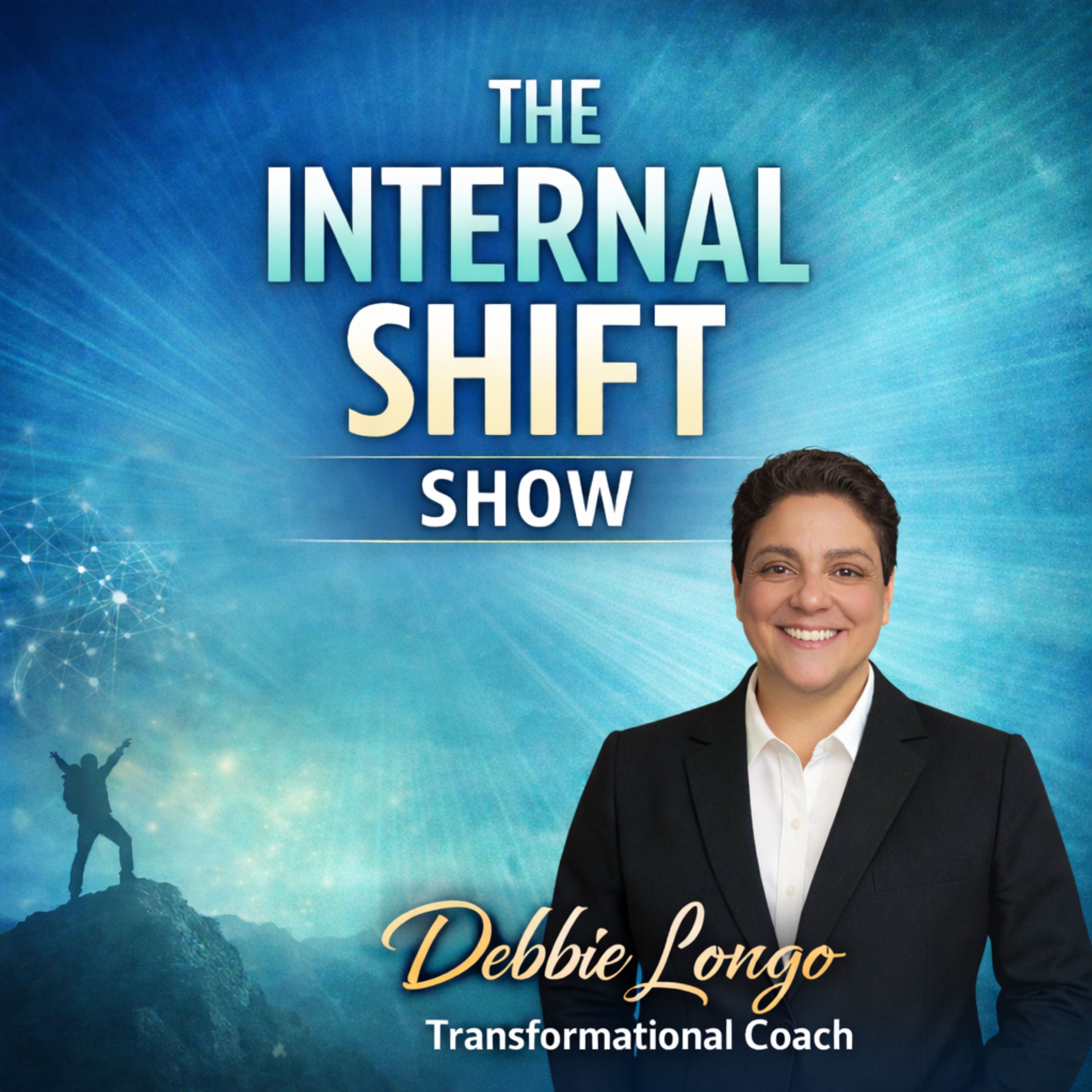
In this episode of The Internal Shift Show, Debbie Longo, Transformational Coach speaks with Cheryl Fimbel about the unexpected emotional and psychological impact of retirement—and the internal shift that changed everything.
After 45 years in healthcare, Cheryl was forced into retirement just weeks after losing her mother. What seemed like a financial concern at first quickly turned into something deeper. Without the structure, routine, and identity tied to her career, she found herself feeling lost, unproductive, and disconnected from purpose .
The turning point came when she realized she was not failing—she was experiencing a documented transition. Concepts like identity loss, lack of structure, and purpose disruption gave her clarity and shifted how she viewed her situation. Instead of staying stuck, she began rebuilding with small, intentional actions.
Through creating structure, redefining who she was beyond her job title, and reconnecting with what mattered, Cheryl moved from drifting and depression to clarity, purpose, and fulfillment. She went on to write her book, The Hidden Side of Retirement, and now helps others understand and navigate this transition.
This conversation reinforces that major life changes are not just external—they require internal adjustment. When that shift happens, direction, purpose, and stability follow.
Contact Information:
Debbie Longo Transformational Coach:
Email: debbie@lifeinbloomny.net
Website: https://lifeinbloomny.net
LinkedIn: https://www.linkedin.com/in/debbie-longo-life-in-bloom-ny/
Cheryl Fimbel:
Email: cheryl@crownyearsmedia.com
Website: https://www.crownyearsmedia.com
Book: https://a.co/d/08hFM0IJ
Welcome to the Internal Shift Show. I'm Debbie
Longo, Transformational Coach. This show explores
how the way we think, decide, and respond internally
influences where we end up over time. Today's
conversation draws on real experience and expertise
to look at how small internal shifts can change
direction, momentum, and outcomes. I'm joined
today by a very special guest, Cheryl Fimble.
Good afternoon, Cheryl. Welcome to the show.
Good afternoon. Thank you. Thank you for being
here. So I'm going to ask you to tell your story
today and point out in your story a life change
or a traumatic situation or something where you
went through a process and you came out the other
side and the end result should always be positive.
And I do this show for a few different reasons.
And one reason is because everybody has their
own individual story, but there are parts to
people's stories that other people can relate
to. Maybe somebody stuck in a situation where
they can't get out of it. Maybe they don't know
how. Maybe they just think that it's normal and
they're just going to be like this for the rest
of their lives. But the point is that there's
no such thing as a negative situation because
everything can be turned into a positive as long
as I'm willing and I'm able to even just try
just to say. I want to see if I could get out
of this. I don't know if I can. And I don't know
what it's going to look like. And that's also
fear of the unknown. That's another thing, too.
There's a lot of situations and there's a lot
of things that people are thinking as far as
going, getting out of a situation where now we
become positive. And this is what the guests
do in this show. And it's a very consistent thing,
because I want to be able to show people, right,
that there is the light at the end of the tunnel.
There's always a positive result to everything.
So if you could do that for me, I would appreciate
it. Thank you. Well, to start with, again, my
name is Cheryl Fimble, and this is to do about
retirement. I had worked for 45 years in healthcare.
Unexpectedly, at the age of 69, I received a
phone call that my position was eliminated. I
was planning to work until I was 70 so that I
could have the full retirement. But anyway, this
happened at age 68, two weeks before my 69th
birthday and two weeks after my mother's funeral.
Not only did I have losing my job happen to me,
but then I lost my mother, which was very, very
significant to me at the same time. So needless
to say, I was just, I was an absolute mess. I
really was. But the first thing that I really
worried about was the money part of it, because
that's really all I'd ever thought about. in
retirement, it's like, do I have enough money
to retire? That sort of thing. And I was worried
because you want to have enough to make sure
that you have enough to live on, that sort of
thing. But I'd also dreamed of being able to
travel and do all sorts of things like that whenever
I retire. So my first thing that I did was I
went to a financial planner and we sat down and
she confirmed that I had saved enough money throughout
the years. to be able to retire comfortably.
I wouldn't have to significantly change my lifestyle,
but there wasn't enough out there for me just
to be able to go on trips two or three times
a year and all of that sort of thing. But it
was real comforting to me to know that money
wasn't necessarily going to be an issue. So anyway,
what nobody told me is that Work just doesn't
provide your income. There's more to it than
that. For example, work determines what time
you get up in the morning. Work determines your
whole schedule throughout the day of what you're
doing. At work is your social world, people that
you speak with and you have lunch with and all
of that. Work is also your sense of being needed.
And so whenever the paycheck stops, all of that
other stuff stops, too. And that is something
that I had not thought about at all. I thought,
oh, well, if I have enough money to live on,
then I'm OK. Retirement is going to be good.
And throughout my life, yeah, I'd thought about
retirement. Oh, yeah, I'm going to be able to
complete this and complete that and do this when
I retire. But I really had not thought about
it specific enough to know what it was actually
going to be with. So here I find myself by going
ahead and I retire and the first week is pretty
good. It's kind of like a vacation and you wake
up whenever you want to, even though the first
morning I did wake up and it's like, oh, my alarm
didn't go off, you know, and I was a little nervous,
but, you know, and it's like, oh, I'm retired
now, how great. Then I went and got my cup of
coffee. And then after that, it's like, Well,
what am I going to do for the rest of the day?
So anyway, there was some of that that went on.
But but anyway, I thought, oh, well, you know,
this is great. So I found I found that it was
there was there was a lot more to it than that.
The first week, like I said, it was like a vacation.
The second week, it's like, well, what do I do?
I remember one afternoon at two o 'clock, I sat
down to watch a movie and I felt guilty, very
guilty for watching the movie because I should
be doing something. I was so used to in my business
life always having something to do. That to -do
list was really long and all of that and I no
longer had that structure. That was probably
the first thing that hit me up. after I retired.
The biggest mistake that I made was not preparing
for it ahead of time. So now, going on in, I
went through like three months, four months,
and I was just kind of drifting around. Well,
I would get up early one morning, I would drink
my coffee, and I would pittle around. The next
thing I know, the day is gone. I hadn't done
anything. And I'm just, it was just like I had
no purpose. I was just kind of floating around.
Even at some point in time, I was depressed because
it's like, okay, I'm retired. It was supposed
to be so great, but this really isn't great.
I'm not doing anything. So anyway, I spoke to
my sister about that. She was kind of my lifesaver
throughout the whole thing, but she told me,
she said, Cheryl, don't try to do everything
at once because that was the problem. I think
it was like, I have so much to do. I couldn't
do anything. And she would say, well, figure
out two or three things, Cheryl, a day. Take
a list. I'm going to do these two or three things
a day. And whenever you do it, then you're finished.
You've accomplished something and feel good about
it. So that is one thing that I started doing,
which really and truly did seem to help. some
with all of it. But the thing about it is, okay,
that was getting me through, but I still had
all of these things that I really wanted to do
that I hadn't even started doing. It sounds crazy.
It's like, well, just get in and do it. That's
how my moment. came when it's like, okay, this
is not working. In my work life, I have always
been a, I've had huge long lists of to -dos and
I've always been able to prioritize them, make
my plan, work through it, do the whole thing.
But I was at a point where I couldn't do that.
I just, I couldn't make myself do it. And I think
part of that probably was depression, but part
of it I think was not having that structure that
I had at work. And so in my mind, I'm thinking
I need structure, I don't have it. And so I wasn't
doing anything. So that moment that I had. I
was standing in the middle of my craft room.
I actually do like to craft. I sew and I knit.
Unfortunately, or fortunately, whether it's my
perspective or my husband's perspective, I've
got lots of fabric. I have lots of yarn. I've
got a lot of things that patterns and things
that I want to make and I wasn't doing any of
that. So I was just standing in the middle of
my room and I have all of this stuff in here.
And I told myself, Cheryl, you have got to get
a grip. You have got to work this thing out.
I just couldn't stumble along in my retirement.
And I was miserable. I was depressed. everything
that I had dreamed that was going to happen when
I retired was not happening at all. So at that
point, I would have to say that was actually
my low point, but I was thinking about something
that my father always said. And he always said
that when we had difficult times or I had a difficult
time, he would always say, well, Cheryl, just
do the best with what you have and don't worry
about the rest. And so it's like, OK. I need
to do the best with what I have. And what do
I have? Well, I have an analytical mind. And
any time at work or whatever when I didn't know
how to do something, I would do research. I would
find out how to do it. And then I would decide
what the best route is to go, make the plan,
and go through it. So that's what I need to do.
So I pulled out my laptop and I didn't even really
know what to search for, but I just started looking
around and what I found actually changed everything
because everything that I was experiencing actually
had a name. It's called identity loss, purpose
disruption. the paralysis of unstructured time.
It was well documented out there and it was real
and other people have gone through that and they've
out they come out on the other side of that.
So the circumstances didn't change the moment
that I had that I made that decision but what
it changed was my relationship to them. I went
from feeling broken to understanding, okay, I'm
in a process. That is my moment when I had that
internal shift that made it possible for me to
go through the rest of my retirement and get
to the point where I was doing more than just
surviving. I knew from the research, that the
first 90 days is a transition period and that
I needed to go through that period before I could
get to the point where I would start thriving.
So that's kind of the beginning of where all
of this started and how I got to that decision
point where I needed to do something. Yeah, that
was very good. Thank you for that. And your description
was excellent. And I don't really have to ask
a lot of questions because you pretty much answered
the ball. You explained about the process and
your feeling and all that stuff in detail as
much as you wanted to. And that's fine. But.
A lot of times we talk about there was a few
things I was thinking about when you were sharing
these things. And a lot of times people and I've
been in this business a very long time and I've
helped a lot of people. I'm a coach. I'm not
trying to sell myself. This is not what this
podcast is about. It's mainly about helping people
become more positive, get out the other side.
All that stuff that we were talking about in
the very beginning. Right. In my intro. But I
know from and. Like you said, this is very common
because I'm going to tell you, I've known from
a lot of people, and I actually have personal
experience with family members too with this,
that there's always, when I work, just going
to use work as an example, there's structure.
I create a certain structure. And if I do that
for a long period of time, I don't realize this
is happening. OK, because I'm so embedded into
that. And that's not a negative thing. That's
a good thing because structure is always good.
But here's the thing. Once I do something different,
I need to prepare. For what that is I need to
prepare in advance for what that is Because and
you didn't realize this and that's totally fine
because this is part of your process There's
nothing wrong with that. This is your process
This is what you went through and this is what
you were supposed to go through because this
is just the way it is This is what happened,
right? But the point is that if I'm able to prepare
myself, right then I know what's gonna happen
and I know what is gonna happen to me and how
I'm gonna feel. So the thing is, a lot of people
say, oh, just think about today. Well, you know
what? There are ways that I can know what's gonna
happen before it actually happens. There are
ways to do that, and there's all different processes
and there's all stuff that I teach. And this
helps also in business with the executives, but
this helps a lot of times when people are going
through a major change. And I don't think this
is not something that I've really talked about
a lot in the previous episodes that I've had.
only because a lot of things get repeated, but
it doesn't matter. So what I want to do is I
want to prepare for it. Now you looked at whatever
came up is what was supposed to come up right
on the computer. So you knew what you did. Maybe
you worked with computers at your job and you
did whatever was comfortable. So this was what
came up. So this is like the psychology version
basically of what happened and a psychological
thing and a mental thing. however you want to
really describe it. And that is what connected
with you in your mind. Like I said, that's your
process and that's totally fine. There's nothing
wrong with that. And when I do these things,
what's happening now? I'm going out of my comfort
zone. First, you did big time because you went
to the retirement. I told you there was no problem
with the money. But you just explained. You just
talked about your feelings and your process and
everything that happened in between that time,
which is one of the questions that I ask. And
a lot of guests are. They need to like go into
that direction, but you didn't, which is, which
is good because like I said, this is, this is
just the way that your thought process works.
We just find. So I want to prepare. I want to
be able to prepare myself for a major change.
or for what I'm going through, providing that
I want to first decide that I want to take this
step. And sometimes things happen to us that
force us to do this or give us a push. Doesn't
have to be like a big major force thing, just
a little push or somebody says something or I
see something on TV or something like that. And
that gives us a little push and then says, oh,
let me try this. But the thing with that is if
I want to always be able to prepare myself and
I want to see what are the pluses and the minuses
so I can take a piece of paper and write, make
two columns, one column is negative, one column
is positive. And what is what is more right of
each column or something like that? If it comes
out more negative than positive, then I might
doesn't mean I can't do it. But then I might
want to figure out how I'm going to get more
positives in if I'm going to go in this direction.
And what you went through, what you're describing,
right, did work out for you because you found
the proper tools and the proper way to do this,
where you're changing your mindset. Right. Now,
a lot of people, when they retire and stuff,
they have, like I said, they have a schedule
or they have the structure. So, I help people
do this and I create the structure. You know
what I mean? They create the structure. I give
them a plan and a guide and stuff. Just like
they're at work. Just like they're at work. The
same thing, they're just not at work. It's the
same. We make a schedule. It's just different
things on the schedule. That's all it is, right?
Absolutely. So this when we do it this way, this
is a very easy transition. And then you might
want to move away from the schedule. You might
want to do one thing on your own or two things
on your own, you know, or something like that.
Right. And like I said, you had your own path.
You had your own thought pattern. And that's
totally fine. There's nothing wrong with that.
But somebody, a listener might be thinking they
might. just listen to this and they might be
thinking, well, I can't do that. I need to do
it in a different way or I need to have the structure,
different things. That's why I am offering all
different ways of doing things depending on the
person's mindset, what the person's comfortable
doing. So how do you feel? Today, since you answered
most of my questions, which are very, very good.
How do you feel today based on this podcast,
everything you said and your process? And also,
if you could just talk about very quickly, what
was the end result? You can incorporate that
into that because you basically said the whole
thing. If there's something you missed, that's
fine. But it sounds to me like we may just making
the point here. How do you feel about all of
that stuff? I feel like I do have purpose now.
I've worked through all of that. To begin with,
and this came from the research that I did, is
that I made a list of 20 things that I am without
the word director in front of it, or without
the title, to help me determine who am I right
now, because I was thinking, who am I? Well,
I'm a mother, I'm a wife, what am I, when am
I? And went through all of that, and I came up
with things that I've always been, but... work
because I worked so much they kind of were pushed
to the side so What I am and then looking at
at things that that matter to me Things that
that I would do without any pay That sort of
thing and I looked through that and then I found
some purpose I found purpose for myself one of
which is writing the book the hidden side of
retirement and singing in my church choir and
things like that, that I didn't have time for
before. So in doing all of that, setting my little
schedule, it's a bare bone schedule, but I do
have a schedule of things that I do every day,
which keeps in my mind, I need that. Maybe everybody
doesn't, but I need that. Then giving myself
purpose, figuring those things out. Now I'm into
my next phase after the 90 days where I can work
further into that. So it's not over once you
figure out those things, then you've got to keep
working through it. But in doing that, I'm much
calmer. I am really enjoying retirement. I love.
not having to get up and drive an hour in traffic
to get to work. I love being available. I recently
had a friend that had some surgery and I was
able to go full week and stay with her. I didn't
have to worry about work the whole time. It's
made me a much better person by going through
the different processes I did and writing about
it was actually very helpful to me too, kind
of healing. Even though I wasn't able to follow
all of the things that I found in research during
my first 90 days, I was able to do it afterwards.
And then I'm able to share that with others,
which, like I said, is all part of that healing
process. So I'm not anywhere, by any means, I'm
not... My retirement isn't perfect. I'm still
working through things. My husband and I every
once in a while still encounter something that
we didn't discuss about who's going to do what
when we're both at home all the time, that sort
of thing. But I am not depressed. I'm not wandering
around. I actually feel like that. I know where
I'm going. I know what I'm doing. And I'm looking
forward to my future and retirement very much.
Very good. That was excellent. And that's an
excellent way to close. And I really appreciate
that. Thank you. And in closing, I would just
like to say that anybody could get through anything.
There is no such thing as a negative situation.
And I hope somebody can relate to any part of
this podcast at all. It doesn't have to be the
thing, right? The situation or the scenario that
we're talking about here. It can be any part
of this podcast at all. this conversation is
a reminder that progress really comes from one
big decision, but from the internal choices we
repeat. If something from today's discussion
connected with you, take a moment to notice how
those internal choices showed up in your own
life. This has been the Internal Shift Show.
Thank you for listening and thank you Cheryl
for being on the show. I really appreciate it.
Thank you for having me.