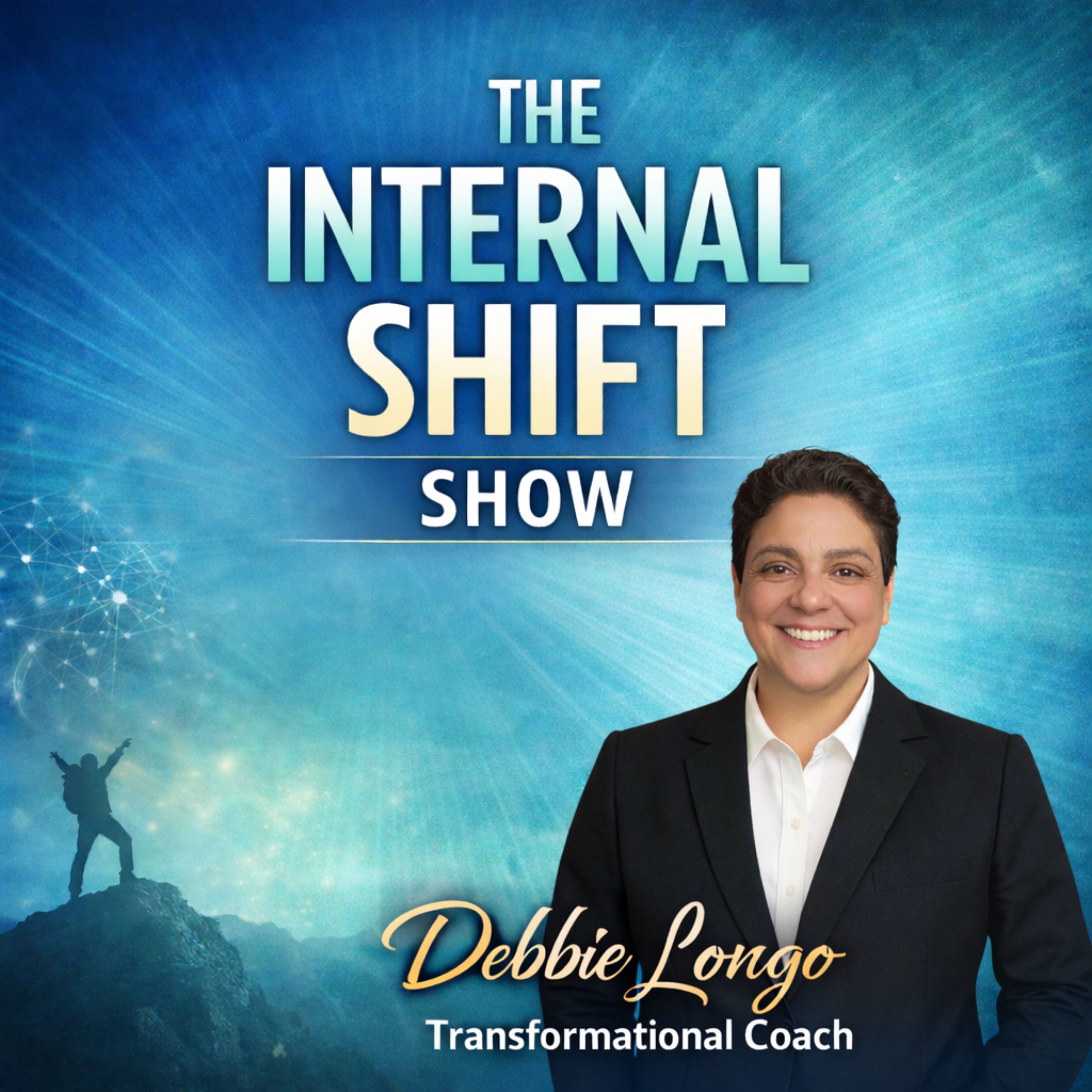
In this episode of The Internal Shift Show, Debbie Longo speaks with Heike Yates about the internal shift that changed how she approached health, performance, and self-worth.
After struggling with weight as a teenager and again after becoming a mother, Heike entered the fitness world determined to change her body and her life. What began as progress quickly turned into a pattern of pushing harder—bodybuilding, endurance racing, ultramarathons, and eventually completing an Ironman. On the outside, it looked like discipline and success. Internally, it was driven by pressure, comparison, and the need to prove something.
The turning point came when her body began to push back. Injuries, exhaustion, and burnout forced her to confront a different truth—that more effort was not the answer. Instead of continuing to override her body, she made a shift toward listening, trusting herself, and choosing sustainability over intensity .
Through practices like Pilates and a more balanced approach to movement, she rebuilt her relationship with her body and redefined what strength actually meant. This conversation explores self-trust, identity, overachievement, and the shift from external validation to internal alignment.
It reinforces that pushing harder is not always progress, and that real growth often begins when you stop fighting yourself and start working with who you are.
Contact Information:
Debbie Longo Transformational Coach:
Website: https://lifeinbloomny.net
LinkedIn: https://www.linkedin.com/in/debbie-longo-life-in-bloom-ny/
Heike Yates:
Email: podcasts@heikeyates.com
Welcome to the Internal Shift Show. I'm Debbie
Longo, Transformational Coach. This show explores
how the way we think, decide, and respond internally
influences where we end up over time. Today's
conversation draws on real experience and expertise
to look at how small internal shifts can change
direction, momentum, and outcomes. I'm joined
by a very special guest today, Heike Yates. Good
afternoon, Heike. Welcome to the show. My pleasure,
Debbie. Thank you for being here. I'm going to
ask you to tell your story and point out a life
change or traumatic experience or something that
happened to you and the process that you went
through and the end result of that. And the end
result should always be positive. Now, I do this
show for a few different reasons. And one reason
is because everybody has their own individual
story. But there are parts to people's stories
that other people can relate to. And maybe somebody
is stuck in a situation that they can't get out
of, a negative situation. Maybe they're in a
situation where they think that it's normal and
they just think, this is how my life is gonna
be. So anything that's any type of negative situation
or scenario or anything can always be changing
into a positive. So I don't believe that there's
really anything negative. This is what we're
trying to do here. And in my podcast, I have
all different stories of all different people
and then they explain what the process is. And
that's what we're really focusing on here because
Some people might think that the process is for
them to get out of the situation is a lot longer
than they think it's going to be, a lot harder,
harder, a lot more time consuming, when a lot
of times it's really not. And sometimes things
just come. This thing happened, this helped me.
Then this thing happened, this helped me. So
it's kind of to show that sometimes it's not
as difficult as it can be. Because to get out
of that negativity sometimes is really not that
easy. And if I think it's normal, or I don't
know really what to do, then I can get some education,
but I don't want it to be something where I don't
think that I could get out of this. Where I think
this is just the way that I'm gonna be and that
just holds me back I always feel that people
can constantly move forward, but I'm holding
myself back I'm not the world and the universe
or whatever it is that you believe in is not
holding me back And that's the thing so the more
positive I become the more I'm able to move forward
and the more successful that I am So if you could
do that for me, I would appreciate it. Thank
you I think my story started long before I even
realized it started. And I remember back after
my first born, I had gained a lot of weight.
I gained 50 pounds during the pregnancy. And
I had no idea how to lose that weight. And that
projected me into the fitness industry, which
I always thought this is something I would never
do. This is not something that's fun. People
are sweating and there's a lot of hard work to
be done. But it seemed also the right path for
me to continue on, to learn more about what the
body can do, what the body is capable of, how
can we get to the maximum of what our bodies
can do in different phases of life as well. And
as I became a coach, I learned more and more
about the possibilities. And the more I learned
about those possibilities as not only a midlife
fitness expert, but as a sports nutrition coach
and also people that teaches regular exercise
classes, I learned that not only can you change
the life of people, but how it affects people.
And the more I learned, the more I tried it on
my own body, decided that Oh, this is great.
I learned how to build big muscles. My friend
said, oh, it's time to learn how to build big
muscles. And at that point, I was a young trainer
and I would never think that anybody other than
probably men would want huge ginormous muscles
on their body. But it was part of our journey.
And we decided that this what it's going to be
for us in that stage of life. So I became a bodybuilder
and that. took a lot of sacrifice, a lot of training,
a lot of hours not spending with your friends
because of the training it involved. And I felt
that pushing harder is the way to go. And I think
back at this time, I also did the same thing
with my client. I saw them as an extension of
me, of course. Back then, I was 30, mid -30s,
and I was like, yeah, come on, the body can take
anything. And so let's keep pushing. So after
three years of bodybuilding, I still hadn't learned
my lesson at this point. I was like, oh, we want
more. And so I got into marathon and then ultimately
marathon, ultra marathon running. So over twenty
six point two miles. And there was another path
that I took that was about harder, not smarter,
but do more. And when when followed that path,
I felt happy, I felt accomplished. And in hindsight,
when I think about the weight that I wanted to
lose that kept following me through the years,
and I felt the harder I pushed, the better it
would be, the less I have to worry about my eating
habits, the less I have to think about diets,
because every diet I tried didn't work out or
backfired. So I said with exercise, I can control
this weight gain, weight loss, and I can stay
in fantastic shape. And it doesn't matter that
I'm wiped out at the end of the day, that I need
to take extra naps, that I really feel exhausted
and not wanting to do anything else other than
running at this point. Of course, I did some
strength training on top of that. I knew how
to support my physical fitness, but it was always
more and more. And during that time, Actually,
my knee complained. My knee said, hey, what are
you doing to me? And I said, hey, me. I know
it sounds funny, but I do talk to my body that
it's fine. We can do this. We can do this. And
I remember very vividly, there was a 60 mile
training run that I had to do. I slugged through
it, pain and all. I took aspirin. My knee was
hugely swollen and I kept pushing and pushing.
And that was a point when I said, I need to change
things a little bit. And I decided, okay, I'm
going to give running a little bit of a break,
but maybe I can do other things. So I shortened
things. I became a little smarter in saying,
you know, longer. distance is harder may not
be better, but I still hadn't learned my lesson
just yet. And I said, well, if I can't run as
far, I can maybe do shorter things. So my knee
started recovering and I had competed in a duathlon,
which is a bike and a run. And I knew my knee
at this point could potentially handle the run
walk. and the biking was not as great for my
knees. So I found a solution. I'm like, hey,
my knee is great. I can move forward. It's a
great solution. And then I did the race and I
qualified for the national championships. And
in the national championships in Milwaukee, it
was a triathlon. So swim, bike and run. But I
couldn't swim. I had never really swam freestyle.
And I said, all right, we're going to learn.
to swim because it's also good for my body. So
from being harder, bodybuilding, pushing to the
brink with running ultramarathons 50 miles, I
was like, OK, there's maybe a better way in all
of this and maybe less competitive is also the
way to go. So I learned to swim and I still hadn't
learned my lesson because then I said, oh. I
learned to swim, I made it through the race.
Let's do an Ironman Triathlon, which is the longest
of all the triathletes. You swim 2 .2 miles,
you bike about 146 miles, something like this,
and you run a full marathon afterwards. So I
had plenty recovered. I said, I can do this.
In the end, I finished the race, but there was
a cost to it. The cost, not only that ever since
then I haven't basically run, but the cost psychologically
is like I pushed myself to the brink of such
a competitive feeling, so competitiveness. And
this is not something I wanted to bring to my
clients. Of course, they were proud that I did
this race and they were thinking, oh, you're
going to do more of this. And I figured it was
one and done. I don't want more of this. I've
pushed my body to where I'm now 64. through all
these years and I kept pushing harder and I have
to go back to the beginning of my story. I was
an obese teenager also. I was then an overweight
mom. The stories that I have experienced through
that path have traveled with me through the years
and they're still with me sometimes seeing myself
as this obese teenager or as this overweight
mom that is not loved. that is not invited to
events, that is sort of looked a little bit onto
as in you're less than. And these are things
that most of us tend to push away and not deal
with. And I think in hindsight, my way of dealing
with this was really diving into the fitness
industry and giving it my all until my body said,
I don't want to do this anymore. Isn't there
a better way to do things differently? Isn't
there also a way to honor your body more? Isn't
there a better way to trust and develop self
-trust in yourself and the things that you know
and you're capable of? And that's about the time,
give and take, where I also came across Pilates.
Pilates taught me a, and that's not the only
modality, it could be anything, but for me it
was fitness. Fitness was for me just a a very
different way of looking at what can I do where
I feel better, I still am strong, I'm still developing
confidence, I'm doing all the things but I'm
kinder to my body, I'm not beating myself up
and I can... Sleep better. I can focus better.
I don't feel I'm wiped out because now not all
my energy is going to this competitive drive
that I have. And it allowed me also through my
practice to think about the things of my past,
my self -worth. Who am I really? Am I defined
by my past or am allowing my past to define me
or will I finally step up? and pursue my spark
in life where I can be the person I am now, no
matter what age, and that I feel I'm not only
doing something physically good for me, but I
do something good for my longevity, for my overall
well -being. The piece this brought, of course,
I still miss those race shirts because you get
free t -shirts every race. Not that I couldn't
buy one, but it is such a mind shift from being
kind to yourself and accepting limitations instead
of pushing through harder and harder and beating
yourself up is the best thing that I've ever
done for my body. And this is what I'm teaching
the people that come in contact with. And they
all look at my trophies and my medals and all
this and they're in awe about this. And I say,
well, now at 65, I became smarter about what
it is I need to do. I don't do less and I don't
feel less because of it. It was something I did,
it was crazy times, but now I've learned that
there's a better way to do things and through
self -trust and confidence to develop that through
the time, it really makes a big difference. And
so many people think about self -trust. What
does it actually mean? How can I trust myself
with things If I'm not sure nothing has really
worked in the past, I would always say you just
haven't found the right approach. And I believe
that every 10 years, we need to pivot a little
bit, whether it's in our career, in our health,
in our activities, maybe in our friends as well,
that reflects where we see ourselves going forward.
And self -trust relies on what we've learned
in the past. And through those experiences that
we've learned, we now can trust we're not messing
up. We're trying out something new. We're going
a different path. And we may not get to the end
goal, but throughout the journey, we're learning
so many things about ourselves of what we will
allow and we won't allow. with ourselves and
with other people by setting boundaries as well.
Trusting what you know can't be that wrong. Trusting
that the steps you take forward, no matter where
it leads you, and so many of us in many older
ages, older than me, are embarking on new adventures
that are interesting, that are very different
from what they ever thought it's going to be.
Trusting that the next step will lead to that
next spark, that next moment that is fulfilling
your life as it is and leaving behind the feeling
of having to do things, must push through, have
to live up to comparison, and also overachieving
things that are, I don't know who gave us those
ideas, but it is It is a good time in life to
let go of those preconceived notions and allow
ourselves to move forward with confidence. Because
I always say, what you need is already within
you. And that's how I want people to see their
future. That was very, very good. Thank you.
The point where you were overweight, an overweight
mom and everything and then you knew that you
had to lose weight or whatever it was you were
thinking and then you went to the strength training
and all that. What was that process in between
that time? What was your feelings and your thoughts?
Did you have any special help? a therapist or
did somebody tell you that you needed to lose
weight or were you influenced by somebody? What
was that process exactly and how did that happen?
From the overweight teenager to the overweight
mom were two different scenarios. As a teenager,
the feeling was really not accepted in the community,
not being part of the... my friends, they would
have parties and not invite me or they would
drag me along if somebody was missing. So it
was really left out and my solace was really
reading books. And I read about stories with
adventure. I read about basically getting away
from all of this with the help of books. And
I read about coming to America, marrying a cowboy.
That was my notion when I moved to the States
from Germany, that this is where I'm going to
go. So my therapy, my moving through this was
books, was the stories that I could emerge myself
into, that I could see myself doing. And also,
I'm not sure what everybody's God is, but the
divine also came down and said, let's help this
girl out. And I got really, really sick and I
lost quite a lot of weight in a short period
of time. But my weight struggle continued through
the years because I had no tools of how to deal
with the weight loss and then not gaining it
back. What was it that I needed to do? But what
I really embraced was the stories in the book
and they carried me forward. And that ultimately
brought me in hindsight to the United States
because I did moved here over 40 years ago, and
I did not marry a cowboy, but an attorney. And
so when I had my first child and I gained 50
pounds, again, I was stuck in the same sentiment.
all this weight and I have no idea what to do.
And a friend of mine dragged me to an exercise
class at the local YMCA and she said, here in
these classes they teach you exercise, they show
you what to do, they work on your tummy and it's
a great community where you can meet other people
and you can take your son to childcare where
he is taken care of for the hour where you exercise
so you don't have to worry about it. And the
feeling I had through that exercise class was
almost like the feeling from the books. It gave
me a new story, another story that I could build
on, that I could make my own story. And when
they asked me at some point, they said, hey,
do you want to become a teacher? I said, me?
No, I'm not going to do this. And then my husband
said, why not? You're a people person. People
will love you. And I went back and I said, all
right, I'll get trained and and I'll I'll I'll
just start teaching classes, which didn't come
with a huge obstacle. I am deaf on one ear. So
I was learning the routine. I was learning choreography,
but I did not hear the music as it is in the
count of eight as I learned because I don't play
an instrument. And as I was going through the
training and I was ready to go and I did my routine
and the teacher said, you're completely off the
music. And I said, I don't understand what you're
talking about. So she played the music and she
said, here, this is what, and I said, yeah, it
looks just like what I'm doing. She says, no,
you're doing it to the melody. And still I did
not know what she was talking about. So she said,
here, let me try this. So she took my hand and
put it on the speaker. She said, feel the music.
And I could hear those, and she said, this is
what you teach with. And I'm going, oh, I had
no idea about that. So I went home, I practiced
the routine first with my hand on the speaker.
And then I was like, OK, I got it. Because I
practiced the same song over and over. But over
time, I learned what it means to I'm an Argentine
tango dancer as well. So I learned what the beat
is, what the where the music is and salsa dancing,
all these things. But this was another bridge.
To help me just from there, I was like, OK, now
what else can I learn in order to grow on that
knowledge to and always say exercise is my therapy
throughout all my years, whether it's perimenopause,
menopause. I was like, exercise is good for you.
And exercise was the cornerstone or is still
the cornerstone of everything, but in a different
way. Yeah, that's very good. So you definitely
explain that very well. And I thank you for that.
I was thinking of a lot of things when you were
sharing your story. And sometimes, and I know
this from a very long time of coaching and working
with people, that people influence other people.
That's true. But sometimes people really just
have it in their heart. In their mind in their
soul and they know what is going to happen and
they know what they have to do So it's kind of
like sixth sense or a little bit psychic type
of thing where some people need like super duper
direction Where people tell them they need therapy
they need this and that and this and that in
order for them? to really see that they really
need to change but some people just Yeah, you
naturally do it. Let's just say And it kind of
sounds like that was the case for you because
the way that you told your story just flowed
very well. And so it kind of sounds like one
thing just happened after another. And to me,
that's a really good gift that somebody has because
to me that's easier. rather than, you know, me,
somebody telling me this, you know, then don't
do it. Then I'm banging my head against the wall.
Then somebody has to tell me the same thing.
And then I still don't do it, which to me is
very common because I work with people that just
have issues. And that's just the way that it
is, because if they didn't have issues, they
wouldn't need somebody to help. But I work with
people like that happen, like I'm saying, you
know, that everything just came, you know, some
people just are stuck for a short period of time.
And some people, like I said, need a lot of help.
To me, that's a really good gift that some and
I had that too when I was going through the process
of doing what I'm doing now. But to me, that's
a really good gift. But here's the thing with
that. Everybody has that gift. And this is another
thing that I teach. Can you connect with that?
Can the individual not you personally, because
you did, obviously, but can the individual can
the listener? Can they connect with that? Do
they know how to do that? And that can be taught.
So this is what I'm saying. So there are always
things that I can learn. There are always different
directions that I can go into that will help
me become positive and have a better life and
meet my goals and dreams and all these things.
But here's the thing. The person, your average
Joe, the listener, unless they have like some
kind of like major training or something, just
your average Joe doesn't know this until until
they experience it themselves. The proof is in
the pudding. That's the bottom line. And then
when they do a little bit and then they say,
oh, wow, this is awesome. I can't believe my
life is this way, you know, and then I say, OK,
let's do a little bit more. And then they say,
oh, wow, it's even better. And then they can
see that they can do that. And then they have
that gift and depends on what how the person
goes in their process and all these things. But
they could see that that if they can't see the
gift or whatever, then they could just see that
they could move on. Depends on what what's happening.
But. I believe that everybody can do this and
everybody has this gift of sixth sense, a little
bit being psychic, kind of knowing what the next
step is to take. Yeah, I think many of us are
too shy or lacking the self -trust, is probably
a better way to say it, in that you actually
can do it, that you can move forward in getting
unstuck and getting out of the rut that you're
in and not... sitting there forever and feeling
sorry for yourself, there's such a great opportunity.
And in my spark method or framework, I call this
the scanning part. I want people, and I'm sure
that you said this in your practice too, we ask
our people, what's your why? And they're rolling
their eyes going, God, why again? What else does
she wants to know? And I re -coined it into the
scanning part. It's the same idea about scanning
your life. Where are you? What is good for you?
What do you not like? Where do you see yourself?
Where do you want to be? What do you need to
do in order to get there? And it's just not happening
by the blank of an eye and that for me, for instance,
I got a job after my first divorce at a fitness
club, but I was living on $300 a month covering
food, mortgage and everything else. And it was
by choice that I wanted to divorce. And I did
not plan on I didn't think about the financial
implications, which everybody, please, if you
do that, highly recommend. Financials need to
be in order. And I sat there and I really didn't
know what to do. And I trusted that I had the
skill to do this job, that I was reaching out
to people to connect with and maybe get their
ideas. So think of your community. And lo and
behold, this girl at this big health club here
in Maryland said, you know what, I'm leaving
my job. Do you want it? I'm going to recommend
you." And they took me. First interview, they're
like, you're hired. And this is creating that
you have to do the work. You can't just sit there
and wait for something to happen. So scan your
areas, move around, and always think nothing
is impossible. It may not be the right thing
in the end, but... By God, if you get to the
right spot, how you can blossom like when I started
fitness, I'd never in a million years thought
this is where I would be. But like you said,
I have something just happens and I have my self
-trust and I am determined. But if you don't
have that, you too, like you just said, you can
learn that. Baby steps. I agree, definitely.
We're almost out of time. So is there something
that I mean, that was actually a very good closing,
but is there something that you would like to
say quickly in closing or some motivational thought
or something like that? Whatever you think. I
think I always tell people what you need. You
already got inside of you. Discover it. Pursue
that spark. Okay, that was good. And in closing,
I would like to say that not only can I do whatever
I want to do and meet my goals and dreams, right?
That there's no such thing as a negative. That's
the bottom line. So not only can I turn that
into a positive, but I don't think that that
situation has to be a negative to begin with.
And if it's not... if i don't think it is or
it's just something i have to go through or it's
a situation there's all different ways to say
it when i don't think that it's a negative then
i can probably get out of it a lot quicker and
a lot easier but if i sit in it it just gets
bigger and bigger and bigger and then it becomes
a little bit more problematic so that was good
thank you so as we close this conversation as
a reminder that progress rarely comes from one
big decision, but from the internal choices we
repeat. If something from today's discussion
connected with you, take a moment to notice how
these internal choices showed up in your own
life. This has been the Internal Shift Show.
Thank you for listening and thank you, Heike,
for being on the show. I really appreciate it.
My pleasure.