
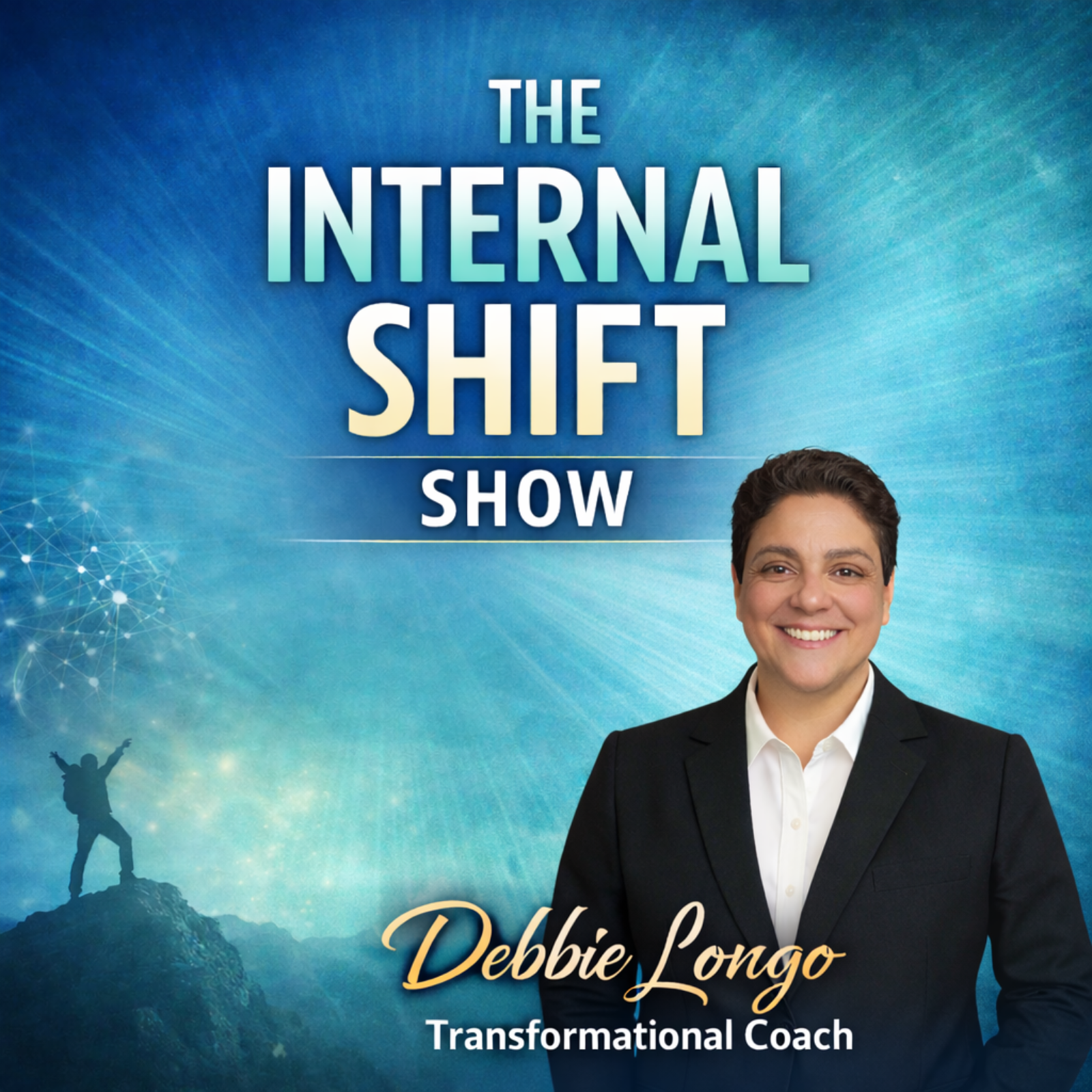
What happens when life changes in an instant? In this episode of The Internal Shift Show, Debbie Longo sits down with Ken Kunken to discuss resilience, identity, and the internal decisions that shape long-term outcomes. After a life-altering event that could have defined his limits, Ken chose a different path. He shares how mindset, discipline, and personal responsibility became the foundation for building a meaningful life and career.
This conversation explores overcoming adversity, redefining purpose, navigating setbacks, and the internal shift required to move from limitation to leadership. Ken speaks candidly about perseverance, perspective, and building strength through challenge. If you are facing obstacles in business or life, this episode will challenge the narrative driving your results.
Connect with Debbie Longo:
Website: https://lifeinbloomny.net
LinkedIn: https://www.linkedin.com/in/debbie-longo-life-in-bloom-ny/
Email: Info@lifeinbloomny.net
Connect with Ken Kunken: Email: ken.kunken@gmail.com
Ken's Show Webpage: https://kenkunken.com/2026/03/10/the-internal-shift-show-with-debbie-longo/
Ken's Website: https://old.kenkunken.com/
Welcome to the Internal Shift Show. I'm Debbie
Longo. This show looks at how the internal choices
we make influence the direction our lives work
and take. Today's conversation brings real experience
into that space, exploring how internal shifts
quietly change outcomes over time. We have a
very special guest today, Ken Klunken. Good afternoon,
Ken. Welcome to the show. Good afternoon, Debbie.
Thank you. You're welcome. Thanks for being here.
I'm just going to ask you to basically tell your
story. if there is a traumatic event or a life
change or anything that you want to talk about
and what happens and what was your process, how
you got through it and how you came out the other
side. And the end result of this story or situation
or example should be positive. Now I'm doing
this podcast for a few reasons. This is a new
podcast. One of the reasons is a big reason,
I think, is to educate people and to explain
to people and show people that there's a way
out, that anything that's negative, it doesn't
matter what it is, can always, always, always
turn into a positive. But that's going to depend
on the individual's mindset. Not only does the
individual have the issue, do they want to face
it? Do they want to say, oh, yeah. I have it,
and then do they want to have the willingness
to actually do something about it, do something
to change? If they want to sit in their sick
and suffering and be miserable, that's completely
up to them. That's up to the individual. Thank
you for being on the show. If you would like
to tell your story a little bit, I would appreciate
it. Well, I think the best way to start is to
direct your listeners back to 1970. Because at
that time, I was a fairly typical 20 year old
college student at Cornell University. I worked
hard in school and I loved sports. I was a member
of a fraternity and I had a lot of good friends.
And like most 20 year olds, I dreamed of leading
a useful, productive, rewarding and happy life.
But on October 31st, 1970, my life changed dramatically.
On that day, I broke my neck and severely damaged
my spinal cord. making a tackle on a kickoff
in a lightweight football game against Columbia
University. And in an instant, I went from being
in the very best shape of my life to being almost
totally paralyzed throughout my body and totally
dependent on those around me. So I spent the
next nine months and 20 days in various hospitals
and rehabilitation centers. I had a lot of encouragement
from my family that even though physically I
had virtually no movement. As you can see, I
still have almost no movement. I still had my
mental ability, my intellect, and they encouraged
me to go back to school and continue my education.
So I went back to Cornell and through the help
of my classmates and personal care attendants
and my family, I completed the next two years,
my undergraduate degree in industrial engineering
during those next two years. and I became the
first quadriplegic to ever graduate from Cornell.
But it was clear to me industrial engineering
was not the right field for me. I mean, this
was well before the age of laptop computers.
And based on the recommendation of a psychology
professor, I'd been taken and elected in psychology.
I changed my career goal and I decided to pursue
a career in counseling. And with his help, I
studied Counseling and Student Personnel Administration
at Cornell. And I became the first quadriplegic
to have earned a graduate degree from Cornell.
And then they increased my counseling credentials.
I went to Columbia University, where I earned
my second master's degree. This was in Psychological
Counseling and Rehabilitation. And I decided
to look for a job in the rehabilitation counseling
field. And think about this, Debbie, I now had
two degrees from Cornell, one from Columbia,
three prestigious Ivy League degrees. two master's
degrees, and no one would hire me. I mailed out
more than 200 resumes and looked for a job for
a year. Debbie, I was even turned down when I
have to volunteer my services. But I knew I could
work and make a significant contribution to some
organization. So I continued my job search, and
finally I found one organization willing to give
me the opportunity to show what I could do. And
that organization was Abilities Incorporated,
which was part of what was then called the Human
Resources Center. It's now called the Viscardi
Center, and they're located on Long Island in
New York State. They hired me to be a counselor
for other individuals that had disabilities.
Very good. That's a pretty amazing story. Talk
about from going to where you are to where you
are now. So... How did you feel when you were
going through all of this? When all of this was
happening and you had to change, you couldn't
walk, you couldn't move, and you were going back
to school, you made all these decisions while
being handicapped, basically. So what was your
feelings while you were going through all of
this? If you could explain. as much as you can.
I would appreciate that. Well, it was devastating
and about as depressing as anything could ever
be. And it was increasingly frustrating because
the medical personnel in the hospital seemed
reluctant to answer any of my questions. So I
was able to get a hold of a pamphlet that the
rehab center put out. And with somebody turning
the pages for me, it described based on my spinal
cord injury, what type of movement I would have.
And it was right on point. I have a little bit
in my bicep, but not in my tricep. It described
where my level of sensation would be, and it
was right on point. I only have feeling just
a couple inches below my shoulders and up. I
don't feel any part of my body below that. It
described how it would affect my bodily functions.
And again, right on point, how it would affect
my back, my bladder and my bowels and my lung
capacity. Right on point. And then they had a
page about what type of careers I could pursue.
And the only career that I saw for my level of
injury would be that someday I may be able to
sell magazine subscriptions over the telephone.
And I was devastated. And keep in mind, they
didn't even have touch -tone phones back then.
They were just rotary phones, and I couldn't
even dial a telephone or take notes or write
anything. So here I went from studying engineering
at one of the most prestigious colleges in the
country to the thought of maybe someday I could
sell magazine subscriptions over the telephone,
and then thinking even that may be too difficult
for me. It was overwhelming. I was fortunate
that the Viscardi Center, which is the head of
the abilities in court, hired me to be a rehabilitation
counselor and to counsel other people with disabilities.
And that changed my life. Yeah, it's interesting.
So when you were going through school and this
is something that you really wanted to do, was
it your calling? It seems like it was something
that you just were born into, that you were just
determined to do this in this way, the school
and the degrees and everything. And how did that
happen exactly? What was the pattern? What was
the process? It was really difficult when you
say, was it my calling? I was always very good
at math. Math was always my strong point. English,
not so much. And here I was having a tough time
with engineering before my injury because there
was a lot of science involved, physics, chemistry,
material science, not just math. And I was struggling.
And after my injury, it became almost impossible.
for me to be working as an engineer back then.
And for me, talking in front of a group was the
last thing I ever wanted to do. And here now,
I was being encouraged to change my career goal
from what I was naturally good at, which was
math, to a career where you're doing more speaking
and more dealing with groups of people. And that
was a very difficult change. And when I began
my job at the Human Resources Center, what's
now called the Viscardi Center, They sent me
out to speak to various groups and organizations
concerning disability issues non -discrimination
and jobsite modification and It was really difficult
because that did not come naturally to me But
I didn't know what else I was going to do with
my life back then But I had the opportunity to
work at that job. I loved it It changed my life
and it helped give me the confidence to say there's
even more I could do So after working there for
two years, I left that job and I went to Hofstra
University School of Law. And when I graduated
law school, I was fortunate to be hired by the
Nassau County District Attorney's Office to work
as an assistant district attorney, where I worked
for more than 40 years. Very good. So the result
was definitely positive. So that was kind of
leading me in to my next question, which will
be one of the last questions. What was the positive
change? You talked about the school and all the
careers and stuff that you got as the result
of all the schooling and the degrees and everything.
What positive changes have you made in your life
overall due to everything that's happened? And
we're talking about the outcome being positive.
What part of other parts of your life did this
affect in a positive way? What was the result
of that? Before my injury, I always considered
myself a bit of an introvert. And now I was forced
to be more of an extrovert. I had to talk to
people because I needed help doing everything
and I had to describe what help I needed and
ask for that help. And that totally changed the
way I related to people and acted. So it brought
me out of I don't know if I actually in a shell.
I mean, here I was an athlete. I was in a fraternity,
but I always felt. Like the best thing for me
would be to sit in the back of a large lecture
room, never raise my hand, hope nobody noticed
me, to now being speaking in front of groups.
I became for quite a while a motivational speaker,
where I was speaking in front of hundreds of
people and working at a job as the assistant
district attorney, where I was appearing in court
before juries that had packed courtrooms in the
back. And in fact, I later became a supervisor
where I was supervising other ADAs. But Debbie,
I have to say the best part of my life was how
it affected me personally. I went from being
a very shy person who rarely have ever dated
before my injury. I mean, I was 20 when I got
hurt to eventually going out and changing my
whole perspective on myself, dating a little
bit and meeting a woman that I fell in love with
who eventually became my wife. She's just sitting
off camera now. Her name is Anna. And when I
married Anna, it was in 2003, more than 30 years
after my injury. And I was in my 50s. And lo
and behold, Ana said not only did she want to
marry me, she wanted to have my baby, not just
our baby, my baby, which really seemed impossible
being paralyzed for more than 30 years. But we
looked into in vitro options and were thrilled
to learn it still may be possible for me to father
a child. So we pursued it. And on January 24th,
2005, I was present in the delivery room when
my wife, Anna, gave birth to triplets. We have
three gorgeous sons, Joey, Jimmy, and Timmy.
They're now 21 years old. They're juniors at
three separate colleges. And Debbie, I'm leading
a very happy life. I am thrilled to be the father
of triplet sons, to be married to my incredible
wife, Anna. And I would never have even met Anna.
had it not been for my injury. I originally met
her because she helped as one of my personal
care aides. That's how I met her. And our relationship
developed between employer -employee to becoming
best friends, to a romantic relationship, to
husband and wife. And that is truly, truly amazing.
And definitely a godsend, so it sounds like it
was really... really meant to be and really worth
it in the long run. So the last question is how
do you feel today, right now, based on this whole
conversation that we've had? I feel great. I've
been so incredibly blessed to have the family
that I have. And I mentioned my incredible wife,
my wonderful triplet sons, but I've got a brother,
a sister, cousins, aunts, uncles. Everybody in
my family has been so incredibly helpful. and
support of my entire life, but particularly after
my injury, that it's brought us all even closer
and it's made family such an integral part of
my life and brought me a lot of pleasure. I have
to say I learned there's an awful lot somebody
can do if they're given the opportunity and have
the drive and motivation to make the most of
it and have the right support and encouragement
to make their goals come true. Yeah, thank you.
That was very good for an ending. One thing that
I would like to put in there, insert, is that
not only that people are physically able to do
things, right, like a construction worker, but
to me, if you're mentally able and you're mentally
willing, that really is what comes first because
the mind controls the body. their mind controls
everything we do, the way we think, the decisions
we make and everything. So that's why, to me,
that's the most important thing. So whatever
the person's physical ability is or disability,
and there's a million examples of this and stories
and everything that in this story to me, right,
in this podcast that we're having now. That does
not matter because it sounds to me like you put
your mind above everything any possible physical
challenge or any type of challenge at all that
you had and you put your mind above it and I
think that this story is a very good example
of that because That can happen to anybody and
I think that a lot of people because I know I
work with a lot of people like this that it doesn't
matter how they are physically, is that their
mind is not there, they're not present in themselves,
in what they do in their daily life. Like, they're
doing something and then their mind is in a different
spot. It's in a different place. And they're
not in tune with their mind and their thinking
and their behavior. So it's like one part of
your mind controls another part and the two are
not connected. Different things like that. It
doesn't matter, like I said, what your physical
ability or disability or anything is. It's the
point that the mind can do anything and overcome
anything. But the first thing that I always want
to do is recognize that I even have a problem
because I don't even know if something's going
on. I might say it's not and it really is. And
then I want to be willing to do, to change, to
do something about it. And that is what's gonna
start to get the ball rolling. And then I could
seek help. You went to, did you have any professional
guidance, like maybe a psychologist, or you went
to school, but did you have any professional
guidance to guide you through this path, maybe
to suggest that you wanted to go to school, that
you should go to school like a family member
or something like that? That was one question
I wanted to ask. Debbie, when I was in the rehab
facility, there was a vocational counselor named
Joyce Mesh who encouraged me to go back to college,
which seemed like a really difficult thing to
do because I would need to hire a personal care
attendant and find a school that I could go to.
Cornell was not very wheelchair accessible, but
I decided to go back there in any event and to
be able to function away from home because I
decided it would be best for me to return to
Cornell. pick up my life where it had been. So
she was vocational counselor while I was in the
rehab facility. Then I had this psychology professor
who encouraged me to change my career goals and
pursue a career in psychology and counseling,
which I enjoyed very much. But I also had a brother
who was very supportive, who was a lawyer, and
I used to watch him in court. And I thought that
looks really interesting and something I could
do. At least I hoped I could do it. So I decided
to change my career goal again after working
as a rehab counselor, leave the job and go to
law school. I had a lot of help along the way.
People encouraging me to do different paths and
encouraged me to stay motivated, which was not
easy following my injury. I'd been very motivated
before my injury, but trying to stay motivated
was difficult. But I had a lot of people in my
corner helping me every step of the way. But
one of the things that was difficult was that
people's expectations were so low for what somebody
with a disability could do back then. And that
took quite a while to get past people's expectations,
to show them that there was still a lot I could
do despite their limited expectations and to
just ask and be given the opportunity to show
what I could do. And that made all the difference.
Yeah, you had people motivating you and influencing
you. But you took the bait. You said, this person's
suggesting this. This is what I'm gonna try.
I'm gonna try it. I have nothing to lose. So
that's what I'm saying. That's the most important
thing. Tons of people can say things to anybody.
And then a lot of times I recognize, other people
recognize things in myself that I don't recognize
in myself. If I don't be able to have an open
mind, to understand what somebody is saying,
that maybe I want to change or something or fix
a problem that I have or just to acknowledge
it, then anybody could say anything a million
times and nothing is going to happen. So this
is really a great example. This podcast is really
a great example of Literally, you put your mind
to anything you can do anything. It does not
matter what it is. It has nothing to do with
what it is. The thing is the thing. That's the
outside force. That's the physical thing. I'm
not talking about that. I'm talking about what
is going on in somebody's mind. What is their
process? How did they get through it? And that's
what I want to focus on. How do I make my mind
strong enough and open enough and willing enough
where I can take suggestions or have somebody
motivate me or try to get out of the rut or the
problem or the issue or whatever it is that I'm
in and I could come back on the other side and
my life will be great like you were explaining.
You got married, you have children, triplets.
that you you never dreamed it. It just came true.
It was amazing. I just have to emphasize I could
not have done any of it alone. I was fortunate
to have the support of my family and friends.
And that made all the difference. Yep. And that's
another very, very, very good point, because,
like I said, I need to have those people around
me. But the thing is that if I know something's
going on, there's always somebody there. Nobody
is leaving us alone. We always have people around
us. But whether I want to see that I can solve
my problem or do better, then that's completely
up to me. So to me, the people are always there
guiding us and helping us. But it's just a process.
What I go through was just a process. So this
was an amazing, amazing podcast. And I really,
really appreciate you being on the show. and
sharing your story. It was awesome. Definitely
was awesome. Yeah, thank you. As we wrap up,
this conversation highlights how small internal
shifts can create meaningful change. If something
from today stayed with you, take a moment to
reflect on how it connects to your own direction
and decision. This has been the Internal Shift
Show. Thank you for listening. Thank you, Ken,
for being on the show. I appreciate it. Thank
you.