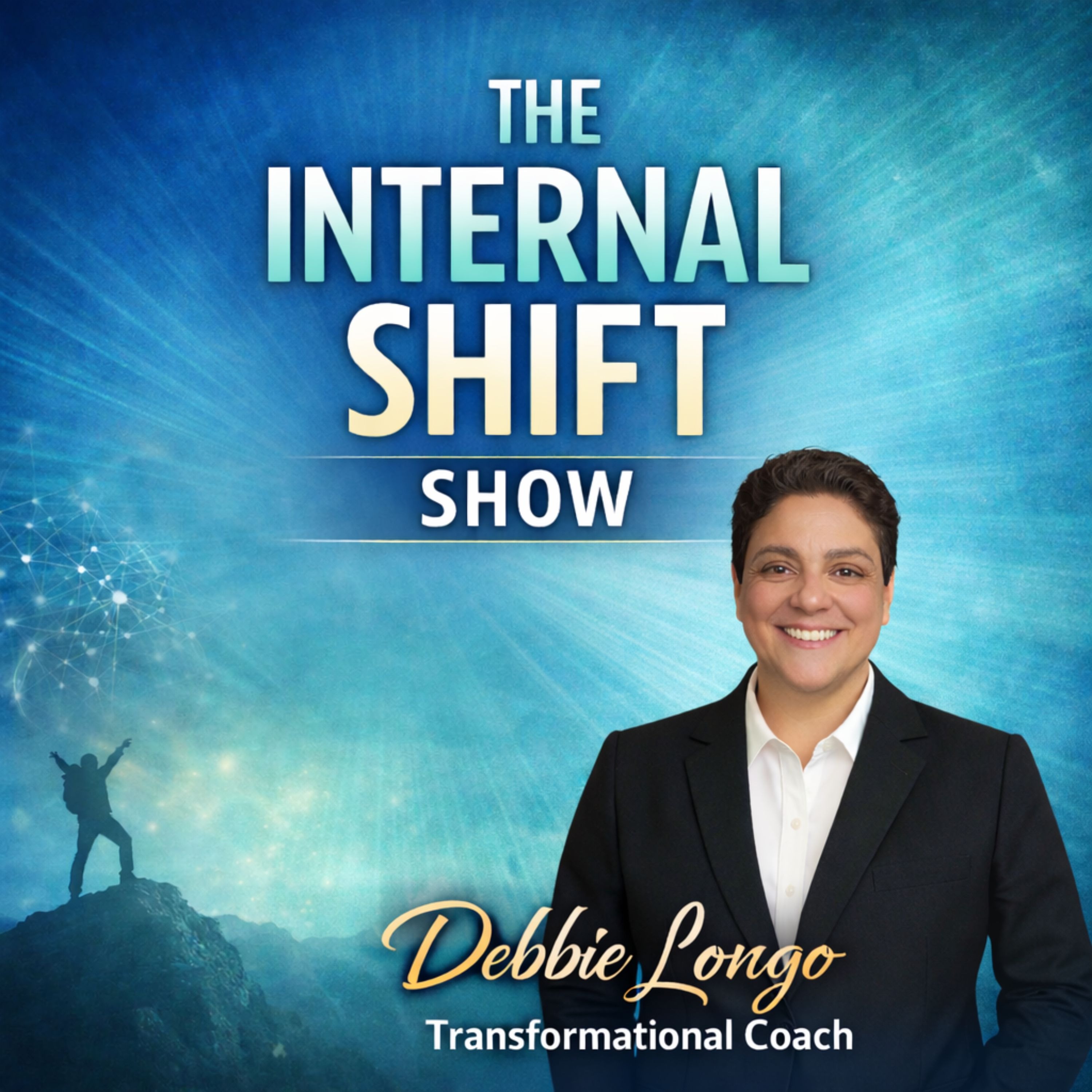
IIn this episode, Sheryl Hauk shares her experience of surviving childhood trauma and the long process of rebuilding her life piece by piece.
She opens up about years of silence, the impact of abuse, and the moment everything shifted—not through control, but through perspective. From her son’s life-threatening illness to a simple moment that changed how she saw everything, Sheryl explains how rebuilding doesn’t happen all at once—it happens step by step.
The conversation goes deeper into what it means to find your voice after years of staying quiet. Sheryl shares her decision to confront her past, sue her abuser, and advocate for others by helping change laws and speaking publicly about trauma. It was not easy—it took years, fear, and persistence—but it became about more than her. It became about accountability and giving a voice to others who don’t have one.
She also discusses how healing is an ongoing process, not a one-time decision. Music, helping others, and identifying personal triggers became part of how she continues to move forward. Her message is clear—what happened does not define you, and there is a way to rebuild, even after the most difficult experiences.
If you’ve ever felt stuck in your past or unsure how to move forward, this episode shows that change doesn’t happen all at once—but it does happen when you begin.
Connect with Debbie Longo, Transformational Coach:
Website: https://lifeinbloomny.net
Email: longo.debbie1@gmail.com
Phone: 321-270-8713
Contact Sheryl Hauk:
Website: www.sherylhauk.com
Welcome to the Internal Shift Show. I'm Debbie
Longo, Transformational Coach. This show explores
how the way we think, decide, and respond internally
influences where we end up over time. Today's
conversation draws on real experience and expertise
to look at how small internal shifts can change
direction, momentum, and outcomes. We have a
very special guest today, Cheryl Hawke. Good
afternoon, Cheryl. Welcome to the show. It's
really good to be here. Thank you for inviting
me. Thank you for being here. Am going to ask
you to tell your story and point out a traumatic
experience or just some type of life -changing
experience that you've had during your life and
the process and how exactly you got through it
and what was the end result of the that whole
entire process right from beginning to end and
That should always be a positive hopefully One
of the reasons why I do this is because there
are people out there. Everybody has their own
individual story, but everybody can relate to
something that other people are saying. So that
hopefully, if a listener listens to this, that
will hopefully open the door to get them to say,
oh, I'm feeling this way. But I'm just curious,
how did this person get through this same exact
situation I'm in or similar situation? And either
they're curious or they really want to be able
to change. They really know that they really
need to do something. So whatever the reason
is, right, which is how they're going to identify
it, that's going to get them hopefully to listen
to the podcast. And then they're going to see
the listener will see. that whatever problem
they have, we're explaining how to get through
the other side, that there's a way out, that
they don't have to sit in that sick and suffering
for the rest of their lives. Because they either
know or they don't know. And if I don't know
something, hindsight is 20 -20. So if I don't
know something, how am I going to know how to
get through that? So this is mainly just the
space where not only can they be educated, but
it's just a matter of being open to know that
maybe, maybe I want to do something about my
problem or issue or whatever it is. So if you
could do that, I would appreciate it. Thank you.
I was a victim of childhood trauma, mentally,
physically, sexually abused from before birth.
It was planned until I was 18 years old. So I
was growing up in a situation that looked beautiful.
That wasn't, and I had to stay silent until I
was an adult and I could do something about it.
But I want to tell a story. I have a son, I have
four children, but I have a son who had a tumor
the size of a softball in his skull when he was
nine years old. I'd been through trauma myself
and put it behind me and thought, I'm a successful
choral director, I'm a successful mom. and this
was a huge tumor in his skull. We found out because
his nose was bleeding and the regular doctor
said, let's take his tonsils out. We're sitting
there writing graduation invitations and the
doctor says, I'm into the little room. My husband
had gone to get coffee and I go into the little
room and he pats himself on the shoulder and
said, you know what, your child didn't die today
because I didn't cut into the tumor, which he
should have looked at when we were in the office.
Yes. Long story short, we went and my son had
24 hours of surgery at University of Michigan
Hospital and we came back. Needless to say, my
son would build Legos for years while he was
dying. It's like putting a frog in water and
turning it on and let it boil. He was boiling
and he would build these elaborate Legos and
he gets through his 24 hours of surgery and ICU
and we come home and of course I'm trying to
keep it together because I've been through trauma.
We know one through five girls in the United
States have been through similar trauma and keep
it quiet and I decide to clean. And so I pick
up the Millennium Falcon and then a dust underneath
and I drop it and it shatters to the ground.
And I think, oh, well, how can I tell this son
who's just had his head open for 24 hours and
survived that I dropped his precious Lego in
a turnaround and in the doorway is my son, nine
years old. And he says, that's okay, mommy, we'll
just make something new. And that was a major
time that I pivoted. Whoa, this was. Life is
falling apart. I always thought adulthood was
going to be wonderful because childhood wasn't.
It was filled with trauma. I worked really hard
at that. All of a sudden, something happened
with my son I didn't expect. Yet this little
boy taught me how to just take the pieces and
try to put all of that back together. That was
the beginning or the pivot of me trying to do
that. Not just in my life, but in the classroom
because I was a choral teacher. How do I make
the community and how do I? not just teach music,
but teach how to put those pieces back together.
So fast forward, I'm about 50 years old and I
am trying all the time to put these pieces back
together and I go back to my home in Hawaii and
some lawyer comes to me and says, we know your
story. Well, that was a surprise because I kept
it silent for so long. We think that you could
help others by changing the laws in the state
of Hawaii if you just Sue your abuser and tell
your story. Well, I never told my story. I tried
to live and put those pieces back together and
tried to move on without a voice. And I went
home to Michigan and I thought about it for four
months and I had a book club and we had read
a book about... children who were made to be
spare parts. And I got really upset. And I explained
this in my book. I just got triggered. What do
you mean? All children are worth saving. And
I decided it's now time. I'm going to call that
lawyer. And so I can't say that it happened right
away. As time went on, I sued my abuser. I won.
took it to the Hawaii State Legislature. I had
to get in front of these people and tell my story
that I really didn't want to tell, and then help
change some laws, continuing to try to do that,
wrote a book to try to advocate, and at the same
time advocating for myself by having identified
what my triggers are at work and saying to work,
hey, I have an invisible disability and let's
write a 504 so that I can be a better worker
for you. If you don't know what that is, it's
a federal... protection of disabilities and usually
you'd see it a disability oh they can't walk
or they're blind but we have disabilities of
children with trauma and I have triggers which
didn't always make me the best communicator with
adults because I would get triggered when adults
behaved badly and so how do we in that workplace,
set up a system, give our voice so that we can
have the best environment to work and to live
in. So that's my story really, really fast. Do
I have all the answers? No. But as I find my
voice, I want everyone out there to know who've
been impacted by childhood trauma, that whether
it's talking to you on a podcast, writing a book,
or just to yourself saying, hey, this happened
to me, but I'm a survivor. I'm not a victim.
Look at what I've done with my life and and look
at I'm still here. We know that 80 % of the people
who've been through what I've been through either
kill themselves through suicide or through self
-medication with drugs and alcohol. And there's
just so many better ways. And I have four grown
children, and I'm going to have my fifth grandchild
in May. I've taught over 12 ,000 students. and
helped empower young women to go out and help
other young women like Ryan Destiny, Casey Brown,
all really successful young women in entertainment
and the business world that now my message goes
through them as well. So that's kind of my story,
Debbie, in a short synopsis. It's longer and
funnier in a book. Very good. How did you feel?
When you were going through the process of suing
your abuser and When you actually did that when
you went and you went to court and whatever your
process was how did you feel when you were going
through that only because of Did you feel a certain
way and then you felt better after? Well, I I'm
gonna my abuser was my own father. So I and he
was very powerful He was a naval officer and
retired naval officer, had a lot of power. I
was scared. I've got to tell you, I was really,
really scared. And I think working with so many
children and having a different focus, it took
seven years though. And it took two judges and
all kinds of things. Again, I tell it in my story.
But I kept saying to him, and I didn't talk to
him for 40 years, but I'd have to see him in
court. And I would say, this is not about me
taking your money. This is about accountability
and setting precedence for all of the people
like you that causes trauma that we have to silently
have. I have five neurological conditions because
of the cortisol that was running through my body.
I have to maintain that for 45 years. Those were
totally unnecessary. And so was it easy? No.
But I focused on this isn't about me. This is
about all of the voices and all of these people
who can't find their voice. So it wasn't easy
and it still isn't. I'm going to say it still
isn't because as we know with all the things
that are going on right now in the United States,
people don't want to hear about it. They want
it to be in the back room. They want to move
on and I wanted to move on for 50 years. So it
was hard. Yeah, that was good. Thank you. So
you were saying the process was seven years.
So you're saying you felt scared and stuff in
the beginning. So how all through it. Yeah. So
how did you feel or not only how you felt, what
were you doing or however you can identify that
process from when you first decided to I'm assuming
you won. So when you write when you first decided
to sue him up until the end, did you feel better
at the end? Did you feel like you accomplished
something? What I did. But there were two incidents
that really it was almost like a greater power.
One day I. I had to fly to Hawaii, which is a
10 -hour flight, and then turn around and come
back. And so I flew to Hawaii, I went to court,
and the judge was surprised to see me. Why are
you here? And it just wasn't a really great day
after I'd flown. So my girlfriend took me to
the North Shore in Hawaii, and it was raining,
and no one was there. And I get in the water,
and I see a shadow, and I think it's a shark.
And I take a double look, and right there is
a Honua, a sea turtle. Probably we figure about
80 to 100 years old. Oh, that's really cool.
Except for he where she followed me for 45 minutes
and I could see everything of the whole new.
And when I finally left because my girlfriend
standing over with purse. designer purse over
her head and she's getting it ruined. He followed
me into shore and I turned around and he looked
up and looked me straight in the eye and I just
thought this feeling like it's going to be okay.
Just have strength and patience and at the time
I didn't realize that that's what sea turtles.
Honu stand for is strength and patience. Just
have strength and patience and it'll be. So that
was the first situation that really, really gave
me some strength to get through it. And then
the second one is when we settled, my father
didn't want to pay, didn't want to pay, didn't
want to pay. And the judge said, you have to
pay on this date. Well, it happened to be Yom
Kippur, which is the day of atonement. And the
judge said, I don't care. You have to do it on
this day. And he's like, well, but I can't. And
the judge said, well, fine. Then I'll charge
you 10 % every day. So of course, he pays on
the day of atonement. So I wear a bracelet that
has in Hawaiian the word atonement to remind
me, yes, in the end, there was some atonement.
I don't believe that happened by accident, either
one of those two things. So that's where I found
my strength in those years. Very good. I really
like it. So then I went on to testify in front
of legislation, which was another many, many
years and a lot of politics of, oh, it's going
to pass. quietly goes away, and then it's going
to pass again. And we finally passed a bill a
year ago with the governor, but it was a compromise,
like so many other laws and bills. And so it's
been a long process to get brave. But those moments,
so I'm growing every time I have these instances.
decided to retire as a choral director. I took
my students to the Capitol to sing. I was invited.
They sang a beautiful song called Earth Song
in Coalwood, the House of Representatives, just
echoing beautiful sound. And when we were done,
one of the legislators ran up to me and said,
do you know that your bill is upstairs in the
finance committee? And you should go up there
right now. And my kid's shirt, my student shirt
said, let your voice be heard. That was our theme
for the year. And so five of them went with me
upstairs as I testified and they had their shirts,
let my voice be heard. And that moment was like,
okay, now I'm doing the wrong right thing. Now
I'm pivoted towards Light. So it's these experiences
and identifying the good in in the experiences
that I have every single day. Yeah. So that was
good. Thank you for explaining that and just
telling the world basically how you feel and
what your feelings were and. I think that's something
very heroic. That type of thing that we do because
if especially if I feel that I do something and
then it comes out a positive, which it doesn't
always know here, we're trying to. This is the
goal of the podcast. But either way, whatever
it is or however it comes out, if I'm willing
to tell people or I don't even know who is listening,
then. I feel that I'm really open and honest
about what happened, what was the situation,
everything that I was saying, everything that
I'm saying, whatever the thing is. If I am willing
and have a desire to tell my story or say whatever
situation it is to basically, I don't know who,
or even a group of people, something more...
more people than a one -on -one. Because a one
-on -one is we're talking here, you and me, and
we know that it's gonna be released and we don't
know who is gonna hear it. But it's different
than a one -on -one that's private, which this
is not, right? It's different than a group or
a lecture or something in public or whatever.
So at that point now, when I do a one -on -one
as compared to that, I have a completely different
mindset. So if I wanna talk to somebody personally,
where I know nobody's gonna listen, that requires
one mindset. And that is part of my process of
whatever it is I'm talking about, because that's
the subject. So then, but now, if I wanna go
beyond that and tell other people, more people
than one, now I have a completely different mindset.
And that takes me now to a different part of
the process. And that's why I want to know the
ending. This is why I do this story in this format.
And it's okay if I say it and they don't say
it. Right. Absolutely. Because they might think
that they have it. And then when they on the
podcast, they tell their story, they don't. But
the point is that This is done this way for a
reason because the process is this and then this
happened and then this is going to complete it.
But to us, it's completed because this is one
one specific thing or thing or things that we're
talking about. But there could be something that
goes past what we're saying because we're going
to talk about how you are now. But. It could
continue the your process. It could be something
different. You could learn a lesson. I mean,
there's tons of things that could happen right
beyond here, beyond what we're talking about
here. But this is just a simple example about
something that abuse that I can get through.
This is just a very explanation that is just
saying. that I don't have to have this mindset
forever, for the rest of my life, or even till
tomorrow. I can do something right now. I could
change right now, right this second. What happened
yesterday, or what happened even an hour ago,
is done. It's gone. It's gone. It's in the past.
It means nothing. But I can, right this second,
I can say to myself, I'm going to change right
now. I listen to this podcast. I heard this thing.
Somebody told me something. I am going to make
the decision to change right now. Right. The
second. And when I do that, what's going to happen
going forward? I might go a little bit towards
it, but then I might run away and go backwards
and then go forwards and then go backwards again.
That could be my process or I could just go forwards.
You know what I mean? I never go backwards. The
point is that when I make that decision. To change,
and this is an if, because this is just a scenario.
If I make that decision to change and I say I'm
going to do something right now about it, and
I am not going to let anything hold me back,
and I know that this has to happen that way,
that's when the process starts. I totally agree.
It's going to kickstart. And what's going to
happen after that? Well, we just told the story
about you and you being abused and all that stuff.
So we just told the story. And I have other podcasts,
too, that explain because everybody has their
own individual story. There's no two stories
that are alike, but we have things that we could
pick out. And not only about the abuse, there's
other things there that you were saying. You
sued your your father, family member, maybe somebody
sued their family member. I mean, there's tons
of stuff here that somebody can identify with.
So this is really what we're trying to get the
point across here in this podcast. And I don't
think that there is one way to complete a process
or move forward or make that decision. There's
many different ways. And how I go through that
is determined by what? determined by me, it's
determined by other forces, too. But that's probably
another conversation for another podcast. What
I want to say is I named my book piece by piece
because it is the process for me. And that's
not for everyone. It's just building piece by
piece and giving back to other. I have two kind
of things that I think. has brought me forward
and gotten me through the process. One is music.
We know that music causes endorphins. We know
that music does just all kinds of things that
we can't even explain for our bodies and our
minds and our souls. I think that's a really
important component. The second one is, I took
what I won and that money goes to help organizations.
have produced a podcast as well, No Child Should
Hurt. I'm not on it. But I've also had bedrooms
redecorated of child survivors so they didn't
have to go back to the rooms they were in. And
so actively helping others. is is in itself part
of the process and and being able to identify
that, yes, I'm not the only one in there. People
who just need to see that there is something
in front of how they're feeling right now. So
I have this woman that I know and she's a spiritual
teacher advisor and she works with raising the
vibration in your body. So it's kind of like
your nervous system. But we have that's the medical
part of your body system that we use that refers
to that. But what happens is when you listen
to music or you exercise, right, or you're doing
something made probably that's stronger than
your mindset at that time, right, that's raising
the vibrations in your body. So you literally
have levels of sounds. And when you hear that.
It completely changes your mindset sometimes
from just feeling like nothing to feeling great
in a matter of less than an hour. And that's
why and the endorphins have a lot to do with
it. But music is just and to me, because I love
music, it's an unbelievable way of doing that,
of making me feel good and feel positive. And
I'm just getting rid of that type of energy that
I had before I listened to that negativity or
worry or fear or whatever it was, because that's
probably going to take it away. But when I stop,
it'll come back. That's another conversation
for another podcast, too. Sure. Another thing
is the beach serenity, the ocean sounds. So there's
all different this. This is what I like. You
know what I mean? Not everybody likes this, but
there's all different sounds. all different examples
that we could we could talk about here. And that's
what it's doing. It's raising your energy level.
It's raising your vibration. She does it through
meditation, which she taught me. I can do it.
It's easy to do. But I mean, it kind of takes
a little. You got to get the knack of it. That's
that's what I'm trying to say. Yeah. And I I
have the privilege of conducting choirs and listening
to all kinds of harmonies and music and and My
son who is a social worker said, I go to swimming
and I love listening to the music while I'm in
the water. He said, well, the vibrations in the
water have 10 times the effect than outside of
the water. Mom, did you know that? No, I just
happened to stumble on it and it's something
that works for me a lot. Very, very good. I really
like it. So how do you feel today based on everything
we just talked about in this podcast, based on
your whole process and your story and everything
we just talked about? How do you feel today right
now? I feel hopeful because I think sometimes
I ask myself, was it really worth? Finding my
voice, was that worth it? And by talking to you
through this process, I'm even growing as a person.
And it's part of that process. You and I are
having this conversation. I'm going to go get
to make music with my students this afternoon.
I was listening to music this morning and really
I feel extremely hopeful about the future and
about other people's futures as well. Yeah, and
it's all growth and that's an excellent thing.
As we close, this conversation is a reminder
that progress really comes from one big decision,
but from the internal choices we repeat. If something
from today's discussion connected with you, take
a moment to notice how those internal choices
showed up in your own life. This has been the
Internal Shift Show. Thank you for listening.
Thank you, Cheryl, for being on the show. I appreciate
it. Thank you so much.