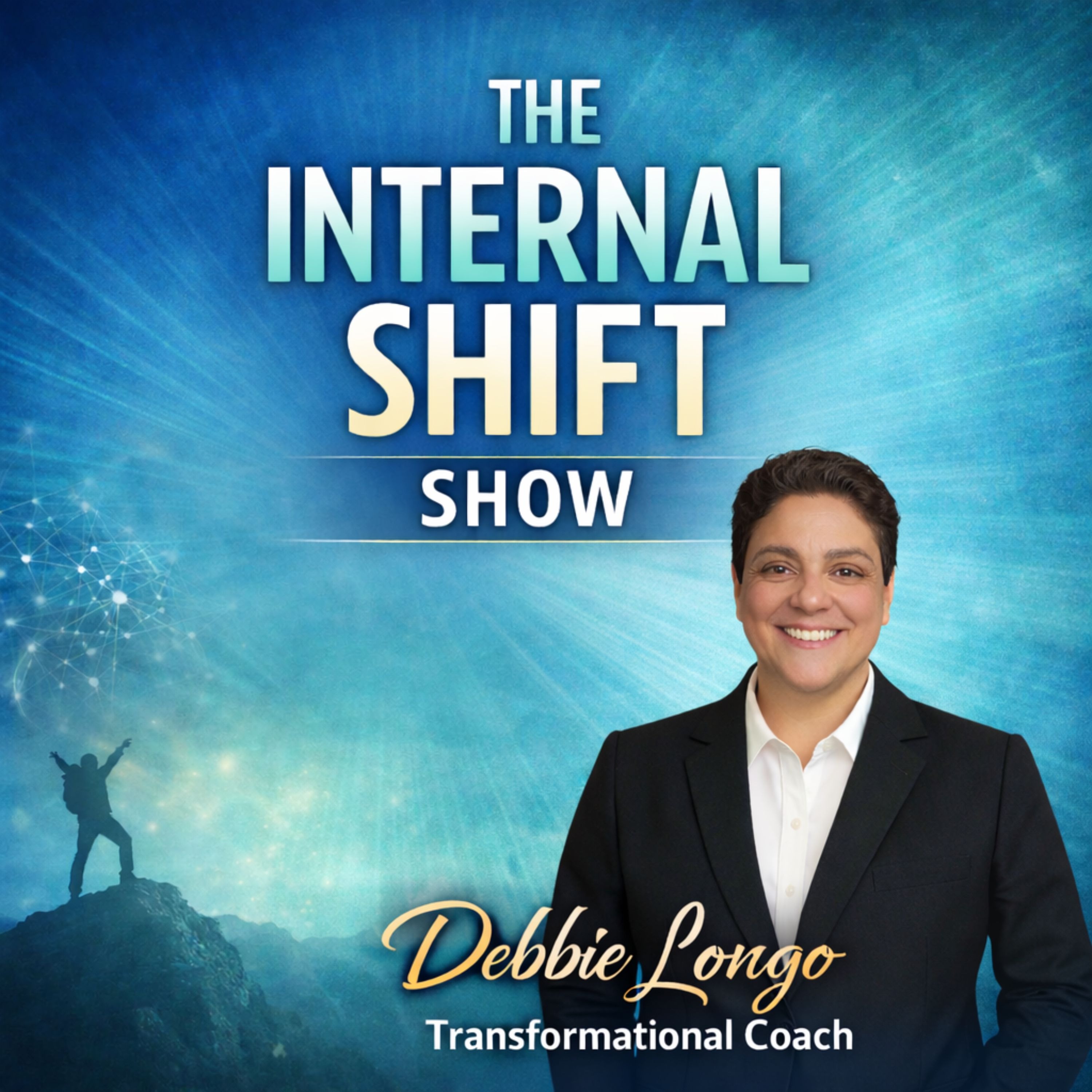
Tigrilla Gardenia joined The Internal Shift Show With Debbie Longo and shared a powerful story of walking away from a life that looked perfect on the outside but felt misaligned internally. She described the moment she chose uncertainty over comfort—leaving a stable career at Microsoft and a structured life to follow a deeper internal truth.
The conversation explored how internal decisions, not external circumstances, drive real change. Tigrilla broke down how creative expression, community, and professional support helped her transition into a completely different path rooted in purpose and authenticity.
This episode highlights that you don’t need a clear plan to move forward—you need the willingness to take the next step and trust the process.
Contact Debbie Longo Transformational Coach
Email: debbie@lifeinbloomny.net
Website: https://lifeinbloomny.net/
Linkedin: https://www.linkedin.com/in/debbie-longo-life-in-bloom-ny/
Contact Tigrilla Gardenia:
Welcome to the Internal Shift Show. I'm Debbie
Longo, Transformational Coach. This show explores
how the way we think, decide, and respond internally
influences where we end up over time. Today's
conversation draws on real experience and expertise
to look at how small internal shifts can change
direction, momentum, and outcomes. I'm joined
today by our special guest, Trigia Gardinia.
Good afternoon. Welcome to the show. Thank you.
Thank you so much for having me. Thank you for
being here. I'm going to ask you to tell a little
bit of your story and point out a life change
event or a traumatic experience or something
like that where you went through a process and
now you came out the other side. So really you're
going basically from negative to positive. That's
like one of the main goals of this podcast. Now
I do this for a few different reasons. And one
main reason is because everybody has their own
individual story, but there are parts of other
people's stories that people can relate to. Maybe
somebody, a listener, is stuck. Maybe they're
in a situation that they're trying to get out
of and they just don't know how. Maybe they're
in a spot where they think that... this is how
it's going to be, you know? So they just try
to make it normal. But everybody's life can always
be better than what it is. So I don't believe
that there is a negative situation. I don't believe
that there's anything that anybody could get
out of. But this is how the individual makes
it for themselves. And another main goal of this
podcast is to show that they don't have to stay
in this space. There's always, always a way out
and people don't have to sit in the negative
and they don't have to sit in places and spots
and situations that they're in that for some
reason they don't want to be in. And once they
do that, They turn their life around and they
see how much better it is, but that's up to the
individual. That's their choice because ultimately
they're the ones that are going to have to reach
out for help and find it somehow in order for
them to change because I can't do it alone. So
I would appreciate if you could do that. Thank
you. Yeah. So thank you so much for having me.
The funny part, as I was thinking when you had,
you know, spoke to me about this, I was trying
to think, okay, what I've had so many life changes.
My life is one continuous sort of change. I was
like, which one do I want to talk about? And
I guess the one I want to talk about first is
kind of the one that kicked off the biggest changes
that have happened in my life. And it's not your
traditional negative to positive story. It's
a false positive to real positive story in the
sense that So I have a very unusual background.
I started, I have a degree in music engineering
and electrical engineering, and I actually left
and got a job at a college where I was working
for the beginning of the internet doing audio
and video online. It was a dream job. There were
so many things about it that I absolutely loved.
And over the course of a few years, I ended up
meeting a man there and got started a relationship.
And he just happened to be kind of at a higher
position than I was. in a similar team. So at
some point, I ended up having to leave the team.
And once I left the team, unfortunately, for
a whole series of different things, I ended up
having to leave the company altogether because
it wasn't going to work. I wasn't going to be
able to find another position. We were always
going to be sort of in this conflict of interest,
especially as our relationship went on and we
eventually got married. It was like all these
things. So I left and I went to Microsoft to
work. For a person looking on the outside, here
I was, a 20 -something year old, my late 20s,
and then going into my early 30s with what looked
like from the outside the perfect husband, because
he was a wonderful, wonderful, wonderful man.
A job that was a dream, making really good money
in a field that was like the top of what you
can imagine, tech and the world and Microsoft.
I was miserable, but that kind of eat, love,
pray type miserable where you don't even realize
you're miserable and you just keep saying something
is missing in your life. But when you look around,
you've got the things people tell you. You've
got the good job, you've got the good husband,
you've got the thing. And my only way of combating
this was because, like I had said, I had studied
music engineering, so I have a degree in music.
I started to go back to music. I started singing
again. I would drive 45 minutes during my lunch
hour to go up. I was living in Seattle and I
would go up to Macalteo, which was about a 45
minute drive, in order to take singing lessons
from this woman. And then she encouraged me to
start auditioning. I started doing acting and
like different theater and things like that around
town. And it was, it was filling a void. It was
filling that need for that creative expression
that I had had and that Microsoft wasn't giving
me because My non -compete meant I couldn't go
back into the world of audio and video and creative
expression. I was kind of stuck in a more, actually
I was, I was project managing for Windows itself,
which great team, lots of good work, but very
much, and I'm an organizer, so kind of worked,
but it was, there was a, but I wasn't a performer.
So it was like this weird mix of anyways, to
make a very long story short, my ex -husband
at the time, my husband says to me, I really
would love you to act a little bit less. because
I want you more home more. And I was like, if
I'm home more, I'm going to be even more miserable.
And I got cast in a show where I walked in and
the director was somebody I had worked with in
my first job out doing audio video in real networks.
And he was so excited to see me and I was so
excited to see him. And he cast me right away.
And it turned out to be this like all night dance
party with a show in the middle of it. The point
being was when I started seeing these people,
these to meet kids because they were like four
to six years younger than I was at the time.
With half, if not a quarter of the money that
I had, some of them all living together in like
shared spaces and so happy, like just expressing
themselves. They were creating music and art
and they were building careers that were alternative
to the world that I had grown up in. Because
I had just known, you go to college, then, you
know, and even though I pushed to study an alternative
thing. I was very much a part of the music scene
down in South Florida when I used to live there.
I had worked in with REM. I had done all these
amazing things and then here I am, almost, I
wasn't a soccer mom because I don't have kids,
but I was like living that life. Let's go to
Costco on the weekends and that's your fun. And
it was just like, oh my goodness, what is happening
to me? But how do you leave that when you have
like, Money and a great person who's next to
you, but it's just not your person until the
night of the actual event where I Was building
up to going to the event and my husband says
to me because it was an all -night dance party
It started at 7 p .m. And it ended at 7 a .m.
And my husband says to me He had his children
and he was trying to figure out how he was gonna
go and at some point I looked at him and I said
Please don't come I said don't come And I don't
know if I'm ever coming home again. It was just
like that. Like, I was like, I had it so clear
in my head at that moment that the life that
I was supposed to live was supposed to include
a lot of that tech stuff and everything, but
not in that way. Like, it just wasn't for me.
And with no plan whatsoever, like not a plan
in sight, I just looked at him and I said, I
don't know if I'm coming home in the morning.
And when I came home, I did come home, but when
I came home at like 8 a .m. or 9 a .m. or whatever
it was, he was waiting for me. He had been blowing
up my phone. And I just looked at him and I said,
this isn't my life. Like, it's wonderful. We
travel. We care about each other. It's all these
things. But I can't be stuck in this city for
the next 20 years waiting for your kids to grow
up, which was reasonable, or 10 years, waiting
for them to grow up, which is a reasonable ask.
working this job that I do love on one hand,
but it's not really fulfilling me. And I can't
do the other stuff I want to do because you're
saying to me that you miss me at home. It's not
what I want. And so that's what I did. I basically
blew my life open out of perspective. And six
months later, and then I started hanging out
with these other people. really getting into
performance and understanding that world, which
again is kind of what I had studied in school.
And six months later, I left Microsoft because
I ended up in that process. I ended up at a party
where I met one of the kind of founders of this
movement and I became very close friends. And
then I was talking to him one day and I was telling
him, oh, you should do this and this. He was
an artist. And he's like, why don't you be my
manager? And I was like, I could do that. I could
do that. I did one of my internships as a management
for bands, in a management company for bands.
So I'm like, I can do that. And then all of a
sudden he had an event that was going haywire
and he called me and he's like, why don't we
start a production company and just do this?
And I was like, you know what? I walked into
my office and I looked at my boss and I said,
this is my two weeks notice. I'm going to be
gone in two weeks because I'm going to go start
a production company and I'm going to start producing
events. And I'm going to get back to my creative
roots, which I knew it wasn't necessarily being
on stage, but I knew that the creative world
was the world that I needed to go in. And this
ended up cascading for me through a whole series
of events. I started to produce large events,
the events got bigger. I then eventually ended
up dating somebody else who wanted to go on tour.
I co -owned a circus in the middle of that because
I was good at managing things. And then I got
my partner wanted to go on tour with Cirque du
Soleil and I manifested it and made it happen.
And so I left the United States. That was almost
20 years ago now. And I just started a whole
different life that was about performance and
art and magic and got back into my spiritual
roots. And that has been my guiding star ever
since. Even though I work a lot with technology
and I work a lot with people and I work now with
plants, so I'm a nature -inspired mentor and
a life coach, but that creative, neurodivergent,
multi -passionate thread has always been there.
And it's that's been once I let that be my guiding
star, everything changed. Yeah, that was good.
Thank you. That was very good. So it sounds like
you just followed your heart. You followed your
soul and you basically knew what you wanted and
you were solid in your brain that you were going
to do this. And to me, that's a very unique gift.
that a person has because I can easily get clouded
with fear, denial, this is the way it's gonna
be, I'll never fulfill my dreams, all that negativity.
And you just cut through all of that. Whether
you originally had that, I don't know, but to
me, everybody has it at some point, even if it's
just a little bit, just doubt. That's really
what it is. It's just basic doubt for whatever
reason. But either way, it really sounds like
that. But my question is you're saying that you
wanted to do this and you did it, right? But
did you have any help, any guidance, any professional
help? Did you have, did somebody guide you in
a certain direction? Did somebody speak to you
about this? How did it come about? where you
really were able to go. This is before you went
onto this path of producing and all these things.
So I'm kind of filling it in in the middle because
then that's gonna take you to this place that
what we just mentioned and everything. What happens
in between that time that got you to that place
of producing and the circus and where you wound
up at that point in your life? Yeah, I think
that there was two kinds of help that I got that
this let me actually three so three kind of different
help that I got that I I think for a person with
my Mentality the way my my mind works was fundamental
One is going to sound so strange, but like I
said, I graduated from college, so around whatever,
22. And I went to a, like one of those like women's,
and somehow in my senior year or something like
that, I went to one of those like women's trade
shows type stuff or women's conference. And I
ended up meeting a broker and I started working
with her. I don't know why I didn't have that
much money and I didn't know what I was going
to do. But the money that I did have, I kind
of felt like, okay, I think I need to get some
help because my family is a family of saver.
Like my mother is a saver, but she doesn't really
know how to spend it. But she also doesn't know
how to multiply it or produce it or anything
like that. She was just somebody who kind of
went step by step and felt comfortable. I was
not like that. Like I'm not a big spender. I'm
also a saver, but I didn't feel comfortable.
So I actually got a broker very young. And when
I moved to Seattle, transferred that to a different
company and worked with my broker to set things
up. So there was a I know it doesn't sound like
the coaching type of world, but actually for
me it was fundamental because it gave me a sense
of security that allowed me to experiment with
other things and know I was safe. I was one of
those people that kind of like when I was working
in tech maxed out my 401k and was always putting
a little bit into this brokerage account, was
made investments with the thought of the long
term. But I also knew that in the case of an
emergency, like when I left Microsoft, I started
producing events. I didn't know if they were
going to make money. As a matter of fact, I didn't.
I lost a lot of money at the very beginning.
But there was this nest egg that I had built.
that I knew I could play with. And I had my broker
that I could rely on to call up and be like,
where am, like, how am I? Am I, should I be panicking
and go find a job right now? Or am I safe? Like
those types of things. So one was financial advice,
which I think when we're trying to make life
changes or for a person who safety doesn't come
internally necessarily at the very beginning
for a person like me having that safety sitting
there. Was really important to me just like it
was not burning necessarily bridges and getting
you know That kind of the second one is I had
had a phase right before right as I was meeting
my my what what became my husband was Therapy
like I actually went to real like therapy Which
it was a therapist that I think it if I was to
have met him today was more like a coach with
a little bit more training which was excellent
and I felt so important because he helped me
put like for example he helped me at the time
when we weren't using the words like neurodivergent
or anything like that but he helped me understand
that my mind worked in a different way and just
again, make me feel really comfortable. I also
have body dysmorphia, so there was a lot of different
little things that were happening. And he helped
me, and I worked with him for a long time, to
really put those things in perspective. And I
think that that was another element that gave
me the possibility to start to understand myself
beyond just my own thought process. The third
element, which is, oh, sorry, very quickly, the
third element that I think has stayed with me
for my entire life, even though I've had lots
of other help in other aspects, is I really lean
on my community. Like, I like to learn from peers
and, like, elders in the community. I don't have
any problem with asking people for help. I'm
very proudful in, like, the basic stuff. So I
do admit that I have a, like, there's certain
things, which is why I have a professional like
a broker. I would never go ask for money advice
for my general friends. for lots of different
reasons and more likely because they're going
to give you bad advice as opposed to a professional.
So my philosophy has always been if it's a learned
experience and life experience, I lean on my
community. And if it's something where you need
a professional, whether it's later in life when
I've worked with. business coaches and life coaches
and when I've worked with therapists in many
different things. If it is something where I
need somebody who is unbiased, who is not going
to give me their experience, but is going to
help me see where I need to go, I want to work
with a professional. And if it's somebody who
can show me how they did it or what they've learned
from it or how things like that. then I go to
the people in my community and I love to exchange
with them and really get into it and understand
that. So my mind really works in those ways.
Yeah, that was very good, definitely. So it seems
like some things were already there and some
things you sought out. And these avenues that
you chose, you just knew that somehow, some way...
You knew that this was going to take you in the
exact direction that you wanted to go into. Now,
there are plenty of movie stars and music stars
also. And they say they have their life story
on television, right? In a movie. And they show
them as like a very small child, like a five
-year -old or something. And the kid tells the
father or the parent or whatever, I want to be
like a music superstar, you know? And they know
when they're five years old and it's 100 % true,
it comes true. And the parents laugh because
every kid says that. But this is why some people
really have it in them. But here's the thing
with that. Everybody has something that they
want to accomplish inside of them. Now, just
to go a little bit beyond what you're saying,
I don't want to get too involved, but things
for me, I believe, are planned. Some things aren't.
A lot of things are, though. And we always have
a positive path to go on. I believe there's many
different paths. Some people say you live, you
are on the path, and then you die. I don't really
believe that. I believe that there's many, because
a human being has the ability to think for themselves
and make their own decisions. Nobody can force
me to do anything. So there's always a dream,
a goal, positive path, something that we could
become, right? I believe is always there. Now,
whether that person decides to choose it or go
in that direction, some people do, some people
don't. That's completely up to the individual
and that's not everybody wants to have stories
a lot of stories of people that I know that have
done this type of stuff but why can't somebody
go to and you're a good example of this go to
not the extreme but do something that is extremely
uncomfortable. for themselves at one point in
their life so they could get to really where
their dream or where they think or where they
could just imagine or something, right? Where
that is, where they could be. And there are tons
of things, I've done this for a long time, because
I'm a coach also, like I said, and there are
tons of ways that I've helped people that...
all these different things that are holding people
back. And people know that, like you just said,
this is not the life they want to live. This
is not the career that they want to be in. But
you are a very, very inspiring story because,
like I said, you took the step just knowing you
used the resources that you had. Some were there,
some you sought out. And you took that step and
you did that. But why can't somebody do that
if anybody, your average Joe, more people than
what do it now because of maybe denial, fear,
anger. I don't need to move forward. But if a
person can do that and they could take even just
the next step from where they are now, let's
say they're stuck. And I know tons of people
that this is true for tons of people. Let's just
say they're stuck. just take the next step. I
know that they will be a thousand times more
happier and their life will dramatically change
just from taking one positive step forward. And
how do I know this? From the proof of years,
25 years that I've been doing this and working
with people and helping people do this. I've
seen it. I've seen it in myself also. Because
I'm a success story too, like you are. I have
my own story. So this is what one of the reasons
why I do this. It's an inspiring story. It's
something to achieve. And that is, to me, is
very important because maybe somebody doesn't
know. Maybe somebody could just listen to this
podcast and say, wow, if I take one extra step
in a positive direction, somebody says to me,
you should ask for a promotion at your job. or
you should look for another job, just one extra
step, my life could be totally different. And
maybe they didn't know that. So these are all
different things that are very, very interesting.
And when I have guests and I do this in different
things, I always try to point out different points
that we talk about, because like I said, Everybody
has their own individual story, but there are
always things, even if they could be similar.
I have three or four podcasts where I say the
same thing, basically. So they could be similar
or they could be different. But these things
to point out is always gonna take me into a positive
direction. So this is good. I just wanted to
add something. I think another element that I
think is really important is... For some people,
they're going to have a vision of something.
I am not, I actually have a fantasia, which means
I don't actually have images in my mind. So I
actually never have had a... absolute vision
of like, I'm going to take a step to go there.
And I think that that's another thing that hurts
many people where they think they can't take
steps or they can't get out of situations that
they're in because they don't have a clear thing.
What I did have, which is what I work with a
lot of people now, like my clients, one of the
big things that I work on is what's the elements?
the way that you express your life. In other
words, for example, I knew probably from a young
age, I used to say before now I filled the sentence
out, but my earliest memory of like a personal
vision statement was I make the dreams of others
come true. Like that was a big piece of me. And
for a while I was able to justify a lot of the
work that I was doing like at Microsoft and stuff
saying, well, I'm probably making somebody's
vision come true. But honestly, I realized that
The sentence, the completion of that sentence
was to take, I make the dreams of others come
true by helping them get from where they are
to where they want to be. And part of the way
I do that is by literally accompanying them,
by creating a super, super, super safe space
and accompanying them, which is what I discovered
when I started to produce events. My events were
unusual, but what everybody always knew was that
once they stepped through the doors, this space
was so safe to them. was like, and it wasn't
just security type safe. It was energetically
safe. It was physically safe for women. It was
safe so that they could just let go of the masks,
even if it was just for one night and do that.
And it's a theme of like helping people create
a safe space that is so safe, whether I do it
in one on one coaching or not, that you can pull
the mask off for a second and then figure out
what your essence is. So my essence might be
to bridge you from one place to another. And
I do that in many, and I've done that in many,
many, many different ways. I think sometimes
you won't know where you want to go, but you
might, you'll figure out instead, what is it
that you need to, what's the function that you
carry and that you want to express? And whether
you know how to do that, you just know you're
not doing it where you are. And so, like you
said, that's what gives you the impetus to take
a step. Not a step because I know that that next
step is the perfect step. but a step because
it gets me out in a direction where I can make
something change. And hopefully that'll help
me express what I'm in. Our world is so filled
with fear and conditioning, our separation, all
these different aspects that make us conditioned
to believe that you're supposed to work in this
way. And for some people, that's great. That
structure works. I work with neurotypicals. I
work with multi -passionate, multi -potentialized
type people. Like their ideas are scattered all
over the freaking world. Like one day they want
to be a painter, the next day they want to be
a carpenter, the next day they want to be a roller
skating star, the next day they want to do this.
And I help them see that there's actually a continuing
thread between that, because it's not about the
thing you do. Doesn't matter what you're leaving
for. It's the thing you express. That, if you
get there, you can change 10 ,000 times, but
you'll always be happy in it. Yeah, yeah. That's
a very, very good point. Do you ever hear the
first step is a giant step? How do you feel now,
right this second, based on... this whole podcast,
everything that we just spoke about and all the
whole story and everything that you told, how
do you feel right now? Proud, like of myself,
not of anybody else, of that trust and of that
belief, which in a time when I really didn't
have like, it wasn't like my self -esteem was
through the fricking roof at the time, but there
was an underlying trust that that step was gonna
take me somewhere, even if it was in the unknown.
and that fear, like feeling that I was going
to find the support I needed and then like step
into that. Also, I did really follow what were
the things that I was missing. Like the other
piece I was missing was friendships and community.
That was something that my ex -husband, it wasn't
a big important piece of his. And I was like,
how can I spend the rest of my life with a man
that one -on -one were great? But God, that would
be lonely. I was just like, that's not what I
want. And so just proud to be able to say, even
in a time when my self -esteem wasn't through
the roof, I still knew that there were some things
that I wasn't willing to live the rest of my
life without. I didn't know how I was going to
get them, but all I knew is that I had to try.
Yeah, that's very good. That's a very, very good
way to close. But in closing, I would like to
say that anybody could get through anything.
They don't have to be stuck. But again, that
is, I can't help anybody that doesn't want to
help. Absolutely. The person needs to reach out
and take the warning signs and do what they need
to do for themselves, or not, or not. And again,
right, I did it, you did it, all the other podcasts
I have there, and they all did it. Now it's up
to you as the listener to take that step and
do it, because my life, I know my life is different
now, obviously, but anybody's life can be better
than what it is now. And that is such a positive,
inspiring thing, really, for me to say. So, all
right, so. As we close, this conversation is
a reminder that progress really comes from one
big decision, but from the internal choices we
repeat. If something from today's discussion
connected with you, take a moment to notice how
those internal choices showed up in your own
life. This has been the Internal Shift Show.
Thank you for listening and thank you for being
on the show. I appreciate it. Thank you for having
me.